

'Zero Died Because of DOGE': Elon Musk Denies USAID Cuts Caused Child Deaths in Violent Backlash
A tech billionaire tried to run government like a cost-cutting startup, and the argument now is over whether the savings were measured in money or in lives.

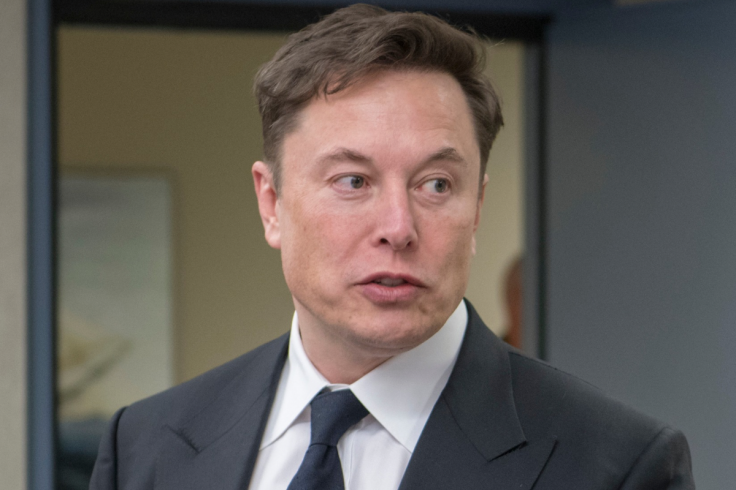
Elon Musk has insisted 'zero died because of DOGE' as he defended his radical cost-cutting drive inside Washington, telling in an interview on Thursday that the Trump-era Department of Government Efficiency did not cause deaths linked to USAID funding cuts.
Musk was brought into Donald Trump's administration to front the so-called Department of Government Efficiency, or DOGE, a White House creation established by executive order on his first day in office.
The unit oversaw sweeping staff reductions across the federal government and wielded the axe over major aid and development programmes, including the partial dismantling of the US Agency for International Development, USAID, an organisation Musk had previously promised to 'eliminate entirely.'
Elon Musk Says He 'Got Carried Away' With Politics and DOGE
In the wide-ranging interview, Musk admitted that his foray into government had gone too far, even as he declined to spell out exactly what he thought had crossed the line.
'I think I got a little too involved in politics. I got carried away, frankly,' he said.
The remark is as close as the billionaire, who poured millions into Trump's 2024 presidential campaign, has come to acknowledging missteps over his 18‑month stint running DOGE. Yet, in almost the same breath, he defended the agency's headline policies, arguing that Washington spending had been bloated and riddled with waste.
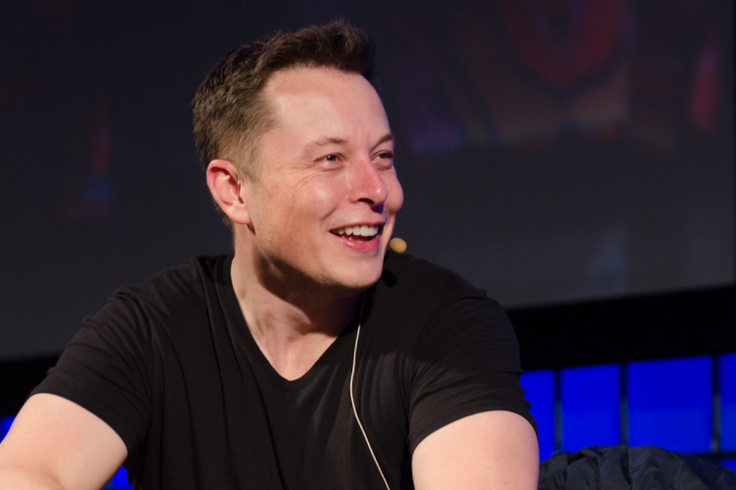
'We need to sort of take a close look at spending and make sure that money is being spent in sensible ways and that it is not wasted or spent on fraudulent activities. And I got a lot of flak for this, obviously,' he said.
Under Musk's direction, DOGE pushed out more than 272,000 federal employees, nearly 140,000 of them through a buyout-style resignation offer, according to the interview. Critics have long argued the cuts were rushed and crude, framed more as a political purge than a rational efficiency drive, and often targeted programmes linked, directly or indirectly, to diversity initiatives or liberal causes.
'Zero Died Because Of DOGE': Musk Rejects USAID Death Claims
The fiercest argument now centres on USAID. Researchers estimate that DOGE-driven funding losses may have contributed to hundreds of thousands of preventable deaths worldwide, many of them children who had depended on USAID-backed nutrition schemes and disease treatment.
Musk rejected that outright.
'These claims are false. They're nonsense, absolute nonsense,' he said, insisting that cutting what he cast as wasteful or corrupt programmes did not kill anyone.
'When funding is stopped for a fraudulent organisation, or for something, do you think they're going to say, 'please keep funding the fraud,' or do you think they're going to come up with a sad story that sounds sympathetic in order to get the funding restored? Obviously, it will be the latter, and that's exactly what they did. But zero died because of DOGE,' he added.
According to a recent analysis, USAID assistance saved 92 million lives over two decades. That estimate is central to the backlash Musk is now facing. If USAID's financing has historically been associated with tens of millions of lives saved, critics argue, stripping away large parts of that safety net in low-income countries is unlikely to be cost-free.

Musk, however, framed USAID not as a humanitarian pillar but as a political actor. He described the agency as 'a political organisation' and 'the biggest funder of regime change,' casting its defenders as part of an entrenched foreign policy establishment that disliked having its budget challenged.
He also suggested responsibility for plugging any aid gap lay with private mega-donors, singling out the Bill & Melinda Gates Foundation and MacKenzie Scott's high-profile giving initiative, and questioning why they had not simply stepped in to replace lost USAID funding if the need was so urgent.
'How many NGOs are there that could step in?' he asked, implying that a crowded philanthropic landscape could absorb the shock of US government retrenchment.
IBTimes UK cannot independently verify the mortality estimates or the scale of the impact of DOGE's cuts, so readers should take all such claims lightly, including those made in Musk's defence.
A Chaotic End to DOGE and a Lingering Political Hangover
DOGE itself shut down on 4 July after what even Musk's allies concede was a chaotic 18‑month run. Inside Washington, the agency quickly became shorthand for a certain style of Trump-era disruption, where long-standing programmes were evaluated through what officials described as 'shallow' assessments of purpose and ideology rather than detailed audits of outcomes.
Critics say funding for research, cultural institutions, and a wide range of social initiatives disappeared almost overnight. They accuse DOGE of fixating on perceived links to diversity, equity and inclusion, or to liberal advocacy, instead of calmly checking what a programme actually did.
For their part, Musk and his supporters present DOGE as a needed shock to a complacent bureaucracy. In their telling, the backlash proves only that vested interests do not like losing money. The truth probably sits somewhere messier, buried in spreadsheets most people will never read.
Musk's own rhetoric shows that despite his nod to having 'got carried away,' he has little intention of apologising for what DOGE did in practice. Referring to organisations that lost their funding, he portrayed them as spinning 'sad story' narratives to claw their budgets back, a line that will infuriate aid workers who see the human cost on the ground.
The clash over DOGE and USAID illustrates a wider argument about what happens when tech-style disruption is dropped into government at high speed. Musk approached the state almost like a struggling company, heavy on headcount and supposedly soft on fraud. His critics respond that you cannot treat a malaria programme or a child nutrition scheme like a failing factory and expect no one to get hurt.
Whether Musk's political experiment will deter other business leaders from taking similar roles is unclear. For now, he appears keen to draw a line under his Washington chapter, while still defending its most controversial legacy. That tension, between regret and refusal to concede harm, may haunt any future attempt to measure what DOGE really did.
© Copyright IBTimes 2026. All rights reserved.