Who Runs Iran? Donald Trump Questions if New Supreme Leader Mojtaba Khamenei Is Alive or Dead
As Iran's leaders fall one by one, the question is no longer who rules in Tehran but who is still willing to try.

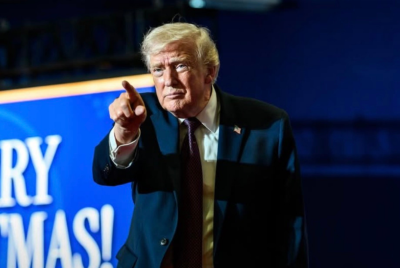
Donald Trump has reportedly openly questioned whether Iran's newly appointed supreme leader, Mojtaba Khamenei, is even alive as power in Tehran appears to be shifting towards hardline commanders of the Islamic Revolutionary Guard Corps following a string of assassinations at the top of the regime.
Ali Larijani, widely regarded as the de facto head of Iran's government following the killing of Supreme Leader Ayatollah Ali Khamenei on Feb. 28, was himself killed on Tuesday in targeted strikes that also eliminated the head of the IRGC's Basij militia.
Larijani had only been in this dominant role for 17 days before his death, which followed a series of high‑level assassinations since the start of the war that have killed top Iranian officials including the heads of the national defence council, the Islamic Revolutionary Guard Corps and other senior security figures, according to analysts cited by the New York Post.
In the immediate aftermath of Ayatollah Khamenei's death, Iran's clerical establishment moved quickly to anoint his son, Mojtaba, as the new supreme leader. Yet Mojtaba, whose father, wife and son were all reportedly killed in the same strike, has not been seen in public since his elevation.
Even Trump, who has claimed credit for the broader campaign of strikes on Iranian leadership, has reportedly said he is unsure if Mojtaba is alive or dead. Nothing about Mojtaba's actual condition has been independently confirmed, so all such claims should be treated with caution.

A Vanishing Supreme Leader
The absence of Mojtaba from public view has sharpened a more fundamental question about who is really running Iran now, as the formal answer on paper is a three‑man leadership council created after Ayatollah Khamenei's death that consists of President Masoud Pezeshkian, Ayatollah Alireza Arafi, who heads the powerful Guardian Council, and Justice Gholam‑Hossein Mohseni‑Ejei, chief of the judiciary.
All three men are fixtures of the Islamic Republic's political and clerical elite. Yet observers of Iran's opaque system overwhelmingly argue that the real centre of gravity has shifted further towards the IRGC, whose senior commanders appear to be shaping both the succession process and the conduct of the war with Israel and the United States.
Ali Larijani had been the crucial civilian counterweight to that military power. Before the war he was widely described as the second most powerful man in Iran after the supreme leader, with deep connections across Tehran's political networks and its sprawling semi-state economy. Mona Yacoubian, director of the Middle East programme at the Center for Strategic and International Studies, told the Post that his removal continues a trend towards a 'rump regime' more tightly bound to the IRGC.
Larijani's own political evolution underlines that shift. Once regarded as a pragmatic conservative, he had in recent years taken charge of Iran's nuclear negotiations and overseen a harsh crackdown on protesters, in which thousands were killed on the streets and many more were allegedly tortured or executed in prison.

Power Vacuum and the Next Man in Line for Iran
With Larijani gone and Mojtaba missing, attention has turned to who might step into the gap. The pattern so far has been dynastic. A Khamenei replaced a Khamenei. Now experts expect another Larijani to replace Larijani.
Yigal Carmon, president of the Middle East Media Research Institute in Israel, suggested that Sadeq Larijani, Ali's brother, is 'among the favourites' to take over while Mojtaba remains out of sight. Sadeq currently chairs the Expediency Discernment Council, which advises the supreme leader and arbitrates disputes between branches of government. He holds the rank of grand ayatollah, and his father reportedly clashed with the former shah, credentials that reinforce his image as a loyal son of the Islamic revolution.
Carmon argued that Sadeq Larijani would appeal to the IRGC because he is a reliable hardliner and not a rival power centre. 'They need someone who will go with them, who will move with them, who will collaborate with them,' he said, adding that Sadeq 'will work with them.'
Janatan Sayeh, an Iran analyst at the Foundation for Defense of Democracies, agreed that Sadeq's institutional clout and religious status put him in a strong position. But he is not the only contender.
Mohammad Bagher Ghalibaf, the current speaker of parliament and Ali Larijani's main rival, is also seen as a possible replacement. A former commander of the IRGC's air force, Ghalibaf has regularly appeared on state television leading MPs in chants of 'Death to America! Death to Israel!.' Khosro Isfahani, research director at the Washington-based National Union for Democracy in Iran, described him as a key link between Mojtaba, the civilian bureaucracy and the IRGC leadership.
Few analysts believe a moderate figure has any realistic chance of emerging from this process. The IRGC's new commander, General Ahmad Vahid, was reported by the New York Times to have lobbied the Assembly of Experts to back Mojtaba as supreme leader, in part as a deliberate snub to Washington and Jerusalem. That push sidelined Larijani and other relatively more centrist figures, including Aarafi, former president Hassan Rouhani and Hassan Khomeini, grandson of the republic's founder, Ayatollah Ruhollah Khomeini.
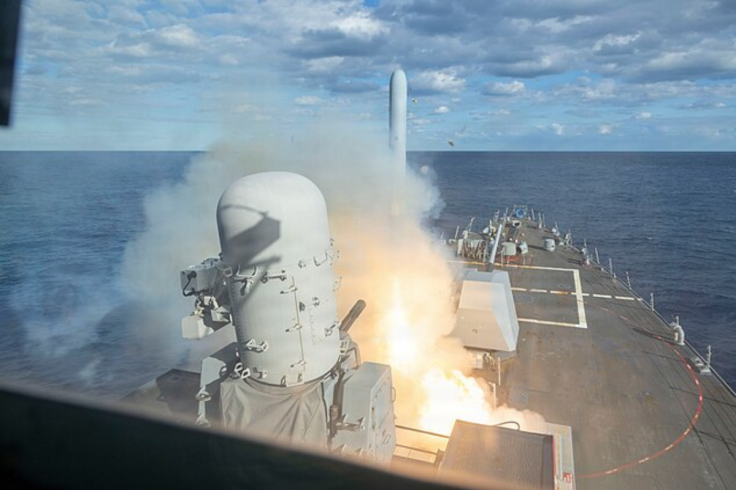
Vali Nasr, professor at Johns Hopkins School of Advanced International Studies, argued on X that each assassination of a senior official is 'engineering greater radicalisation of Iran's leadership,' predicting a 'bleak future' for Iran, its neighbours and US efforts to avoid long-term entanglement in the region.
Inside Iran's elite, the calculus is becoming brutally simple. 'As senior officials watch figures such as Khamenei and Larijani get eliminated, they notice that the personal risk associated with holding high office in the Islamic Republic rises sharply,' Isfahani said. In his view, such operations leave regime insiders facing 'two options: absolute annihilation or total surrender' to a negotiated end to the war, likely with Trump holding many of the cards.
None of the claims about who is alive, who is choosing successors or who is ultimately calling the shots in Tehran can be independently verified at this point and should be treated with caution until Iranian authorities or credible primary sources provide clear confirmation.
© Copyright IBTimes 2026. All rights reserved.
- MOST POPULAR IN Trending