The Witcher 4 Release Window, Cast, Spoilers And Update: Ciri Replaces Geralt as The New Protagonist
The Witcher 4 (Project Polaris) is unofficially set for 2027 with Ciri as the lead
The air on The Continent has been too quiet. For nearly a decade, fans of the epic fantasy saga have waited patiently for the clang of steel, the snarl of a beast and the return of a witcher. Since the phenomenal success of The Witcher 3: Wild Hunt cemented CD Projekt Red (CDPR) as a titan of RPG development, the anticipation for the next mainline instalment has been palpable.
Now, though the studio remains officially tight-lipped, a combination of financial data, production milestones and ambitious timeline commitments strongly suggests a clear launch window. The Witcher 4 is coming, and all signs point to a spectacular return in 2027. While the developer won't announce it yet, the intricate financial and developmental breadcrumbs they've dropped leave little doubt about the earliest realistic time we'll step back into this dark, beautiful world.
The Unofficial Timetable: Why 2027 is the Launch Year for The Witcher 4
The path to a 2027 release is paved by CDPR's unusually bold strategic planning. The studio first pitched the second trilogy for The Witcher back in 2022, announcing a brand-new three-game saga under the code name Polaris. With this new idea, the studio is aiming to release all three games within a six-year span, which is 'an unusually bold goal' in modern AAA development. This commitment is the primary driver of the projected timeline.
During the late-November 2025 financial briefing, CDPR co-CEO Michał Nowakowski reiterated that the studio is still committed to delivering The Witcher 4, The Witcher 5 and The Witcher 6 within those six years. While he didn't give us exact dates for The Witcher 4 or the Polaris trilogy, he did confirm that The Witcher 4 entered full-scale production in November 2024.
This is where the five-year development cycle, typical for massive open-world RPGs, comes into play. After a full year of production and nearly 450 developers involved, the studio appears to be following the typical five-year AAA development cycle that many big RPGs follow. Starting in late 2024, that trajectory takes us directly into late 2029 for the completion of the five-year phase. However, investors have already heard clarifying details that tighten this window considerably.
In 2024, CDPR clarified that Polaris would not launch before 2027, ruling out a 2026 launch entirely. Further cementing this reality, CFO Piotr Nielubowicz also confirmed in the same meeting that the game sits outside the company's incentive program, which ends in December 2026. This financial structure confirms that the studio does not expect the game to contribute revenue before 2027.
So if 2026 is not the year, and 2028 feels too far for the first game in an ambitious six-year, three-game plan, what are we left with? 2027. CDPR isn't promising 2027. But it doesn't have to. The timeline and development process they've described make that year the obvious choice for the earliest possible delivery of The Witcher 4.

Ciri's Ascendancy: New Protagonist and Technological Leap for The Witcher 4
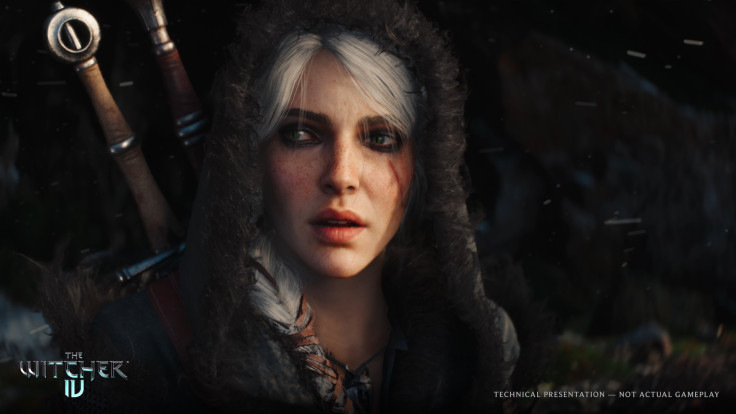
CDPR has been very quiet about the release date, but the company has been far less shy about the creative direction of the game itself. Mainly being that in The Witcher 4, we'll be following Ciri's journey. Geralt's companion has been confirmed as the protagonist, complete with a new voice actor and a story aligned with the 'best' ending of the previous game, where she survives and embraces the witcher path.
Ciri's original voice actor, Jo Wyatt, has been replaced for the new saga by Ciara Berkeley. Ciri's role also means the studio is taking the lore of the franchise into a new direction. She is confirmed to have completed the Trial of the Grasses, solidifying her status as a full witcher, while her more volatile Elder Blood powers from The Witcher 3 have been dialled back to create a more balanced, familiar gameplay experience.
The game is set a few years after the events of The Witcher 3 and will take place primarily in the previously unexplored northern region of Kovir and Poviss, a wealthy area known for its canals and mountainous terrain. This focus allows the studio to explore new schools of witchers and fresh narratives.
The announcement teaser revealed a feline-like medallion in the snow, which the developers confirmed represents the mysterious School of the Lynx, a new, unofficial school likely started by Ciri herself. Fans will be pleased to know that Geralt isn't entirely gone, though.
CDPR has confirmed he'll appear in the upcoming game, just not as the main character. This approach allows the developers to introduce new perspectives while respecting the legacy of the former protagonist.
The choice of Unreal Engine 5 is also a major factor helping to accelerate certain aspects of development. CDPR has spent almost four years learning and mastering the open-world toolset of Unreal Engine 5 specifically for this project. This transition away from their in-house REDengine is a huge, albeit necessary, undertaking, allowing them to leverage sophisticated external tools and accelerate their design process.
And we already saw the impressive results and payoffs of this in the tech demo earlier this year, which showed us a densely detailed region, fluid movement, natural lighting and much more. This investment in new technology strongly supports the studio's ambitious six-year timeline for the Polaris trilogy.
The shift in focus to Ciri, the adoption of Unreal Engine 5, and the commitment to a six-year, three-game timeline all point toward an ambitious, yet entirely feasible, launch for The Witcher 4 in 2027. This new saga, set in the cold, wealthy northern region of Kovir and Poviss and featuring the mysterious School of the Lynx, represents a defining new chapter for CDPR and the fantasy genre.
© Copyright IBTimes 2026. All rights reserved.
- MOST POPULAR IN Entertainment