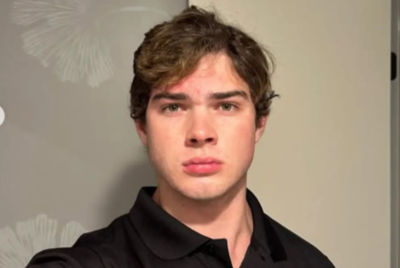
The Internet Is Losing It: AI Turns Hailey Bieber Into a Man—and Fans Can't Cope With How Hot He Looks
AI turns Hailey Bieber into a man, and the internet can't get over how striking he looks

The internet has been thrown into a new wave of fascination after AI-generated images reimagining Hailey Bieber as a man went viral last week, prompting a flood of memes, shocked reactions and light-hearted debates about beauty, gender and the power of artificial intelligence.
The images, shared widely on TikTok and X, quickly gained millions of views as fans marvelled at the sharp jawline, strong features, and moody expression of 'male Hailey'—with many joking that the look outshines her husband, Justin Bieber.
The sudden frenzy has reignited discussions about how far AI can shape perceptions of celebrity identity.
Fans Are Swooning — And Doubting Their Eyes
Across social media, reactions ranged from playful envy to outright admiration. One fan wrote: 'Hailey Bieber as male is probably the hottest man on planet Earth.' Others playfully speculated that Selena Gomez should've picked Hailey as a male instead.
Hailey Bieber as male is probably the hottest man on the planet earth 🙏 pic.twitter.com/VMFH0Y5Wkq
— J 🪷 (@kotakuisland) November 29, 2025
Hailey Bieber male version out mogged Justin Bieber https://t.co/BQcHO6arqp pic.twitter.com/Z7EEtlvCtz
— ´ㅅ' (@RB56211) November 29, 2025
@seanreirei No cause I need him so bad #haileybieber #rhode #justinbieber #genderswap ♬ sonido original - ozu ♚
Save me Hailey bieber male version save me pic.twitter.com/ktTUQAqW3z
— Jen1 (@jenstuns) November 29, 2025
For many, the images are just another fascinating by‑product of modern digital editing. Yet there's also a deeper underlying reaction: the way fans are willing to project entirely new identities onto celebrities simply because of AI.
A Long History of 'Looks Like a Man' Comments — Now Amplified by AI
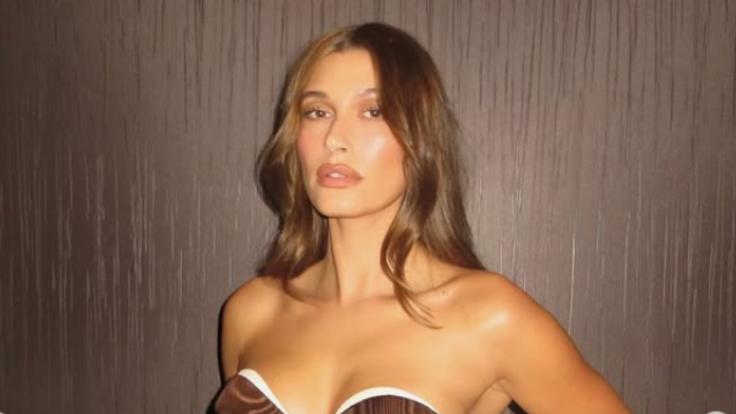
The interest in a male Hailey is not coming out of nowhere. Over the years, Bieber has faced frequent criticism about her appearance, with some online trolls accusing her of 'looking like a man' or suggesting she was transgender. The constant taunts had previously stirred public debate.
In October 2025, Hailey Bieber appeared on the podcast In Your Dreams with Owen Thiele, where she responded to online rumours about her appearance. She addressed the topic calmly, reflecting on the broader conversation about public perceptions of gender, without making it the focal point of the discussion.
Her reaction was widely praised for its maturity and refusal to let insults define her. Many outlets reported her response as a classy rebuke of transphobic trolling and body‑shaming.
Now, with the AI‑generated male version of her circulating online, those age‑old taunts have taken on a new dimension—this time in a way many find amusing or flattering rather than insulting.
What This Says About AI And Our Obsession With Celebrity Looks

The viral images of male‑Hailey reflect a broader trend: AI's growing ability to reshape reality, including gender, with ease. As early as 2023, artists were using AI to generate gender-swapped images of well-known public figures, often for humour or commentary.
But as realism improves rapidly, what was once a giggle‑worthy experiment now raises questions about identity, perception, and consent. When fans respond to an AI‑generated image as if the person were real—swooning, sharing, debating—it shows just how powerful and convincing such edits have become.
Moreover, the Hailey example taps into broader discussions about gender, beauty standards and societal expectations. The fact that many social‑media users quickly accepted and even celebrated the male version suggests underlying assumptions about masculinity, attractiveness, and how they intersect with fame.
Is This Just Fun Or Something Bigger?
On the surface, this latest wave of AI‑generated male Hailey Bieber images might seem like harmless internet fun. And perhaps it is.
Yet it also underscores a more profound shift in how we engage with public figures: their image is no longer fixed, untouchable, or curated solely by them or their teams. Now, AI allows the public (or any user) to reimagine, reshape, and re-release those images.
In an age of deepfakes and digital manipulation, the viral male‑Hailey trend is a vivid example of both the creative potential of AI and the confusion, fascination, and debate it can stir.
Whether you're laughing along, criticising the use of AI, or simply scrolling through the memes, one thing is clear: we may not know what real looks like anymore.
© Copyright IBTimes 2026. All rights reserved.
- MOST POPULAR IN Entertainment