5,300-Year-Old Mummy's Yeast Helps Scientists Create a 'Very Good Sourdough
Reviving ancient yeast from Ötzi's gut offers insights into prehistoric life and microbial resilience.

A loaf of sourdough baked in a modern laboratory has provided an unexpected connection to prehistoric Europe. Scientists studying the remains of Ötzi the Iceman (also called Oetzi or Oetze), a naturally preserved mummy who died more than 5,000 years ago, have successfully revived ancient yeast discovered in his gut and used it to produce what they described as a 'very good' sourdough.
The experiment has drawn attention not only for the bread it produced, but also for the questions it raises about how microscopic organisms can survive for millennia. Researchers spent months attempting to culture the yeast before finally turning the ancient microbe into a working sourdough starter.
How Scientists Turned Ötzi's Ancient Gut Yeast Into Sourdough
The yeast was discovered during scientific analysis of the ancient mummy's digestive tract, where researchers identified living microorganisms that had survived in extraordinary conditions. They were initially surprised by the discovery and eventually decided to use it to make a sourdough.
'If you tell anyone you have yeast, they immediately ask: can we use it for bread?' lead study author Mohamed Sarhan of the Eurac Research institute told AFP.
Initially, attempts to grow the yeast were unsuccessful. Scientists spent approximately three months refining the process before finally cultivating enough of the organism to create a sourdough starter.
The breakthrough allowed researchers to create sourdough using yeast from Ötzi's body. According to the scientists, the resulting loaf was a 'very good' sourdough, demonstrating that the microorganism remained viable despite its remarkable age.
The experiment provided researchers with a rare opportunity to observe how ancient strains of yeast behave compared with modern baking varieties. It also highlighted the resilience of microscopic life when preserved under the right environmental conditions.
The scientists have ambitious plans for where and how to use the yeast they gathered from the mummy, including brewing beer.
Ötzi the Iceman has already told us what he ate before he died. Now the microbes preserved on his body for 5,300 years have been revived, cultured, and baked into sourdough bread — a flavor profile no one alive has tasted before.https://t.co/g7z74Srim1#AncientYeast… pic.twitter.com/7VkNbDem0J
— Interesting Engineering (@IntEngineering) June 3, 2026
Why Ancient Yeast Survived Inside Ötzi's Mummified Body
One of the central questions surrounding the discovery is how the yeast managed to survive for more than 5,300 years. Scientists caution that the microorganism may not necessarily have been present in Ötzi's body when he was alive. It is possible that the yeast entered his remains sometime after his death and became trapped within the preserved tissues.
Under normal circumstances, yeast would be unlikely to survive for thousands of years inside a decomposing body. Microorganisms typically break down as environmental conditions change and organic material decays.
Researchers believe the exceptional preservation of Ötzi's remains may have played a crucial role. The mummy was naturally frozen soon after death and remained preserved within Alpine ice for millennia. The consistently cold temperatures significantly slowed decomposition, creating an environment that protected delicate biological material.
As a result, scientists have been able to recover DNA, analyse stomach contents and study microorganisms that would ordinarily have disappeared long ago.
However, Nikolay Oskolkov, a researcher at the Latvian Institute of Organic Synthesis, not involved in the study, is unsure whether the newly discovered yeast is ancient or more recent. He noted that the available samples were collected only in 2010 and 2019, making it difficult to determine whether the yeast has survived for thousands of years or colonised the body more recently.
Who Is Ötzi The Iceman And Why Is He So Famous?
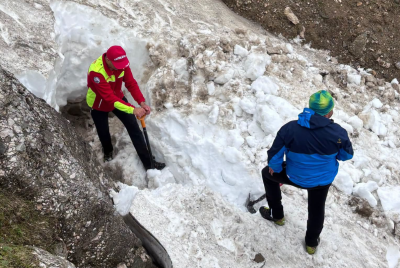
Ötzi, often referred to as Ötzi the Iceman or the Frozen Mummy, is one of the most extensively studied ancient humans ever discovered. His body was found in September 1991 by hikers in the Ötztal Alps near the border between Austria and Italy. Because the remains were recovered from glacial ice in the Ötztal mountain range, researchers gave him the nickname Ötzi.
Scientific examinations later determined that he lived around 5,300 years ago during the Copper Age. Investigators also concluded that his death was violent. Studies revealed that he had been struck by an arrow in the shoulder, causing severe bleeding shortly before he died.
The freezing conditions preserved not only his body but also his clothing, equipment and personal belongings. Researchers recovered tools, weapons and other artefacts that have provided insight into daily life in prehistoric Europe.
More than three decades after his discovery, Ötzi continues to generate new scientific findings. The recent sourdough experiment shows how even the smallest traces preserved within his body can offer perspectives on ancient life and the power of natural preservation.
Ötzi the Iceman is currently housed at South Tyrol Museum of Archaeology in Bolzano (Bozen), Italy.
© Copyright IBTimes 2025. All rights reserved.
- Recommended For You