Street Artist Banksy Built Secret Network to Stay Anonymous, Investigation Reveals
A new investigation found Banksy maintained anonymity through a coordinated network handling logistics, legal matters and commercial operations
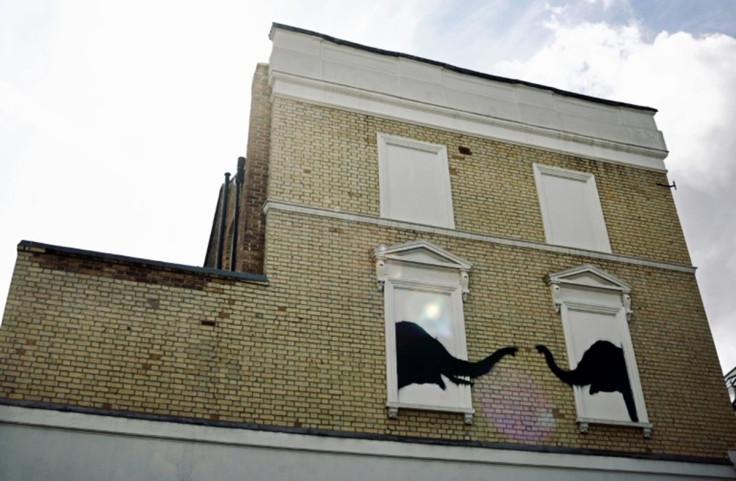
The anonymity of the British street artist known as Banksy has been sustained through a long-running and carefully managed support network, according to new findings that shed light on how the artist has operated undetected for decades.
The reporting, published in March 2026, draws on court records, interviews and previously undisclosed documents. According to a Reuters investigation, the artist's work is supported by a network of collaborators handling logistics, legal matters and commercial operations, allowing large-scale installations to be carried out across multiple countries without revealing his identity.
The findings provide new insight into how Banksy has maintained a global presence while avoiding formal identification, even as his work has appeared in high-profile locations ranging from London to Ukraine.
Coordinated Team Behind Installations
The investigation found that Banksy's works are often the result of coordinated efforts involving multiple individuals. Installations are typically prepared in advance, with attention to timing, access and movement in order to minimise detection.
Witness accounts from Horenka, Ukraine — where a Banksy mural appeared in 2022 — described masked individuals carrying stencils and materials before completing the artwork within minutes. Additional support was linked to logistical arrangements in the area, allowing the operation to take place discreetly.
Banksy's identity has been debated, and closely guarded, for decades. A quest to solve the riddle took Reuters from a bombed-out Ukrainian village to London and downtown Manhattan — and uncovered much more than a name.
— Reuters (@Reuters) March 13, 2026
🔗 Read the full investigation: https://t.co/3WoD8uaKhC
✍️… pic.twitter.com/FKtwQVpPNA
Those involved are believed to operate under strict confidentiality agreements. Their roles can include transporting equipment, preparing sites and monitoring surroundings during installations, particularly in locations where security risks are heightened.
Business Structure Protects Identity
The investigation also highlights how Banksy's commercial activity is structured to shield his identity. A company known as Pest Control Office acts as the official body responsible for authenticating artworks and managing sales and enquiries.
Financial records reviewed in the reporting show that entities linked to the artist hold millions of pounds in assets. These arrangements allow transactions to be conducted without direct association to an individual, separating the artist from the commercial side of the work.
Banksy's pieces have generated significant value in the global art market, with sales through galleries, auction houses and private collectors continuing to drive demand.
Identity Linked to Legal Records
The findings identify Banksy as Robin Gunningham, a Bristol-born artist previously named in media reports. The conclusion is based in part on US police records from a 2000 arrest in New York, where documents include a handwritten confession linked to vandalism.
The reporting also suggests that Gunningham later used another legal identity, with travel records indicating the name 'David Jones' in connection with activity linked to Banksy's work.
Links are also explored between Gunningham and musician Robert Del Naja of Massive Attack, who has long been associated with speculation surrounding Banksy. The investigation places Del Naja in proximity to at least one confirmed installation, though it does not identify him as the artist.
🇬🇧 Reuters journalists have discovered that the street artist behind the pseudonym Banksy is Robin Gunningham, a 51-year-old street artist from Bristol who later changed his name to David Jones.
— Europa.com (@europa) March 17, 2026
Gunningham/Jones had previously been identified in a 2008 Mail on Sunday piece, but… pic.twitter.com/8Nm7yJ11T9
Anonymity Maintained Despite Findings
Banksy's representatives declined to confirm the identity outlined in the findings, with his lawyer stating that some details were disputed and raising concerns about privacy and safety.
The findings, nevertheless, point to a structured system that has allowed the artist to operate internationally while maintaining anonymity. Through the use of collaborators, legal frameworks and controlled communication, Banksy has continued to produce widely recognised work without direct public exposure.
While questions around the artist's identity have circulated for years, the latest reporting offers the clearest account to date of how that anonymity has been sustained.
© Copyright IBTimes 2026. All rights reserved.
- MOST POPULAR IN Trending