Could A 'Rootless Hair' Solve It? New Forensic Advice In Nancy Guthrie Mystery
In a case defined by absence, the latest hope rests on the possibility that the smallest trace was missed the first time.

A fresh Nancy Guthrie update emerged in Tucson, Arizona, on 17 March, when genetic genealogist CeCe Moore said investigators should go back over the home of Savannah Guthrie's missing mother and search for even a 'rootless hair' that might still carry enough DNA to identify the abductor. Speaking on NewsNation's The Truth of the Matter, Moore said the forensic trail in the case may not be as cold as its timeline now suggests.
Nancy Guthrie, 84, was last seen at her home in the Catalina Foothills on 31 January, and the Pima County Sheriff's Department launched its search on 1 February. More than six weeks on, no suspect has been publicly named, which leaves Moore's remarks in the territory of expert assessment rather than confirmed investigative fact.
Nancy Guthrie And The Case For A Second Look
Moore's central point was stark and surprisingly narrow. She told journalist Natasha Zouves that, if she were advising on the case, she would 'go back and re-swab parts of that house and look for even, like, a rootless hair', adding, 'We can solve these cases now with just a rootless hair.'
That is the kind of line that sounds almost too neat, but Moore was not presenting it as a miracle fix. Her argument rested on a practical assumption that the person who took Nancy Guthrie likely left something behind, however careful he may have been. In her telling, the house should still be treated as a place that may have more to give.
She pointed to one detail in particular. Moore said investigators believe the perpetrator had the bite flashlight in his mouth and doubted that he kept it there for the full 40 minutes or so that he was inside the property. If that is right, she reasoned, the outside of a glove could have picked up DNA the moment the flashlight was handled again, and from there, contact with some part of the scene would have been hard to avoid.
Moore did not say usable DNA has been found. She said she finds it 'very hard to believe' that none was left at all. That is not proof. It is, however, a challenge to any assumption that the obvious opportunities for evidence have already been exhausted.
Why Investigators May Still Find DNA
Moore also pushed back against the idea that time alone would make a fresh forensic search pointless. Cases, she said, have been solved using 'really old DNA', and she described DNA as 'pretty hardy'. Her view was that, even with the home having been open to family members since the abduction, investigators could still work through who has been there and rule out innocent contamination.
That matters because cases like this often turn on patience rather than drama. The public tends to imagine DNA as something either found immediately or lost forever. Moore's comments suggested a messier reality, one in which evidence can remain at a scene long after attention has shifted, waiting for improved methods or a more targeted search.
The report also noted that Moore has recently floated the possibility of a second crime scene, another thread that could, in theory, help clarify what happened to Nancy Guthrie after she vanished. No such site has been publicly identified, and nothing in the available account confirms that investigators have located one. For now, it remains an avenue of speculation, albeit from a figure whose reputation rests on genetic genealogy work rather than guesswork alone.
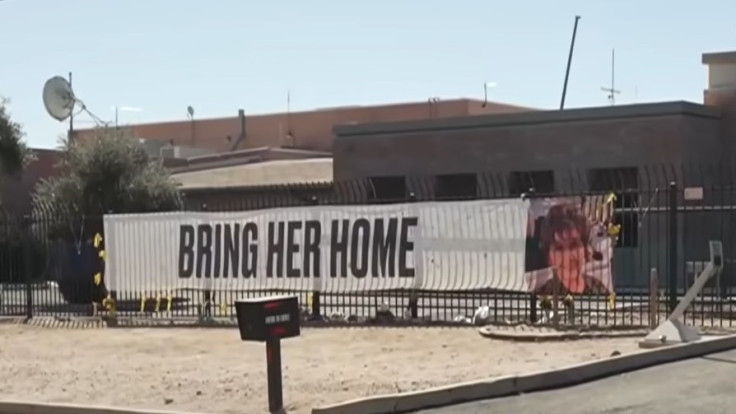
That leaves the case in an uncomfortable but familiar place. There is still no publicly named suspect. There is still no public confirmation of a breakthrough. And yet the most arresting part of Moore's intervention may be its modesty. Not a sweeping theory, not a dramatic new witness, just the suggestion that somewhere in that Tucson house, something as small and unassuming as a hair without a root could still be waiting to tell investigators who was there.
© Copyright IBTimes 2026. All rights reserved.
- MOST POPULAR IN Trending