Nancy Guthrie Case Could Be Cracked By Same Lab That Caught The Gilgo Beach Serial Killer: Expert
In a case built on grainy video and silence, everything now rests on what one strand of hair can finally say.

The Nancy Guthrie case could be broken open by the same specialist DNA lab that helped identify evidence linked to Gilgo Beach suspect Rex Heuermann, a leading genetic genealogist has suggested after the FBI took control of a crucial rootless hair sample recovered from Guthrie's Tucson home.
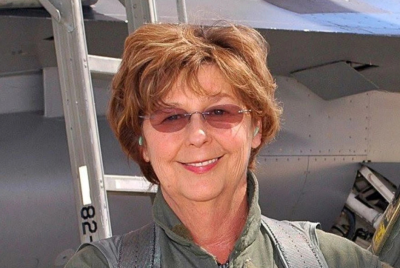
Guthrie, 84, the mother of Today anchor Savannah Guthrie, was last seen at her secluded home near Tucson, Arizona, on 31 January. Investigators believe she was abducted in the early hours of 1 February.
Blood found inside the house has been confirmed as hers, while FBI-released footage shows a masked man on her front porch around the time she vanished. More than two months later, no suspect has been publicly named and no motive has been disclosed, placing fresh focus on whether advanced forensic testing could finally produce a lead.
Why A Gilgo Beach Lab May Hold The Key To The Nancy Guthrie Case
Attention has centred on a single hair recovered inside Guthrie's home. According to OK! Magazine's summary of US reports, the strand was initially sent by local authorities to DNA Labs International, a private facility in Florida.
The sample is now back with the FBI, which has taken possession of it and could, experts say, send it to another lab with a stronger record in analysing this type of evidence.
That lab is Astrea Forensics in San Francisco. Earlier this month, 62‑year‑old Rex Heuermann stood in a New York courtroom and admitted to strangling eight women in killings that had long haunted Long Island. A pivotal piece of evidence in that case was rootless hair, analysed by Astrea using cutting‑edge techniques that can recover DNA from shafts once considered forensically useless.

'I am pretty confident that they will want to use the lab that they have been extremely successful with, which is Astrea,' CeCe Moore, chief genetic genealogist at Parabon NanoLabs in Virginia, told Fox News Digital.
Moore was less convinced by the original Florida testing. She said DNA Labs International 'has been working to refine their own rootless hair analysis, but I haven't seen any successful cases from them yet'.
By contrast, she said the FBI appears to have 'a lot of confidence in Astrea' because of its success in other high-profile investigations. 'Sending it to Astrea, where there is a proven track record, is by far the safest option,' she added.
Her remarks underline how quickly forensic priorities are shifting as rootless hair analysis becomes more sophisticated. In a case like Guthrie's, where conventional evidence has yet to identify a suspect, a viable DNA profile from a single strand could prove pivotal.
FBI Pushes Back On 'New Evidence' Claims As Tensions With Sheriff Surface
The hair sample itself is not new. What has changed is who is testing it.
On Monday 20 April, FBI Assistant Director of Public Affairs Ben Williamson addressed the issue directly on X. 'This is not new evidence or information,' he wrote. 'FBI asked to test this DNA 2 months ago with the same technology we've always had, when the local sheriff instead sent it to a private lab. Any further developments we will share as soon as appropriate.'
Still receiving inquiries on this: this is not new evidence or information. FBI asked to test this DNA 2 months ago with the same technology we’ve always had - when the local Sheriff instead sent it to a private lab. Any further developments we will share as soon as appropriate. https://t.co/FohRJtv8oH
— Ben Williamson (@_WilliamsonBen) April 20, 2026
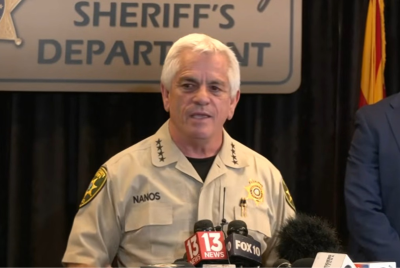
The statement was carefully phrased but pointed. As OK! has previously reported, Pima County Sheriff Chris Nanos was said to have blocked the FBI from accessing key evidence during the early phase of the investigation.
Williamson's post appeared to confirm at least part of that dispute. Federal agents wanted the hair months ago, but the sheriff's office chose to send it elsewhere.
Now that the FBI has the sample back, Moore and other observers believe there is an opportunity to apply Astrea's rootless hair technology to the case. However, there has been no official confirmation that the bureau will send the evidence there.
Blood, A Masked Man And A Case That Needs A Breakthrough
While debate over the lab continues, the central facts of the Nancy Guthrie case remain stark and unresolved.
Guthrie, an Arizona retiree, was dropped off at her home in the Catalina Foothills on the evening of 31 January after dinner with her daughter Annie and son in law Tommaso Cioni. By the following morning, she was gone.
Pima County investigators quickly concluded that this was a targeted kidnapping, not a case of confusion or voluntary disappearance. Blood found inside the house was later confirmed to be hers, reinforcing suspicions of a violent encounter.
The FBI subsequently released a grainy security video showing a masked man on Guthrie's front porch within the relevant time frame. Despite national media attention, a $1 million reward offered by Savannah Guthrie, and intense online scrutiny, the man has not been publicly identified.

Investigators have said only that Guthrie was deliberately targeted. They have not revealed what motive they are pursuing.
That has left forensic progress carrying unusual weight. If the FBI, or a lab working with it, can generate a usable DNA profile from the hair, the result could be checked against national databases or used in a genetic genealogy search of the kind that has helped solve cold cases across the US.
There is no guarantee the sample will produce that kind of breakthrough. The hair could belong to Guthrie, a relative, or someone with no link to the crime, which would limit its immediate value.
The FBI has also not said what any preliminary testing has already shown. Moore's view is based on the technology's potential, not on inside knowledge of this specific sample.
Even so, the possibility that the Guthrie case could be advanced by the same kind of forensic work used in a major serial killer investigation has given renewed significance to one microscopic piece of evidence. For a family and a public still staring at the same porch footage and the same unanswered questions, that hair may represent the clearest path yet to a name.
© Copyright IBTimes 2026. All rights reserved.
- Recommended For You