Sheriff Confirms Nancy Guthrie Investigation Is Closer to Breakthrough; Supporters Say Savannah's Mum 'May Soon Be Found'
Authorities close in on answers with new evidence and surveillance footage in Nancy Guthrie's abduction case

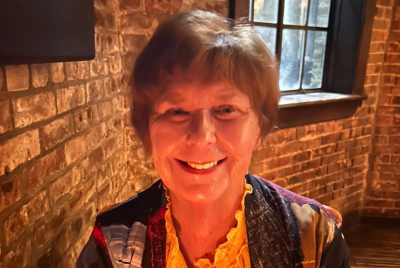
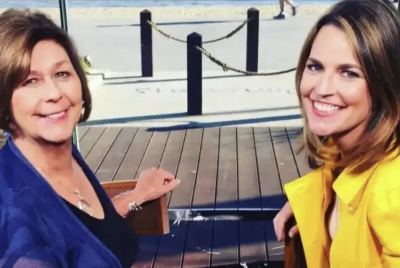
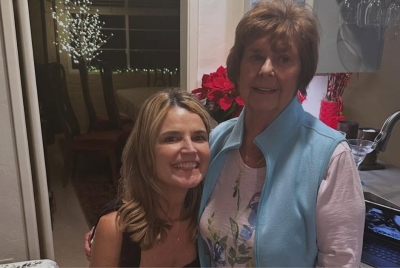
Nearly 100 days after her disappearance, investigators say they are closer to a breakthrough in the case of Nancy Guthrie, the 84-year-old mother of 'Today' show anchor Savannah Guthrie, who was last seen at her Catalina Foothills residence in Arizona on 1 February.
Authorities believe she was abducted from her property at approximately 2:30 am local time. This alarming scenario prompted an immediate joint investigation by the FBI and the Pima County Sheriff's Department.
Sheriff Chris Nanos Confirms Investigators Are Closer to Solving The Case
During a recent public update outside the department, Sheriff Chris Nanos was pressed on whether law enforcement was closer to solving the case. He firmly stated, 'We are.'
Supporters of the family have taken to social media with messages of hope. One user on X wrote, 'She will soon be found.'
Key Evidence Heads to the FBI for DNA Analysis
A hair sample recovered at the Arizona property has become a central focus of the investigation. The sample has been transferred from a private laboratory in Florida to the FBI for advanced genetic testing. To help establish a baseline, police have collected voluntary DNA samples from family members and staff.
Identifying a foreign DNA profile on the sample could provide investigators with a significant lead, with forensic genetic genealogy among the techniques under consideration.
Identifying a foreign profile on the hair would provide a monumental lead. Forensic specialists note that advanced genetic genealogy might serve as the ultimate tool to help identify a possible suspect.
Dr David Mittelman, co-founder of the forensic laboratory Othram, explained the complexities of dealing with degraded genetic material. He clarified that constructing profiles from hair does not inherently require extensive time, stating, 'In the Idaho Four murders, for example, the DNA profile was developed within days.' He added that the true hurdle is generating a high-quality result, as poor-quality samples often render genetic tracing difficult, ambiguous, or impossible.
Chilling Surveillance Footage Reveals a Masked Suspect Monitoring the Property
Surveillance footage has remained a focal point of the task force's investigation. Nest camera recordings captured a masked individual clad in dark clothing and equipped with a holstered handgun near the residence around the time of the presumed abduction.
Official descriptions state the unknown individual wore gloves, a zip-up hoodie, sweatpants, a dark backpack, and a balaclava.
Update in Nancy Guthrie case as Sheriff Nanos says ‘we are’ closer to solving 84-year-old’s abduction Nanos added that the developments are "really great" while speaking with Fox News Digital on Friday. https://t.co/vZzS15XrHq pic.twitter.com/d7bi6zII4x
— UnfilteredAmerica (@NahBabyNahNah) May 9, 2026
Massive Tip-Offs Narrow the Search as the Department Admits Early Missteps
Officials have processed up to 50,000 leads since the investigation began. Detectives are filtering these tips to find information connected to the armed individual seen on the doorbell cameras.
Despite progress, early crime scene handling attracted scrutiny. Sheriff Nanos stated, 'We do believe that Nancy was taken from her home against her will, and that's where we're at.'
The controversy stems from the initial handling of the crime scene, which was returned to the family less than 24 hours after the abduction, only for the FBI to seal it off again for further investigation. During that period, reporters filmed blood spatters near the porch, which authorities later confirmed belonged to Guthrie.
Reflecting on those early hours, Sheriff Nanos conceded that strategic errors occurred. He admitted he 'probably would have' kept the perimeter secured if given the opportunity to restart the investigation.
© Copyright IBTimes 2026. All rights reserved.
- Recommended For You