

'Cradle to the Grave': North Korea Accused of Punishing Christians' Children and Grandchildren for Their Faith
North Korea faces allegations of punishing generations of Christian families through religious surveillance, imprisonment and institutional discrimination
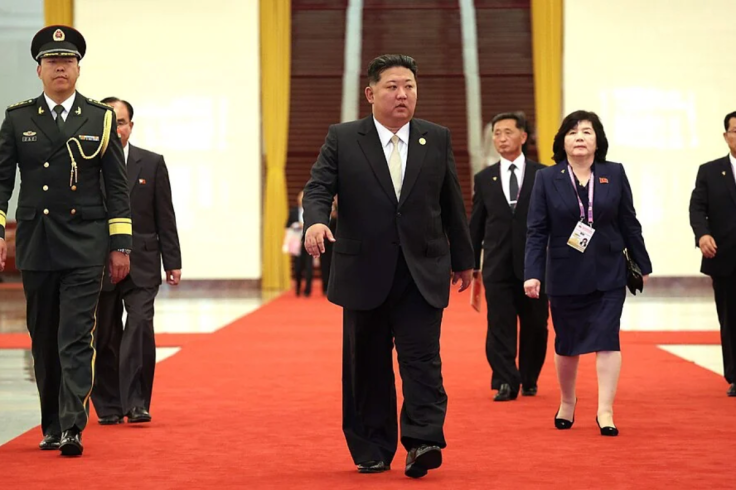
North Korean authorities are accused of restricting the education and employment prospects of Christians' children and grandchildren because of their families' beliefs, according to a report by British human rights organisation Korea Future.
The findings suggest that alleged religious persecution under Kim Jong Un may affect successive generations, including people who do not themselves hold religious beliefs.
The five-year study, titled Enemies of the State: Understanding Anti-Christian Persecution in the Democratic People's Republic of Korea, documents the experiences of 570 North Korean escapees. Most reported experiencing or witnessing persecution targeting Christians.
North Korea says it permits religious freedom, despite longstanding allegations of human rights abuses documented by international organisations and the United Nations. Churches operate in Pyongyang, although the BBC reports that they remain under state control.
North Korea Accused of Persecuting Christian Families Across Generations
Researchers say North Korean authorities keep records of families' religious beliefs across generations. They allege that this can limit Christians' children and grandchildren from accessing higher education and career opportunities. The report's findings point to restrictions that may affect people beyond those who practise Christianity themselves.
Report co-author James Burt said institutions including schools and the police sought to control citizens' beliefs from 'cradle to the grave'.
According to the BBC, anti-religious instruction begins as early as kindergarten. Schoolchildren attend self-criticism sessions during which they are warned against alleged superstitions, understood to include Christianity and other religious beliefs.
The reported restrictions contrast with the country's history of Christianity. The religion expanded across northern Korea after Protestant missionaries arrived in the 1880s.
Pyongyang was once known as the 'Jerusalem of the East', while North Korea's founding leader, Kim Il Sung, was born into a Christian family.
Kang Dong-wan, a professor at Dong-a University, told the BBC that North Korea's leadership regards religious allegiance as a potential threat to its authority.
The findings also point to neighbourhood surveillance as a way religious restrictions are enforced. The report's account suggests that people may be watched by those around them, making private worship a risk.
North Korean Christians Describe Beatings and Secret Worship
For Kim Bo-bin, 44, concealing her Christian faith meant changing even the simplest aspects of worship.
Speaking to the BBC, Kim described adapting her prayers and hymns to avoid detection. She travelled to China in 2003 after being offered what she believed was employment. Kim said she was instead forced into marriage and later discovered Christianity while living there.
After her deportation in 2007, Kim said North Korean officers questioned her about Christian connections and whether she intended to flee to South Korea. She recalled enduring 23 days of beatings before being sentenced to three years of hard labour.
Another escapee, Lee Young-joo, described praying secretly during her imprisonment. She said guards challenged prisoners who appeared to be worshipping.
Lee feared being transferred to a political prison camp if authorities discovered her religious beliefs. However, Korea Future's research did not include first-hand testimony from Christians held in such camps.
The full extent of religious persecution remains difficult to establish. North Korea publishes no official figures on its Christian population. The United Nations has previously cited estimates of between 200,000 and 400,000 people practising Christianity in secret, according to the BBC.
Kim eventually escaped to South Korea with her daughter in 2012. After years of concealing her beliefs, she now attends church on Sundays, where she can sing and worship openly.
© Copyright IBTimes 2026. All rights reserved.