Donald Trump Abruptly Halts Iran Attack, Claiming Tehran's Government Is 'Seriously Fractured'
Donald Trump's abrupt Iran ceasefire extension has stalled a potential strike while raising fresh doubts over what comes next.

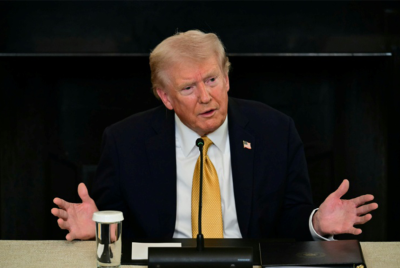
Donald Trump extended a temporary ceasefire with Iran on Tuesday, announcing in Washington that he had ordered the US military to hold off striking Iranian infrastructure after claiming the 'Government of Iran is seriously fractured.'
The US president said he had acted following a direct request from Pakistan's army chief and prime minister, even as he maintained that American forces remained poised to attack.
The climbdown came after days of increasingly bellicose rhetoric from Donald Trump over Iran and its leadership. The US had already imposed a blockade and carried out major strikes against Iranian forces, and a two‑week truce was due to expire within hours. Trump had earlier warned Iran that the 'whole country is going to get blown up' if its leaders did not accept US terms, framing the confrontation as a test of American resolve in the Gulf and beyond.

The new pause was laid out in a statement on Trump's social media platform, Truth Social, where he attempted to explain why, after promising no more extensions, he had just granted one.
In his post, he wrote that 'the Government of Iran is seriously fractured, not unexpectedly so' and that Pakistan's Field Marshal Asim Munir and Prime Minister Shehbaz Sharif had asked Washington to hold off on a planned attack on Iran 'until such time as their leaders and representatives can come up with a unified proposal.'

Trump said he had instructed the US military to maintain the blockade and stay 'ready and able,' but to avoid launching strikes while diplomatic talks were still possible. The ceasefire, he said, would be extended until Iran submitted a proposal and negotiations concluded 'one way or the other.'
Donald Trump Shifts From 'Raring To Go' To Reluctant Pause
The timing of Donald Trump's reversal was striking. Only hours before the Truth Social statement, the president had suggested he was running out of patience with Iran and had little appetite for prolonging any ceasefire.
In an interview with CNBC, he dismissed the idea of another extension, saying, 'I don't want to do that. We don't have that much time.'
In that same interview, Trump painted a picture of overwhelming US dominance. He boasted that American forces had 'taken out their navy, we've taken out their air force, we've taken out their leaders,' and insisted Tehran effectively had no room to manoeuvre.
In his telling, Iran 'had no choice' but to strike a deal with Washington, and the United States was 'going to end up with a great deal.'
He also claimed that there had already been 'regime change' in Tehran and that those now in charge were 'much more rational.'
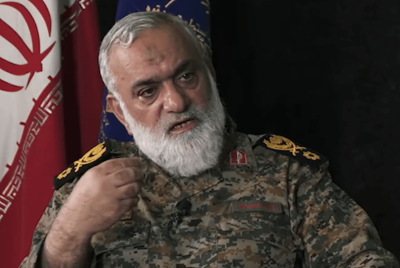
There has been no independent verification of that sweeping assertion, and Iranian state institutions have not acknowledged any such shift in power, so that specific claim remains unverified. Still, the language underlined Trump's effort to present Iran's leadership as weakened and divided, and himself as navigating from a position of strength.
The White House has not released a detailed readout of the president's conversations with Pakistan's leaders, and US defence officials have not publicly outlined what any postponed strike would have involved. The administration's messaging, in other words, rests largely on Trump's own characterisation of events and his judgement that the Iranian government is 'seriously fractured.'
Stalled Talks And A Fragile Ceasefire Under Donald Trump
The extended ceasefire is supposed to create space for fresh negotiations in Islamabad, where delegations from the United States and Iran were expected to meet to de‑escalate the stand‑off. Uncertainty has surrounded those talks from the outset, however, reflecting both the depth of mistrust and the violence already unleashed.
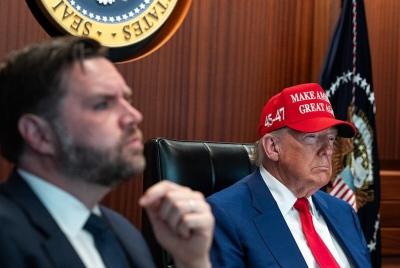
US Vice-President JD Vance had been scheduled to lead the American team in Pakistan, while Iran was tipped to send parliamentary speaker Mohammad Bagher Qalibaf as its chief negotiator.

By Tuesday evening, though, Vance was still in the United States and there was no indication that high‑level discussions had begun in earnest. That apparent delay has raised questions over how much substance lies behind Trump's ceasefire extension and whether the window for diplomacy is in fact as narrow as he suggests.
Trump's insistence that the United States holds all the cards jars slightly with his last‑minute decision to postpone a promised attack. On one level, the move fits a familiar pattern, maximal threats followed by a pause that he portrays as an act of restraint.
On another, it exposes how dependent Washington still is on intermediaries such as Pakistan to maintain channels to Tehran, and how fragile a ceasefire can be when it hinges on the personal calculations of one man.
The US president has chosen to wait and see whether a 'unified proposal' emerges from a leadership he publicly describes as broken. If it does not, his own words about being 'raring to go' will hang over whatever comes next.
© Copyright IBTimes 2026. All rights reserved.
- Recommended For You