Iran War Update: Beijing Sidesteps Credit As Trump Hails China Role In Hormuz Peace Deal
As Washington hails a 'total and complete victory', China treads carefully between its ties to Tehran and its dependence on Gulf oil.

Beijing on Wednesday downplayed suggestions it was the quiet architect of the latest Iran war ceasefire, even as US President Donald Trump publicly hinted that China had helped secure the deal to reopen the Strait of Hormuz and pause air strikes.
At stake in the Hormuz peace arrangement is more than regional pride: the narrow waterway off Iran's coast handles around a fifth of the world's seaborne crude, and more than 40 per cent of China's own oil imports.
Trump, speaking to Agence France‑Presse on Tuesday, cast the ceasefire in triumphal terms and hinted at Beijing's involvement.
He declared what he called a 'total and complete victory' in the Iran war and, when asked if China had helped bring Tehran to the table, replied, 'I hear yes.'
Iran War Update Shows China Choosing Distance Over Trump's Narrative
At her regular press briefing in Beijing on Wednesday, Foreign Ministry spokesperson Mao Ning stressed that China had consistently pushed for de‑escalation in the Iran war and would keep doing so, but she stopped well short of endorsing Trump's narrative about China's role in the Hormuz peace talks.
'As a responsible major country, China will continue to play a constructive role in the peace and tranquillity of the region,' Mao told reporters.
She then set out Beijing's visible diplomatic efforts since the bombing campaigns began more than five weeks ago. China had joined Pakistan in releasing a five‑point peace proposal the previous week.
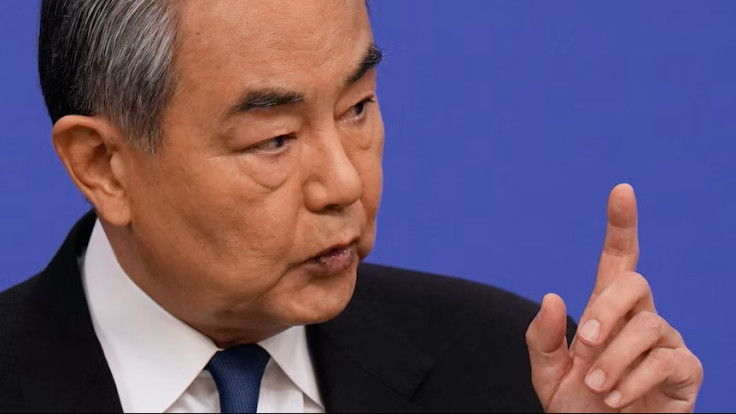
Wang Yi, China's top diplomat, had spoken by phone with foreign ministers from 26 countries. Zhai Jun, Beijing's special envoy to the Middle East, had been shuttling between Gulf capitals.
Yet when pressed directly on whether China had been party to the US‑Iran negotiations that led to the Hormuz peace deal, Mao sidestepped, declining to confirm any behind‑the‑scenes role.
Trump's Ultimatum, Tehran's Framework And A Fragile Hormuz Peace
The timing of the Iran war ceasefire also reflected raw pressure from Washington. The announcement followed a stark ultimatum from Trump, who threatened massive strikes on Iranian civilian infrastructure, explicitly naming bridges and power plants, if Tehran did not accept a deal by Tuesday night.
In a menacing social media post, he went further, warning that 'a whole civilization will die tonight' if Iran refused.
Tehran's agreement to a two‑week truce and a 10‑point framework appears, at least on the surface, to have defused that immediate threat. The United States, for its part, has accepted fewer points than it initially demanded, although, as of this reporting, the precise content of the remaining ten has not been fully detailed in public statements.

For Beijing, the Hormuz peace deal is an awkward balancing act. Chinese state media have talked up the country's broader stabilising role while official spokespeople avoid claiming credit for the ceasefire that Trump is now loudly celebrating. China has said only that it has made its 'own efforts' to push for an end to the Iran war.
Ceasefire Did Not Extend To Lebanon
Israel has endorsed the pause in strikes on Iran but has drawn a firm line on its northern front. The office of Prime Minister Benjamin Netanyahu said the ceasefire did not extend to Lebanon. Israeli officials describe their ongoing operations there as defensive, aimed at countering Hezbollah, which they regard as a proxy for Tehran and a direct security threat along Israel's border.
According to the Lebanese government, Israeli air raids since 2 March have killed more than 1,450 people, including 126 children, and displaced roughly 1.2 million.
The two‑week truce was announced on Tuesday after more than five weeks of US and Israeli attacks on Iran. Under the agreement, brokered by Pakistan according to statements from both sides, Tehran will reopen the Strait of Hormuz while Washington and Jerusalem halt their bombing campaigns as talks move towards a longer‑term settlement.
Iranian Foreign Minister Abbas Aragchi confirmed that negotiations will be based on a 10‑point framework drafted by Iran, scaled back from the 15‑point plan the United States had been pressing for.
© Copyright IBTimes 2026. All rights reserved.
- Recommended For You