DRC Terror Crisis: ISIS Claims 60 Christians Slaughtered in Sick Easter Attack
A remote Congolese village becomes the latest stage for ISIS's global theatre of terror, where unverifiable boasts collide with very real human loss.

ISIS claimed responsibility on Sunday for an Easter attack in the Democratic Republic of the Congo (DRC) that it said left 60 Christians dead in the remote village of Bafwakao in the north-eastern Mambasa territory. The group announced the alleged massacre in a Telegram post, while Congolese authorities confirmed an assault in the area and said dozens of homes and several vehicles were destroyed.
Eastern Congo has long been gripped by violence involving armed groups, including the Allied Democratic Forces, or ADF, which has been linked by security services and the UN to ISIS's so‑called Central Africa Province. The latest claim comes as the DRC government struggles to reassert control over lawless border regions and protect civilians whose villages are routinely overrun, often with minimal warning and little subsequent support.
Officials in Kinshasa said 44 homes were burned in Bafwakao and six vehicles were damaged during the Easter weekend raid, which targeted a largely Christian community. Communication from the region is patchy, and casualty figures remain difficult to independently verify. Local and national authorities have not yet publicly confirmed the ISIS death toll of 60, and the group is known to exaggerate its numbers, so the real scale of the attack is still uncertain and should be treated with caution.

Bafwakao Under Siege as ISIS Claims 'Barbaric' Assault
The DRC military said it had deployed additional troops to Mambasa following the attack, describing what happened in Bafwakao as 'barbaric acts' marked by indiscriminate killings and widespread destruction. In a statement, the Armed Forces of the Democratic Republic of the Congo, known as FARDC, condemned the violence as 'a grave affront to human dignity and a flagrant violation of fundamental rights.'
FARDC insisted it was reinforcing security to 'protect the population, restore order and neutralise the ADF terrorists and their allies.' The army said 'targeted military operations' were being stepped up in the surrounding area in an effort to track down those responsible and dismantle their networks, though it offered no timeline for when residents might be able to return home safely.
On the ground, the human cost extends beyond the official communiqués. Villagers who fled similar raids in recent years have spoken of families scattering into the forest in the middle of the night, with elderly people and young children often left behind. Survivors of past ADF‑linked attacks have described house‑to‑house killings and deliberate targeting of churches and schools, patterns that match the militant group's ideology and ISIS's own rhetoric.
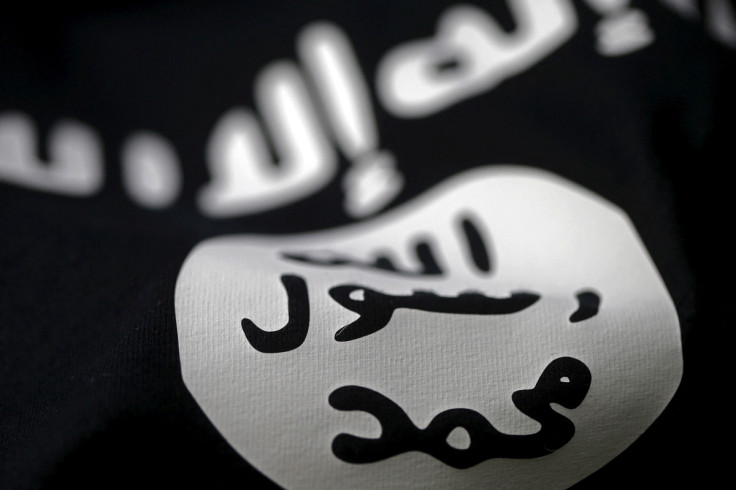
ISIS Messaging Fans Fears of Wider Easter Attacks
The Bafwakao claim did not emerge in isolation. In the same period, ISIS allegedly used its weekly al‑Naba newsletter to urge supporters to torch churches and synagogues during Easter, explicitly naming countries including the UK. According to Daily Star, the group called for attacks across Europe, Russia, the United Arab Emirates, Syria, Tunisia and Morocco, casting them as reprisals for restrictions at Jerusalem's Al‑Aqsa Mosque.
As cited by the Express, ISIS also boasted that it had inflicted 60 casualties in '15 operations' over the previous week. As with the Bafwakao figures, these claims have not been independently corroborated and appear designed to project strength at a moment when the organisation is under sustained pressure in Iraq and Syria. Intelligence agencies typically treat such pronouncements as both a propaganda tool and a potential indicator of real threats.
Israeli authorities closed Al‑Aqsa to worshippers in late February, citing the 'security situation' amid heightened tensions with Iran and its allies. Israel has also restricted large gatherings at other sensitive religious sites in Jerusalem, including the Church of the Holy Sepulchre and the Western Wall. Those moves forced many Muslim worshippers to pray outside the Old City walls during Ramadan, as close as possible to the mosque without entering it.
ISIS has seized on these restrictions to recast itself as a defender of Islamic holy sites, despite the fact that its primary victims globally have been Muslim civilians. In its messaging, the group presents attacks on churches in Africa and potential strikes on religious sites in Europe as part of a single global front, folding local grievances and long‑running conflicts into a simplified, apocalyptic narrative.
For governments, that blend of local insurgency and transnational propaganda poses a familiar dilemma. In Mambasa, authorities promise more soldiers and 'intensified' operations. In European capitals, security services quietly raise alert levels and revisit plans to protect churches and synagogues. Between those two worlds sit communities like Bafwakao, whose people rarely see the inside of a press release but live with the consequences of every word ISIS sends out.
Nothing in ISIS's casualty figures or operational boasts has been independently confirmed so far, and all such claims should be treated with a degree of scepticism. What is not in doubt is that another small village in eastern Congo has been left counting its dead and missing after an Easter that was meant to be about resurrection, not ash.
© Copyright IBTimes 2026. All rights reserved.
- Recommended For You