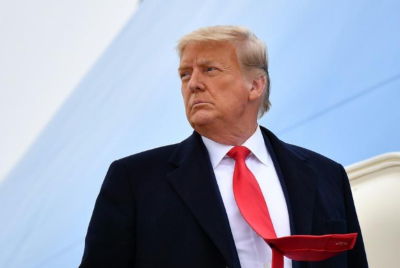
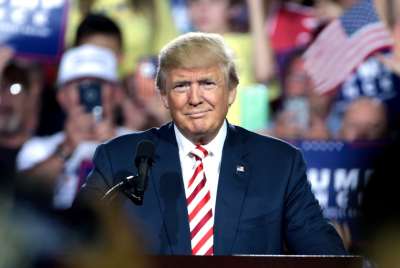
Donald Trump Brain Decline: POTUS Claims He 'Settled Eight Wars' As Doctors Declare Him Unfit
Trump's latest claim that he 'settled eight wars' has reignited scrutiny of his physical and mental health.

Donald Trump's grasp of reality was again thrown into doubt in Washington, after the US president claimed he had 'settled eight wars,' even as senior American doctors publicly branded him 'mentally unfit' to hold office.
Concern over the 78‑year‑old Republican's health has been building for years, fuelled by his meandering speeches, visible physical decline and a social media output that oscillates between late‑night rants and meme storms.
Type 'Donald Trump' into Google, and 'health problems' is now one of the first suggested searches, jostling with 'Iran' and tabloid‑friendly speculation about his marriage. What began as internet mockery has hardened into something more clinical: a debate over whether the man who wants to return to the White House is still fully in command of his mind and body.
The latest flashpoint came when Trump told reporters earlier this month: 'I settled eight wars. And in every case, the people, the prime ministers or presidents, wrote letters thanking me.' The remark, delivered with his usual certainty, prompted bafflement from viewers and critics who pointed out that no such record of eight resolved conflicts exists.
Video of the exchange ricocheted across social media, with one widely shared reaction declaring: 'The President has lost touch with reality.' Nothing about these war claims has been independently verified.
Donald Trump And The Question Of Mental Fitness
The 'eight wars' boast sits on top of a growing pile of clips that have left even some of Trump's supporters shifting uncomfortably. His public appearances frequently veer into what detractors call 'word salad' territory, with sentences changing subject halfway through and threads of thought abandoned mid‑air.
Doctors and commentators have been flagging what they see as signs of cognitive slippage since at least 2024. In one speech that year, aimed at attacking Joe Biden, Trump suddenly diverted into an impromptu tribute to the long‑dead Hollywood star Cary Grant. 'How good was Cary Grant?' he beamed to a puzzled crowd, the transition as abrupt as it was unexplained.
It is this jumble of topics, the casual grandiosity and the vacant pauses that unnerves specialists. In an assessment published on 30 April, a group of senior US doctors told the British Medical Journal that Trump was 'mentally unfit,' arguing that 'it doesn't take a psychiatrist to know that the US President has demonstrated erratic behaviour.' They did not, however, release detailed medical records or formal test results to back that conclusion, leaving their judgment open to challenge.
Trump's own online behaviour hardly reassures them. His Truth Social posts frequently appear in the small hours, filled with sprawling sentences, insults and a remarkable number of memes. To some, it resembles the online diary of a retiree with too much time and not enough sleep. To others, it is the unfiltered mind of a man still wielding extraordinary political influence. Either way, it is unusual output for someone seeking to reclaim the most powerful office in the world.
The White House, for its part, brushes off talk of mental decline, pointing to Trump's punishing rally schedule and arguing that political opponents are weaponising age and health to do what they cannot achieve at the ballot box. Independent, transparent cognitive testing would go some way to settling the matter, but for now, both the assessments and the counter‑claims remain contested.
Reporter: Are you attending your son’s wedding?
— Acyn (@Acyn) May 21, 2026
Trump: He’d like me to go. I’m going to try. I said, this is not good timing for me. I have a thing called Iran and other things. He’s a person I’ve known for a long time. pic.twitter.com/lGdjvU7oD0
Visible Wear And Tear On Donald Trump's Health
If the mental questions are murky, the physical signs of strain on Trump are harder to ignore. Even by the standards of a man in his late seventies, he often appears unsteady. Footage from political events shows him limping as he crosses stages, his gait compared by some observers to Kevin Spacey's character Verbal Kint in The Usual Suspects. The mockery is unkind, but the underlying observation is plain enough: he looks fragile.
Trump's long‑documented love affair with fast food has become part of the folklore surrounding his health. Accounts of Big Macs, Quarter Pounders, Fillet‑O‑Fish, chocolate milkshakes and a dozen Diet Cokes a day have been relayed so often they are almost background noise. Nutritionists are not needed to draw a line between that diet and the expanding waistline now stuffed into tightly tailored suits. 'You are what you eat' might be a cliché, but in Trump's case it feels uncomfortably literal.
More specific rumours are murkier. A viral clip from last September, filmed at an event where he joined right‑wing activist Charlie Kirk's widow, Erika, triggered feverish online speculation that Trump was wearing an adult nappy under his suit. As she reached to place a hand on his back, her fingers appeared to jolt against a strange bulge, prompting instant commentary along the lines of 'Erika has grabbed Trump by the diaper.' None of this has been confirmed and remains firmly in the realm of online conjecture.
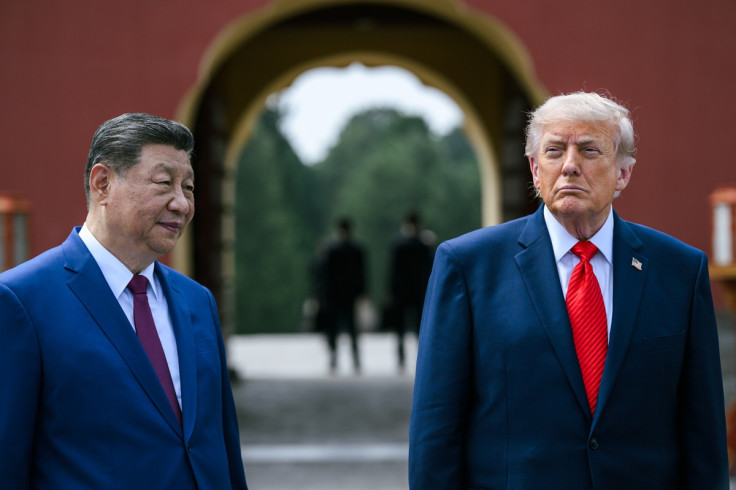
Other details have drawn the attention of medical professionals. Photographs from the past year show Trump's hands looking heavily made up, as if makeup has been used to conceal bruising. Some doctors quoted in US media have suggested that such bruises could indicate repeated intravenous injections, perhaps for an undisclosed health condition. The theory is speculative. The official explanation from White House press secretary Karoline Leavitt is more prosaic: Trump's hands, she says, are simply the result of 'shaking hands' so often.
That defence has not quieted the doubters, who point to the combination of the hand discolouration, swollen ankles and increasingly careful stage movements as the true 'telltale signs' of a body under significant strain. Supporters see an embattled leader refusing to slow down. Critics see a man being cosmetically propped up for one more run at power. Until proper medical disclosures are made, both sides are dealing in inference and hunch as much as hard fact, and every new clip or mangled sentence is treated as another clue in a very public diagnostic guessing game.
© Copyright IBTimes 2026. All rights reserved.
- Recommended For You