Experts Warn US Public Health Cuts Are Letting Deadly Ebola Outbreak Spiral Out of Control in Africa
Officials say reduced funding and staffing may be limiting international capacity to respond effectively.

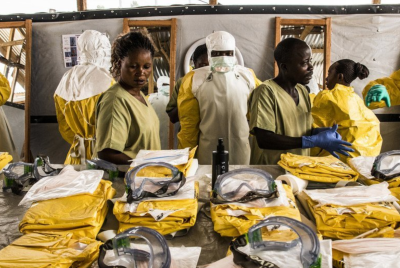
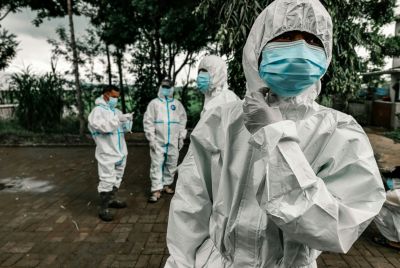
Health experts and researchers have raised concerns that an Ebola outbreak in central Africa is spreading more quickly than it should, pointing to reduced US public health support as a key factor limiting international response efforts.
The experts warn that US public health cuts are weakening surveillance and containment systems just as hundreds of cases emerge in the Democratic Republic of the Congo, alongside confirmed infections in neighbouring countries.
The outbreak involves the Bundibugyo variant of Ebola, a rare strain with no specific cure or vaccine. According to health officials cited in reporting, the situation has escalated rapidly since April, prompting urgent monitoring from international health agencies. But scientists say the US, once central to outbreak response efforts, is now playing a much smaller role than in previous crises.
Ebola outbreaks in the region have historically triggered large-scale cooperation between local health workers, the World Health Organisation, and US-funded programmes designed to detect infections early and contain spread.
US Public Health Cuts Slowing Ebola Containment Efforts
Current figures indicate at least 482 suspected Ebola cases and around 116 deaths in the Democratic Republic of the Congo since April, with additional cases reported in Uganda and concerns about possible spread into South Sudan.
The outbreak has been declared a public health emergency of international concern by the World Health Organisation, reflecting fears that transmission could continue for months if not brought under control.
According to The Guardian, Kristian Andersen, a professor of immunology and microbiology at Scripps Research, said the scale of international support is no longer what it once was. He pointed to reduced investment in global health systems and warned that outbreaks become harder to control when early detection networks are weakened.
The strain involved, Bundibugyo Ebola, has appeared in only a small number of outbreaks in recent decades, but its behaviour in the current situation is still being studied by scientists working to map its spread.
Global Health Networks Weaken
These concerns come after big changes to the US public health and foreign aid systems. This includes the closure of the US Agency for International Development and the ending of several research projects. Thousands of health jobs were also cut, which experts say has left important gaps in systems that used to track and respond to outbreaks in other countries.
Matthew Kavanagh, who leads the Centre for Global Health Policy and Politics at Georgetown University, said the Democratic Republic of the Congo is especially at risk because it depends heavily on international support. He said the funding cuts were made quickly, leaving countries little time to adjust.
Ebola is usually first detected in local clinics, where patients present with common symptoms like fever, before doctors realise it could be something more serious. When these clinics lack sufficient funding or staff, early warning signs may be missed.
Kavanagh said that cuts to US-funded programmes affected many community health workers who were responsible for tracking diseases. These workers used to help spot early signs of outbreaks, not just for Ebola but also for illnesses like malaria and tuberculosis.
Without steady monitoring at the local level, experts warn that outbreaks can spread for longer before anyone realises what is happening. By the time they are officially detected, they are often harder to control.
According to figures reported in the article, US aid to the DRC fell from about £1.09bn ($1.4bn) in 2024 to roughly £336m ($431m) in 2025, with further reductions this year. Uganda also saw a similar drop in support over the same period.
Long-Term Consequences of Weak Health Systems
The Ebola outbreak in the DRC has also exposed weaknesses in global lab and research systems. A specialist Ebola research centre in the United States, which previously helped test treatments and vaccines, was shut down last year after staff cuts. Experts say losing this facility has slowed the ability to quickly develop and trial medical responses during outbreaks.
Several senior roles across US health agencies also remain unfilled, including key leadership posts at the CDC. Officials have acknowledged that fewer staff are now available for overseas outbreak response compared with earlier Ebola crises.
Some US personnel are still working in the DRC, but experts say the overall response is smaller than in past outbreaks. Remote support is being used, though scientists argue that being physically present on the ground is crucial when diseases spread quickly.
African scientists and health workers continue to lead much of the response, including genome sequencing that confirmed a new spillover event and helped trace the outbreak's origin. However, they are operating under significant strain.
Health experts stress that Ebola can still be contained with fast, coordinated action. But they warn that delays in detection and reduced support make control much harder.
© Copyright IBTimes 2026. All rights reserved.
- Recommended For You