Earl Spencer Says King Charles Is 'Gaslighting' Him, Compares Press Treatment of Harry and Meghan to Diana
Spencer stands by his recollection that Charles said 'we'll forget her soon enough', while the Palace has questioned whether grief affected his memory
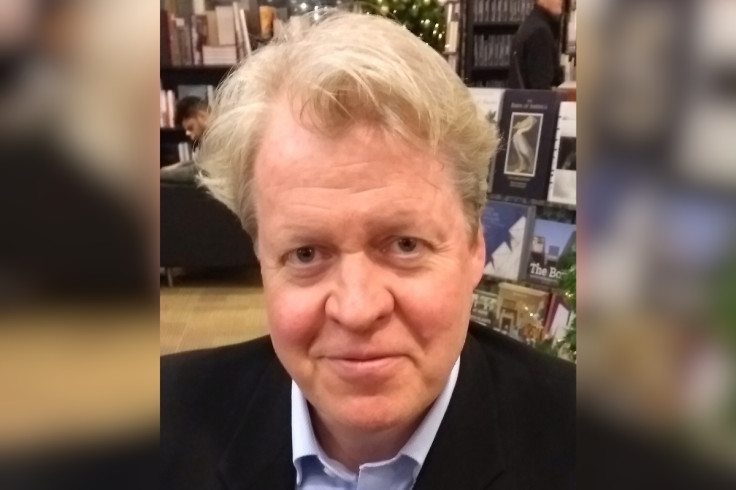
Earl Spencer has accused King Charles of 'gaslighting' him after Buckingham Palace questioned his recollection of an alleged 1997 conversation about Princess Diana's funeral. Spencer has stood by his account while also saying that media coverage of Prince Harry and Meghan Markle contains echoes of the treatment his late sister experienced.
The dispute centres on Spencer's memoir, Swan Song: Diana, My Sister, in which he alleges that Charles told him, 'we'll forget her soon enough', during an argument over arrangements for Diana's funeral. Buckingham Palace later issued an unusually pointed statement suggesting that grief can affect memory and judgement, without directly addressing whether Charles made the alleged remark.
Spencer has interpreted that response as an attempt to undermine his credibility.
Earl Spencer Stands by His Diana Funeral Claim
'It is not every day you wake up to find you've been gaslit by the King,' Spencer told the Mail on Sunday.
He described the Palace's response as 'astonishingly provocative and below the belt', arguing that it was 'essentially trying to say I'd lied without the King being able to deny what I'd said'.
That is Spencer's interpretation of the statement. Buckingham Palace did not explicitly accuse him of lying, nor did it provide a competing account of the alleged conversation.
Instead, a Palace spokesman said the King was mindful that 'the pain of fraternal grief can cloud reason, affect judgment and colour memory in ways others do not recognise'.
Spencer objected to the wording, comparing it with Queen Elizabeth II's well-known phrase 'recollections may vary'. He said the Palace statement was 'a rather poor imitation' of that earlier formulation, which he considered 'a much more elegant way of putting things, but in these circumstances entirely out of place'.
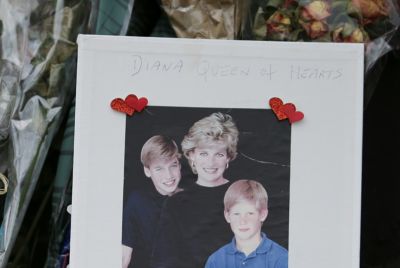
The allegation concerns events following Diana's death in a Paris car crash in August 1997. Spencer has said the conversation with Charles took place while the family was dealing with arrangements for her funeral and the decision over whether her two young sons should walk behind her coffin.
William was 15 and Harry was 12 when their mother died. Both ultimately walked in the funeral procession alongside their father, Prince Philip, Charles and Spencer on 6 September 1997.
Spencer has previously said he opposed the decision for the boys to take part in the public procession, arguing that Diana would not have wanted them exposed to such an ordeal.
His account of the alleged conversation remains disputed. Spencer has repeatedly said he is telling the truth, while the Palace response has questioned the reliability of memories shaped by grief without directly denying the words attributed to Charles.
Sussex Press Coverage Allegedly Echoes Diana
The argument has now extended beyond the alleged conversation itself, with Spencer drawing a comparison between the media treatment of Harry and Meghan and the press attention experienced by Diana.
Spencer has described coverage of the Sussexes as 'really, really unpleasant' and said there are echoes of what happened to his sister. His comparison is an expression of his own view rather than an established finding that the circumstances are identical.
The issue is particularly personal for Spencer because he has spent decades discussing the press intrusion surrounding Diana, including the period immediately before and after her death.
His latest comments also place the memoir within a wider debate over how the royal family responds when disputed personal accounts become public. Spencer has chosen to stand by his recollection despite the Palace's unusually direct intervention.
He also defended the decision to publish the book, saying that he believed Diana would have supported it.
'Diana would be cheering from the rafters at this book,' he told the Mail on Sunday.
The memoir is due to revisit Spencer's memories of his sister, her death and the events surrounding her funeral. Its publication has brought renewed attention to a private family dispute that began nearly three decades ago but remains impossible to resolve conclusively from the accounts now in the public domain.
The Palace has not provided a detailed alternative version of the alleged conversation. Spencer, meanwhile, continues to insist that his recollection is accurate and has challenged the suggestion that grief could have coloured his memory.
That leaves the central question unresolved. Spencer says Charles made the remark. The Palace has questioned the reliability of the recollection without explicitly saying that the words were never spoken.
© Copyright IBTimes 2026. All rights reserved.
- Recommended For You