

Elon Musk Calls Neuralink 'Jesus-Level Technology,' Says Healthy People Could Get Brain Chips by 2030
The company's president wants to implant chips in able-bodied people within four years
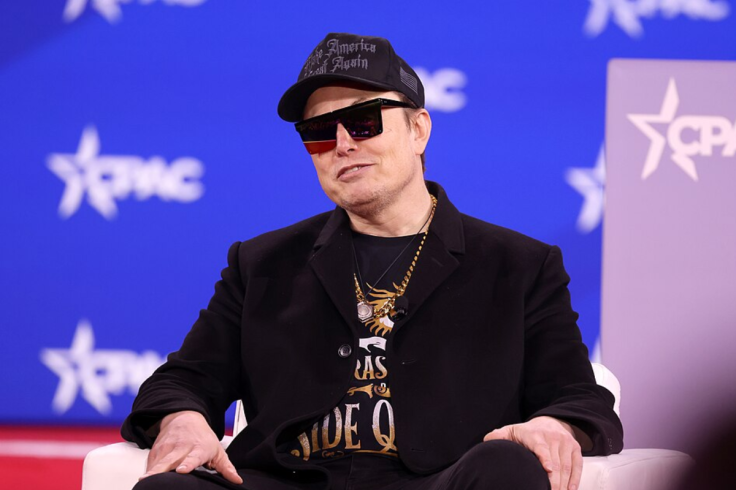
Elon Musk described Neuralink's brain implants as 'Jesus-level technologies' during a virtual appearance at the Samson International Smart Mobility Summit in Tel Aviv on 18 May, while the company's president confirmed plans to begin implanting chips in healthy, able-bodied people by 2030.
'Miracles in the Scientific Sense'
Musk, who joined the Israeli government-hosted event via video link from Texas, said that restoring movement to paralysed patients and sight to the blind were breakthroughs of historic scale.
'Restoring control of people who are tetraplegics and restoring sight are pretty big deals,' Musk told the summit. 'They're sort of what I might call Jesus-level technologies. I mean miracles in the scientific sense.'
The Tesla and SpaceX chief executive also said the technology could eventually give blind patients 'perhaps superhuman vision' through Blindsight, a product that bypasses damaged eyes entirely by feeding visual data directly into the brain's visual cortex. The company expects the first patient application of Blindsight by the end of 2026.
From Medical Tool to Human Augmentation
But the more significant disclosure came from Neuralink's president and co-founder, DJ Seo, who said the company is working toward installing its chip in an 'otherwise healthy person' by 2030.
Seo first outlined that goal at a conference at the Korea Foundation for Advanced Studies in Seoul last year, where he told attendees that Neuralink was 'currently envisioning a world where in about three to four years, there will be someone who's otherwise healthy who's going to get a Neuralink.'
That timeline turns brain-computer interfaces from a medical intervention into something closer to a consumer product. If Neuralink succeeds, the question shifts from whether the technology can help the disabled to whether the able-bodied will feel pressure to adopt it.
21 Patients and Counting
Neuralink confirmed in January that 21 participants were enrolled in trials worldwide, up from 12 reported in September 2025. The company's Telepathy chip has allowed patients with spinal cord injuries to control computers, browse the internet, and operate robotic limbs using only their thoughts.
The first human recipient, Noland Arbaugh, a quadriplegic who received the implant in January 2024, has used the device to play video games, send messages, and design 3D models with his mind. Neuralink said it has also raised $650 million (£483.9 million) in a Series E funding round to expand patient access.
On 31 December 2025, Musk posted on X that Neuralink would begin 'high-volume production of brain-computer interface devices' and move toward 'a streamlined, almost entirely automated surgical procedure' in 2026.
The Ethical Gap
The pace of Neuralink's expansion raises questions that regulators haven't yet answered. No global framework exists to govern elective brain implants in healthy people, and the US Food and Drug Administration's current approvals cover only investigational use for patients with severe neurological conditions.
Critics have also pointed to a tension in priorities. The brain-computer interface market is attracting billions in investment for devices that could one day enhance cognition in the able-bodied, even as basic medical tools for diseases like Ebola remain unavailable in parts of Africa during active outbreaks.
Musk, for his part, has framed the work in messianic terms. Whether the world shares that faith will depend on what happens between now and 2030.
© Copyright IBTimes 2026. All rights reserved.