Erika Kirk Accused of 'Unhinged Rant' After Emotional Video Blaming Critics for Husband's Death
Erika Kirk's video addressing her husband's death ignites debate over political discourse and media responsibility.

A newly circulated video featuring Erika Kirk has triggered a wave of online controversy, with critics accusing her of delivering an 'unhinged rant' while speaking about the death of her husband, Charlie Kirk.
The emotional remarks, shared shortly after a White House Correspondents' Dinner-related post and follow-up podcast appearance, have divided audiences across political and media circles.
Supporters say her comments reflect raw emotion and trauma, while detractors argue she crossed a line into inflammatory territory. The debate has since escalated, raising wider questions about political discourse, media responsibility, and the boundaries of public grief.
Emotional Video Sparks Backlash Online
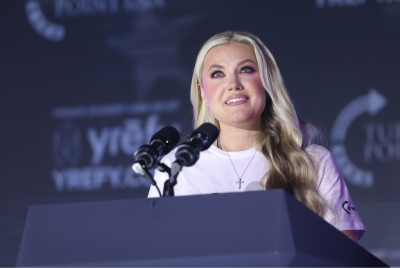
The controversy began after Erika Kirk released a video and accompanying podcast segment addressing the aftermath of her husband's death and the broader political climate.
In the footage, she described what she called a 'deeply traumatic' environment and accused segments of the media and political opponents of distorting truth and fuelling hostility. Her tone, described by some viewers as visibly distressed and forceful, quickly drew attention online.
While supporters argued she was speaking from a place of grief and frustration, critics labelled the delivery as erratic and emotionally charged. Social media platforms amplified the clip, with commentators dissecting her phrasing and delivery, turning the video into a viral flashpoint within hours of its release.
Kirk Blaming Critics For Husband Death
Central to the backlash are claims that Erika Kirk indirectly blamed critics and political opponents for contributing to the environment that led to her husband's death. In her remarks, she referenced what she called 'perverted truth' and suggested that rhetoric from public figures had dangerous real-world consequences.
Critics argue these statements blur the line between legitimate grief and political accusation, suggesting she attributed responsibility too broadly. Supporters, however, insist her comments were not literal accusations but rather an expression of anger towards a culture of hostility and misinformation. The ambiguity of her wording has fuelled ongoing debate, with neither side reaching consensus on her intended meaning.
She just doesn't get it. Not any of it. pic.twitter.com/50xpbHOyoW
— 🇺🇸Lionel🇺🇸 (@LionelMedia) April 30, 2026
I’m sorry someone said you shouldn’t be CEO. But one of those people was your late husband.
— Brianna Wu (@BriannaWu) April 29, 2026
Charlie Kirk said women should “embrace their roles as mothers and homemakers.” He said that for women, having children was more important than a career.
And he said women getting jobs… pic.twitter.com/kRGUvYhYIC
During her podcast appearance, Kirk expanded on her concerns, linking her personal experience to broader political tensions in the United States. She referenced high-profile figures, media personalities, and public discourse, arguing that disagreement has become increasingly polarised and personal.
At one point, she questioned how individuals would react if placed in similar emotional circumstances, using rhetorical comparisons involving public figures and controversial commentary.
These remarks were widely circulated and interpreted in multiple ways, with some seeing them as an attempt to highlight perceived hypocrisy, while others viewed them as escalating rhetoric. The segment also revisited past statements associated with Turning Point USA and Charlie Kirk, further intensifying scrutiny of the organisation's public messaging.
Divided Reactions and Ongoing Debate
Reactions to Erika Kirk's video remain sharply divided. Supporters describe her response as an understandable expression of grief following a deeply personal tragedy, arguing that her words should be viewed in the context of emotional distress.
Critics, however, maintain that her delivery and framing of events contributed to the perception of an 'unhinged rant,' pointing to what they see as inflammatory language and sweeping accusations. The debate has extended beyond Kirk herself, evolving into a wider discussion about the role of political rhetoric in public life and the responsibilities of high-profile figures when addressing sensitive personal loss.
© Copyright IBTimes 2026. All rights reserved.
- Recommended For You