

New EU Car Safety Rules Take Effect 7 July: How Your Car Could Monitor You
Exploring the impact of the EU's new car safety regulations on drivers and manufacturers
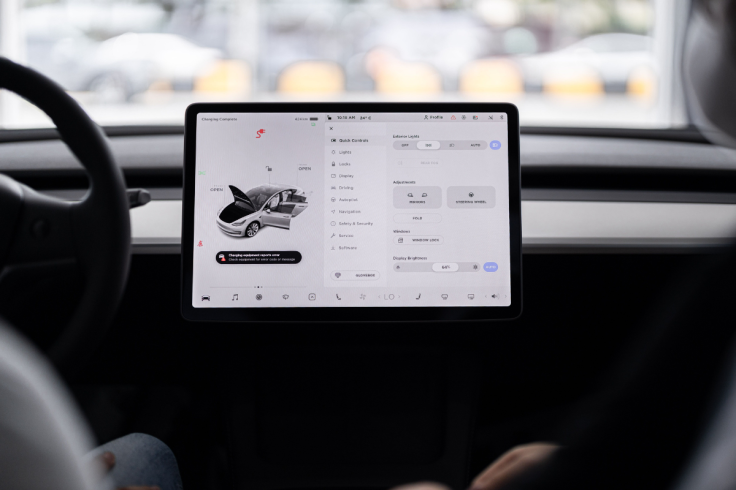
The European Union announced new EU car safety rules that will take effect on Tuesday, 7 July 2026. 'Smarter cars mean safer roads,' the European Commission said on social media. But the public fears a more expensive vehicle that monitors one's every move.
The following are the new requirements: advanced emergency braking systems, advanced driver distraction warning systems, improved forward visibility for drivers, new testing requirements for worn tyres and expanded safety glass areas.
The new regulations don't just intend to keep the drivers safe, but also pedestrians. The braking system, for example, is meant to detect nearby cyclists and pedestrians. The expanded safety glass area will also 'better protect pedestrians in the event of a collision.'
What Changes on 7 July?
The rules are not retroactive, so vehicle owners with existing cars without the 'smarter' features don't have to worry. The burden is also on car manufacturers within the union that need to integrate the mandatory car safety features. A car without the new requirements cannot be registered and will therefore be deemed illegal to drive.
Drivers are expected to be on the better end of the stick as vehicles are definitely safer on the road. However, they may face harsh penalties if they are found driving vehicles manufactured after 7 July without the five new EU vehicle regulations.
The biggest fear among vehicle owners is the possibility of higher prices and system monitoring. A social media user posted: 'Wow. Making life more expensive, stalking us through your surveillance 24/7 and protecting people like everyone is a newborn toddler.' Another said: 'Thanks for making cars for regular people more expensive again!'
Smarter cars mean safer roads.
— European Commission (@EU_Commission) July 5, 2026
From 7 July 2026, all new passenger cars and vans across the EU will require these built-in features ↓
Technology is not cheap, and if manufacturers have to install technology-heavy vehicles, it will become a pass-through expense.
Will Technology Monitor European Drivers?
The most controversial requirement in the guise of general safety regulation is the advanced driver distraction warning system. The technology involves having an infrared camera pointed at the driver's face to analyse behaviour. The goal is to be able to detect erratic driving behaviour through eye movements, frequent blinking, gaze direction and yawning.
Mandatory from 7 July, the warning system will make it easy to integrate an ignition interlock device into the car. If the system, for example, detects that the driver has high alcohol levels, the car will automatically lock the ignition.

Alcohol-related accidents constitute close to 25% of all fatal crashes in Europe, according to the European Commission's thematic report titled 'Main Factors Causing Fatal Crashes.' Speeding contributes to about 30% of the fatal crashes, which may be prevented by the new regulation on advanced emergency braking systems.
Distracted driving, mostly due to the use of mobile phones, comprise 2% to 10% of European fatal crashes. Some Europeans believe safety should be a choice among vehicular owners and drivers.
These are actually already ALL in Tesla FSD and make in all approved countries in EU already the road safer.
— Dan D'Ascenzo (@TheDDA_) July 5, 2026
Approve it in ALL EU is the only right move!!
Instead of making European cars more expensive and capable of surveillance, many are clamoring for the EU to approve Tesla's Full-Self-Driving cars instead. All the EU safety requirements are already in the Tesla FSD, they said. Sweden opposed Tesla's deployment in Europe, claiming the vehicle has a 'speed offset' feature that will allow the car to go beyond speed limits.
© Copyright IBTimes 2026. All rights reserved.