

Tesla's Missing Autopilot Data Showed It Detected A Hazard Before Fatal Crash, Despite Claims It Was Missing
A federal judge has upheld a landmark $243 million verdict against Tesla, rejecting the automaker's bid to overturn a ruling linked to a fatal 2019 Autopilot crash.
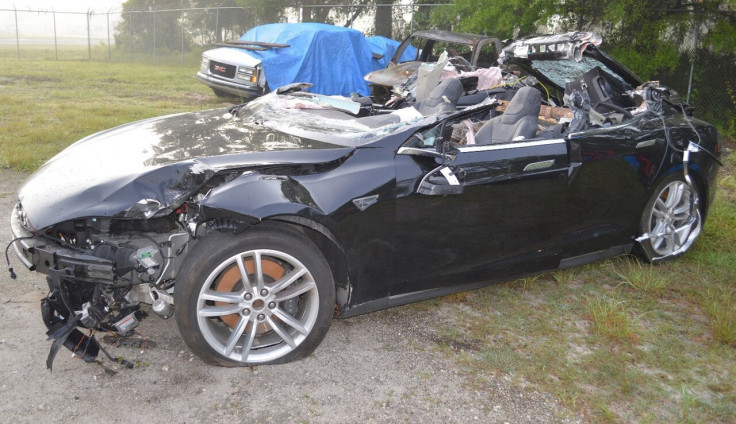
A federal judge has officially rejected Tesla's attempt to overturn a staggering $243 million (£180 million) jury verdict, marking a decisive legal defeat for the electric vehicle giant in one of the most high-profile Autopilot liability cases to date. The decision, handed down by US District Judge Beth Bloom, leaves in place a 2025 ruling that held Tesla partially responsible for a fatal 2019 collision, a case that turned on the dramatic discovery of data the company originally claimed was lost.
The ruling ends the immediate challenge to the August 2025 verdict, which found Tesla 33% liable for the crash in Key Largo, Florida. The incident, which killed 22-year-old Naibel Benavides Leon and left her boyfriend, Dillon Angulo, with catastrophic injuries, has become a focal point for critics who argue that Tesla's driver-assistance technology fosters a dangerous level of complacency among motorists.
The case has become one of the most closely watched legal challenges involving Tesla's driver-assistance technology, raising broader questions about how motorists interact with systems marketed as making driving safer yet still requiring constant supervision.
The Turning Point: Recovered Data Reveals System Failure
The trial's most explosive moment came not from witness testimony, but from the digital evidence presented by the victims' legal team. During proceedings, Tesla had maintained that it could not recover specific Autopilot data from the Model S involved in the accident. However, attorneys for the Benavides family successfully extracted the 'missing' information with the assistance of a specialist, proving the vehicle's systems had identified the hazard seconds before impact but failed to trigger emergency braking.
This revelation effectively undermined the defence's core argument that the system was not at fault. Jurors were shown that the vehicle had registered the pedestrians while continuing to accelerate through a T-junction at 60mph. For the court, this was not merely a case of driver error—the driver, George McGee, admitted to being distracted by his phone—but a demonstration that Tesla's technology was defectively designed and marketed in a way that misled users about its true capabilities.
Tesla argued during the proceedings that it could not recover critical Autopilot data from the vehicle. However, lawyers representing Benavides' family later obtained the information with the assistance of a hacker, allowing jurors to examine what the vehicle's systems recorded in the seconds leading up to the collision.
Judge Bloom agreed there was sufficient evidence for the jury to conclude Tesla shared responsibility. In her ruling, she wrote that the evidence admitted during the trial fully supported the verdict and found no basis to reduce the damages or order a new trial.
Another Fatal Tesla Crash Draws Fresh Scrutiny
The ruling comes as Tesla faces another lawsuit involving its driver assistance technology following a fatal crash in Texas earlier this month. The suit centres on the death of 76-year-old Martha Avila, who was killed after a Tesla Model 3 crashed into her home in Harris County. The driver later told investigators that Tesla's Full Self-Driving (Supervised) system had been engaged at the time of the crash.
Avila's family alleges the software was defectively designed and contributed to the collision. Tesla has disputed that suggestion. Writing on X, the company's vice president of AI software, Ashok Elluswamy, said vehicle data showed the driver manually overrode the system by fully depressing the accelerator before and after the crash. Chief executive Elon Musk similarly dismissed suggestions that the software was responsible.
The Future Of Autonomous Vehicle Liability
Judge Bloom's refusal to disturb the Florida jury's findings signals a hardening of the judicial attitude toward Tesla's software accountability. By upholding both compensatory and $200 million in punitive damages, the court has effectively signalled that corporate transparency regarding crash logs is non-negotiable.
For Tesla, the financial impact is significant, but the long-term cost may be even greater. With federal investigators at the National Highway Traffic Safety Administration (NHTSA) continuing to probe the company's driver-monitoring systems, the Key Largo verdict serves as a blueprint for future plaintiffs. As the automotive industry pushes toward broader autonomy, the Florida case stands as a reminder that when the technology shares the wheel, it must also share the responsibility.
© Copyright IBTimes 2026. All rights reserved.