EU's New Digital Border System: Thousands Denied Entry After It Tracks Overstays and Visa Violations Automatically
The EU's Entry/Exit System is causing unexpected travel disruptions
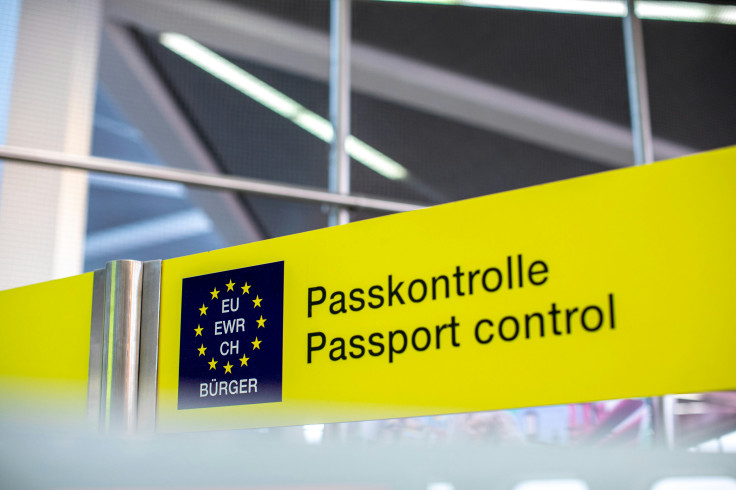
The European Union's new digital border system is already reshaping travel across Europe, and for thousands of visitors, the consequences are arriving faster than expected.
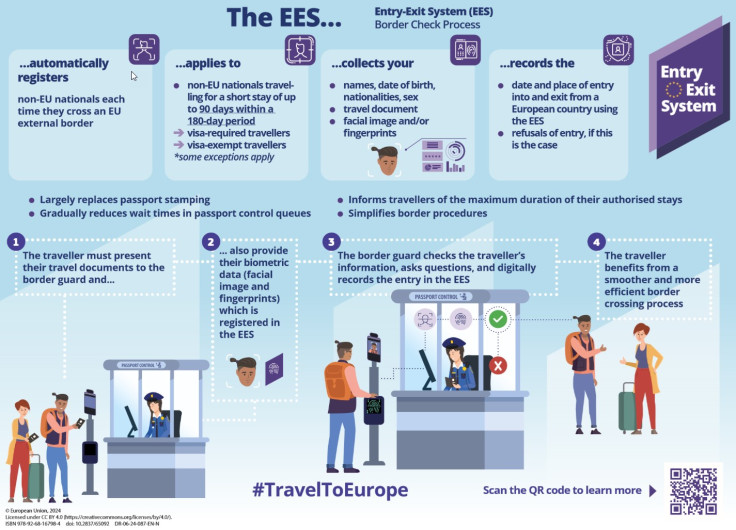
Since the EU's Entry/Exit System (EES) became fully operational in April 2026, border officials across the Schengen Area have begun automatically tracking how long non-EU travellers stay inside participating countries. The system replaces passport stamps with biometric registration, using facial scans, fingerprints, and digital travel records to monitor entries and exits in real time.
What was introduced as a modernisation effort is now triggering debate after authorities confirmed that thousands of travellers have already been flagged for overstaying visa limits or violating entry rules.
Reports from European officials and travel industry observers indicate that more than 4,000 overstayers were detected during the system's early rollout phase alone, per The Times.
A Border System That Never Stops Watching
Under the EES, nen-EU travellers entering most Schengen countries no longer receive manual passport stamps. Instead, their movements are digitally logged each time they cross an external border.
The system records biometric information and automatically calculates whether a traveller has exceeded the Schengen Area's 90 days in every 180-day period limit, which is a long-standing rule that was previously much harder to enforce consistently.
European officials say the technology is designed to strengthen border security, identify irregular migration, and detect travellers who remain in Europe beyond their authorised stay. Switzerland's migration authorities stated that the EES can automatically expose individuals who overstay permitted travel periods, according to the State Secretariat for Migrations.
For many travellers, the biggest shock is not the technology itself but the precision of the monitoring. Immigration specialists warn that even minor miscalculations involving travel dates could now trigger digital flags that remain permanently attached to a traveller's record.
Thousands Already Refused or Flagged
Early figures from the rollout show the system is already generating enforcement actions at scale. According to reports tied to the EES implementation, nearly 66 million border movements were registered during the phased launch period.
The European Commission recently released data that indicates since its soft launch in October of 2025, over 66 million non-EU citizens have been registered by the EES and roughly 32,000 refusals of entry. Hundreds of individuals were identified as potential security threats.
Travel experts say the automation is a major shift from the old passport-stamp era, where overstays could sometimes go unnoticed due to inconsistent border checks between countries. Now, every entry and exit is digitally connected.
The EU Commission's Vice-President Henna Virkkunen said in an official statement that the initiative is intended to strengthen both security and border management across the Schengen Area.
'To keep Schengen open and secure, we must modernise how we manage mobility and security risks. We are making advances in digitalisation and interoperability of large-scale IT systems', Virkkunen said.
Airports Struggle with Long Queues and Technical Problems
While the EES is being praised for tighter enforcement, the rollout has also caused disruption at several major European travel hubs.
Travellers in France, Portugal, Greece, and other countries have reported hours-long waits, malfunctioning kiosks, missed flights, and confusion over biometric registration procedures. Some airports temporarily switched back to manual checks after technical failures overwhelmed staff, per The Guardian.
The system officially became fully operational on 10 April 2026, after years of delays and testing. However, some governments reportedly struggled to prepare infrastructure in time for the launch.
Despite the backlash, EU authorities appear determined to move forward with the digital border transition.
© Copyright IBTimes 2026. All rights reserved.
- Recommended For You