Morbi Shaking Well Explained: Geologists Confirm Groundwater Recharge, 'Not Seismic Activity'
Geologists say the mysterious shaking of a well in Gujarat is a natural phenomenon caused by heavy monsoon rains, dismissing initial earthquake fears
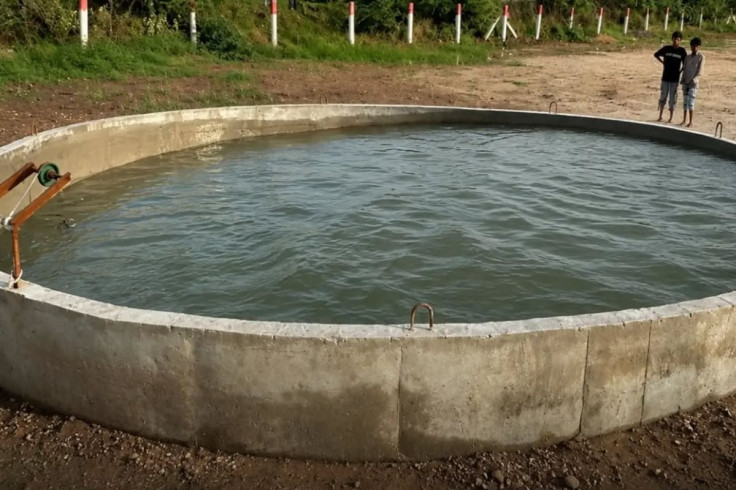
Residents in the Morbi district of western Indian state of Gujarat watched with profound concern as water in a local village well began shaking continuously, sparking immediate fears of an impending earthquake across the region.
The unusual phenomenon quickly generated viral attention on social media platforms, drawing large crowds of anxious onlookers to the site.
However, state geologists and seismic authorities swiftly stepped in to calm public anxiety, confirming that the extraordinary aquatic disturbance is entirely the result of natural groundwater recharge and compressed subterranean air following intense monsoon rains rather than seismic activity.
District Geologist JS Vadher conducted preliminary site inspections and reported no evidence of tectonic faults or underground tremors in the area, explaining that heavy downpours forced water deep into subterranean rock formations where trapped air was violently displaced upward through the water column.
The Institute of Seismological Research in Gandhinagar reinforced these findings, noting that regional monitoring networks recorded zero seismic anomalies during the incident.
Decoding The Gujarat Shaking Well Mystery
The unusual occurrence unfolded during an exceptionally active monsoon season across Gujarat, where successive low-pressure weather systems over the Arabian Sea delivered torrential rainfall to Saurashtra and Kutch.
This heavy deluge rapidly replenished local water tables, rivers, and sub-surface aquifers. As underground water levels rose sharply, the sheer volume of liquid compressed trapped pockets of air within hidden rock fractures and pore spaces beneath the earth.
The pressurised air ultimately sought an escape route, forcing its way upward through the water column of the local well and creating a sustained bubbling effect that terrified nearby villagers.
'This is not seismic activity. Prima facie, it appears that following heavy upstream rainfall, groundwater is recharging and air trapped in the pore spaces of rocks is being released, causing the disturbance in the well,' Vadher explained.
Experts at the Gandhinagar's ISR confirmed the complete absence of any active fault lines in the immediate Morbi region. Furthermore, regional monitoring stations did not detect any subterranean tremors that would correlate with the continuous aquatic disturbance.
An unusual mystery in India: water wildly swaying inside a well in Morbi, and no one can explain why
— RT (@RT_com) August 7, 2026
Strange phenomenon continues for a FIFTH DAY, baffling locals as authorities investigate pic.twitter.com/GykyazKKXi
Further Investigations Into the Gujarat Shaking Well Mystery
Despite the plausible geological explanation provided by initial geological assessments, local authorities remain cautious. Morbi District Collector Swapnil Khare confirmed that the state government is taking no chances with public safety, prompting further analysis.
'We have informed the Gujarat government about it, and a team from Gandhinagar will visit the site for further investigation,' Khare said. This dedicated team of scientists will examine a variety of secondary factors that might explain why this specific water source experienced such significant movement compared to others in the district.
While officials are confident that the release of trapped air is the primary cause, the specific mechanics remain a subject of genuine scientific curiosity. Investigators will study whether the unique geometric shape and depth of the structure actually amplified subtle underground pressure waves.
This precise phenomenon, known as a well seiche or resonance, can sometimes turn a standard groundwater disturbance into a widely observed phenomenon.
Another distinct possibility being explored is the potential presence of a large underground cavity or specific rock fracture directly connected to the water source. If such a deep geological connection exists, it would make the structure uniquely responsive to sudden changes in subsurface pressure.
Such groundwater-related anomalies are admittedly uncommon, but they do occasionally manifest when aquifers are suddenly overwhelmed by intense precipitation.
The forthcoming technical analysis from Gandhinagar experts is fully expected to map the exact geological processes at play.
The water in Morbi will likely continue its rhythmic movement until those final scientific reports are published.
While official reports confirm that no structural danger exists, ongoing scientific monitoring aims to provide complete clarity as the region manages the aftermath of record seasonal precipitation.
© Copyright IBTimes 2026. All rights reserved.
- Recommended For You