Is Hillary Clinton More MAGA Than Donald Trump? Real Reason Joe Rogan Now Feels 'Betrayed' By POTUS
When a onetime ally starts replaying your rivals' toughest speeches, the myth of singular toughness on immigration begins to fray.
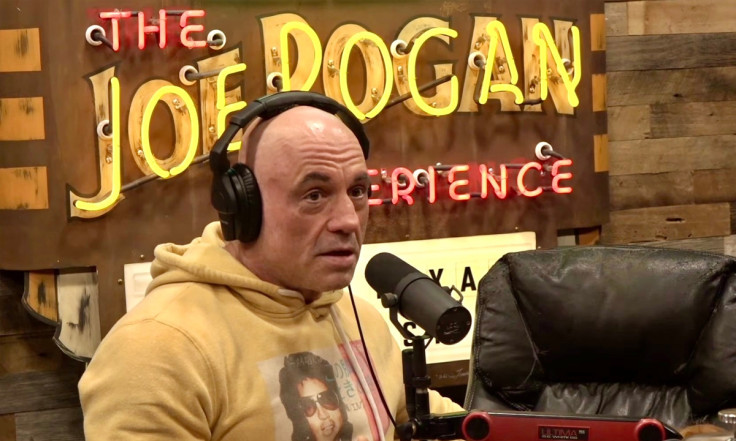
Joe Rogan has claimed on his latest podcast in Austin that Hillary Clinton and Barack Obama once sounded 'more MAGA than MAGA' on immigration, arguing that both took a tougher line on illegal border crossings than Donald Trump did during his first year in office.
Rogan is slowly distancing himself from the president, whose 2024 White House bid he previously supported. The stand‑up comic and UFC commentator has turned his vast podcast audience into an unconventional political focus group, and his recent commentary has moved from admiration of Trump's anti‑establishment pitch to open frustration with his record on immigration and foreign policy.
Joe Rogan: " We've played clips of Hillary Clinton from 2008 and she's more MAGA than MAGA…Her take on the border was like hardcore… And Obama deported more people than Trump did." pic.twitter.com/tpZ0WOAoul
— Cesspool (@CesspoolOnline) March 26, 2026
Joe Rogan Replays Hillary Clinton, Donald Trump And 'Hardcore' Border Talk
Rogan's remarks on Wednesday about Clinton and Trump came during a discussion on 'The Joe Rogan Experience' with guest Bill Thompson, a former US Army chief. Rogan dug up footage from Clinton's first presidential run, highlighting her comments on illegal immigration and presenting them as far more severe than many voters might remember.
'She's more MAGA than MAGA,' Rogan told Thompson, describing Clinton's earlier stance as 'hardcore.' He summarised her position as: if you have been convicted of a crime, you are deported; if you stay, you face a stiff penalty, must get in line, and are required to learn English. According to Rogan, the crowd in the clip he watched responded with loud approval.
He framed this as what he called a 'hardcore right‑wing 2026 perspective,' a slightly muddled attempt to say that what Clinton once advocated would now be seen as comfortably inside the Make America Great Again camp. Thompson agreed and added that Obama had also taken a strict approach, saying: 'Obama did it too in 2012.'

Rogan then moved from rhetoric to numbers. He noted that Obama deported more people in the first year of his second term than Trump managed in his first year as president. That comparison has been used before by immigration advocates and Trump critics, but hearing it from a former Trump booster with an audience in the millions lands differently.
According to data Rogan cited, about 409,849 people were deported in Obama's first year of his second term, compared with fewer than 260,000 during Trump's first year in office. Critics of the current administration have repeatedly used those figures to argue that Trump's enforcement record, while noisy, did not always match the scale seen under Obama.
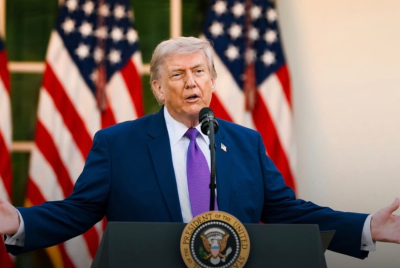
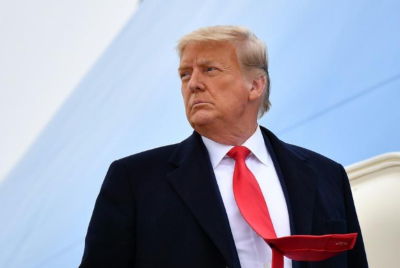
Deporting undocumented immigrants and tightening the southern border have remained central priorities for Trump, both in his first term and since returning to office last year. Supporters argue that beyond headline deportation totals, he has focused on deterrence, tougher asylum rules and new restrictions at ports of entry. Nothing clarifies how those claims stack up across the entire period, so any broader comparisons should be treated with caution.
From Podcast Ally To Feeling 'Betrayed' By Trump
If the immigration segment sounded like an uncomfortable history lesson for Trump loyalists, Rogan's wider comments suggest a deeper shift. Earlier this month, in a separate episode with journalist Michael Shellenberger, he said he now feels 'betrayed' by the president over the current conflict involving Iran.
Rogan told Shellenberger that the confrontation appears to cut against Trump's campaign‑trail promise to end stupid, senseless wars. 'It just seems so insane based on what he ran on,' Rogan said, arguing that many of Trump's supporters believed they were voting to avoid exactly this kind of foreign entanglement. He described the Iran situation as a war 'we can't even really clearly define why we did it.'
Rogan repeatedly stresses that he does not identify with either major US party, and he has never fit neatly into conventional ideological boxes. That has made his praise valuable to Trump in the past. When Trump appeared on Rogan's podcast in October 2024, the episode drew heavy coverage, feeding the narrative that the former president could still command the attention of younger, sceptical voters who distrust mainstream media.

In the months since that appearance, however, Rogan has become markedly more critical of Trump's decisions and rhetoric. The immigration figures comparing Obama and Trump have become a go‑to example in his argument that the president's image as uniquely tough on the border is more marketing than measurable reality. Nothing in the report suggests the Trump camp has formally responded to Rogan's latest claims.
Rogan has also taken aim at what might seem like softer targets. He recently dismissed the idea of a UFC event at the White House, floated as a symbol of Trump's alliance with the sport, as feeling like a gimmick. He also attracted criticism for suggesting Trump 'doesn't have much to lose' because of his age, a line some listeners took as morbid, others as bluntly pragmatic.
The relationship now looks strained. A second Trump visit to The Joe Rogan Experience appears unlikely, at least for the foreseeable future, given Rogan's public frustration over Iran and his insistence that past Democratic leaders sounded more hardline on immigration than the current Republican standard‑bearer.

For Clinton and Obama, meanwhile, Rogan's segment functions as an awkward reminder that political memory is selective. Speeches that once played as centrist toughness on the border now resurface in an era defined by MAGA slogans and wall‑building chants, inviting listeners to ask who really shifted and who simply forgot.
Nothing confirms whether Rogan's comments will have any measurable political impact, particularly among undecided or younger voters, so any such speculation should be taken with a grain of salt.
© Copyright IBTimes 2025. All rights reserved.
- Recommended For You