

Two Cousins Built a Merch Business From a Spare Room: Delivered a 94,000-Tote-Bag Order
The Merch Studio's journey from humble beginnings to corporate supplier
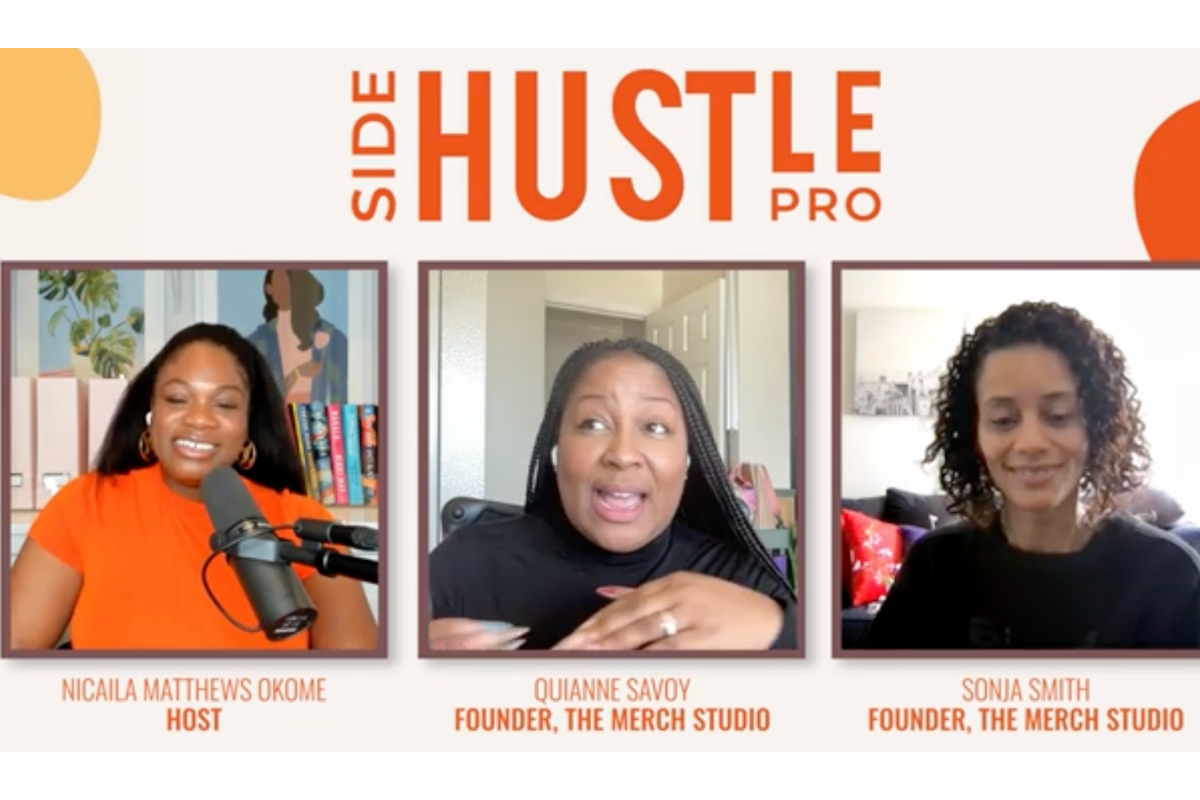
Kiani Savoy and Sonja Smith, the first cousins behind The Merch Studio, have filled a single order for 94,000 tote bags. They built the business out of a spare room, and for its first three years they paid themselves nothing.
The cousins built and ran the company largely from home. What began as a side project between relatives grew into a branded merchandise firm supplying corporations with onboarding kits, custom apparel, and event giveaways.
Savoy and Smith launched the company in 2017, incorporating in Ohio and combining backgrounds that rarely share a desk. Savoy came from marketing, events, and public relations, having worked as a publicist and later as an event director at a non-profit. Smith brought graphic and web design, plus a short spell inside a merchandise firm that taught her how the supply chain fits together. They had spotted a gap between the branded goods they admired and the forgettable freebies most companies handed out.
Money came slowly, and by design. Savoy kept her non-profit salary for about three years after founding the company, leaving only in October 2020, months into the pandemic. 'We did not pay ourselves for the first maybe three years,' she told the Side Hustle Pro podcast, adding that a credit card covered much of the early cost. The company took no outside investment and did not run payroll until 2022. 'I'm actually on payroll,' Savoy recalled thinking when it finally did.
How The Merch Studio Turned Gifts Into Clients
The growth plan leaned on giving product away. Rather than buy advertising, the cousins treated their own merchandise as the marketing budget, posting samples to prospects and sponsoring items for events. One collaboration, a sheet of stickers for a planner, cost between $30 (£23) and $50 (£38) to produce. After the client shared it online, orders arrived within minutes, the founders said, landing what was then their biggest job.
Relationships did the rest. A mentor who had once sold products to Savoy introduced the studio to what became one of its largest accounts. At the time, its biggest customer had spent around $40,000 (£30,000). Savoy, who describes herself as a serial entrepreneur, put the approach in a line: 'Sales is kind of everything you say, everything you do.'
The broader industry is substantial. US promotional products distributors booked a record $27.1 billion (£20.4 billion) in sales in 2025, according to Promotional Products Association International, which has measured the sector since 1965. Growth was a slim 1.3 percent, behind inflation, as tariffs and freight costs squeezed margins. Small distributors, those turning over less than $2.5 million (£1.9 million) a year, account for close to half of the total.
What Running The Merch Studio Costs
For all the volume, the setup stayed lean. Savoy said the company had no dedicated warehouse. 'I actually don't have a warehouse,' she said, describing three spaces in her home given over to stock. She was, she added, hunting for warehouse space, one of several steps up in overhead she called daunting.
The team was small. The two cousins worked with a pair of freelance designers and contract finance help, drafting in temporary hands to assemble and ship large kits. Alongside curating and manufacturing custom products, the studio built clients' online shops and handled fulfilment, sparing customers the need to hold stock.
Scale had not simplified the maths. A run of 100 pens, Savoy said, could demand as much attention as a mass order because smaller clients scrutinise every colour and detail. 'It takes the same amount of work,' she said, 'as it does to work on a really huge order.'
After years of taking whatever came in, the cousins had begun forecasting and setting targets. January stayed quiet, though it had repeatedly produced one outsized order. It was in January that Smith produced those 94,000 totes, the order that carried the slow month.
Savoy said the studio was preparing to make its first hires, across sales, finance and production, after years of running on the two founders and freelance help. 'Hiring staff is so very scary,' she admitted, though a mentor had urged her not to fear the added overhead, telling her his own business had grown each time he took on more space.
© Copyright IBTimes 2026. All rights reserved.