Why Is Trader Joe's Mini Tote Bag So Popular? How a $3 Bag Has People Lining Up for Hours
Exploring the unexpected popularity of Trader Joe's miniature tote bags and the consumer behaviour driving the trend
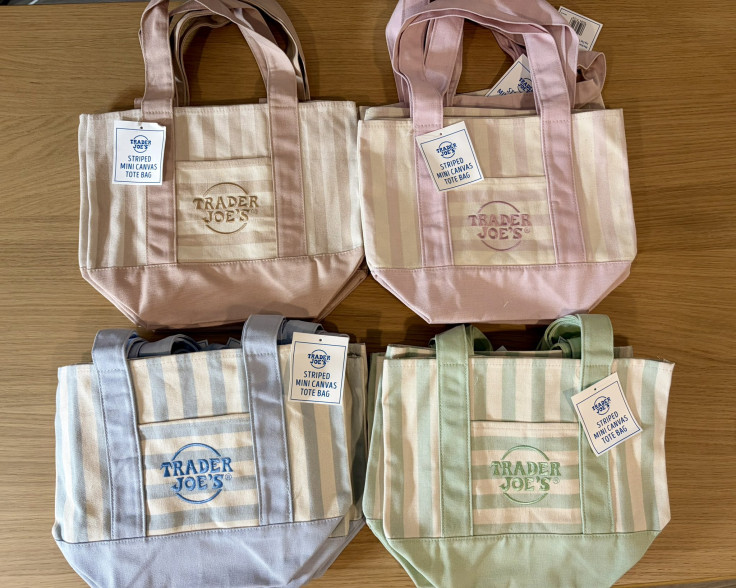
A miniature Trader Joe's tote bag that costs just $2.99 is once again causing chaos outside stores across the United States.
From New York to California, shoppers have shared videos of packed queues and sold-out shelves, while social media users debate whether the viral buzz is a clever marketing success, a collectable obsession or simply the latest internet phenomenon. The latest design, a pastel striped version released on 17 June, is the third consecutive annual release of the bag, and demand shows no sign of slowing.
But what is really driving the buzz? Is it social media hype, fear of missing out, clever scarcity, or something else entirely? To find out, we spoke to consumer behaviour specialists and examined new shopper data.
The Internet Is Just As Confused
Videos shared on Instagram showed queues stretching several blocks outside stores in New York and Los Angeles. At some locations, shoppers reported arriving before opening time only to find hundreds of people already waiting.
One Instagram user commented: 'Here in one NYC store that I asked, lines were many blocks long. The store opened at 8:30am and was sold out by 8:45am.'
The trend has also sparked debate on Reddit, where users have been trying to understand the appeal. Some compared the bags to Stanley Cups and Labubu dolls, arguing they are simply the latest social media-fuelled trend. Others insisted Trader Joe's bags have had a genuine cult following for years because they are sturdy, practical and cheap. One user recalled being offered $50 (£37.40) for theirs while still shopping.
Why Has the Tote Bag Become So Popular?
To understand why a $2.99 (£2.24) tote bag is generating queues around the block, we reached out to consumer behaviour specialists.
Shampaigne Graves, Women's Consumer Expert and founder of Women's Research Solutions, believes the low price point is doing much of the heavy lifting.
'The price point is doing a lot of quiet work here,' she said. 'At $2.99, the bag isn't a financial decision, it's a permission slip.'
According to data firm Numerator, shoppers are not necessarily buying the bags because they need them. After surveying more than 1,000 verified mini tote buyers, the company found that 50 per cent purchased the bag because it was cute or stylish, while 44 per cent bought it as a gift. A further 34 per cent described it as a fun treat, while 31 per cent said it felt inexpensive enough to try.
'That's not a rational purchase decision, it's an emotional one dressed up as a bargain,' Graves said. 'It delivers a real hit of joy without triggering the guilt-audit women run before bigger purchases.'
The Tote Has Become a Symbol of Taste
Fashion and design psychologist Sarah Seung-McFarland also believes it goes beyond social media.
'These bags have become a way for people to communicate something about their taste, find community, and feel connected to a shared cultural moment,' she said. 'When people see others carrying them, it creates a kind of I-found-my-tribe moment — a signal that says "we're in the know" together.'
Seung-McFarland said the bag's simple design also plays into the psychology of style. 'The simple, classic aesthetic is reminiscent of understated sophistication associated with those who value quality, simplicity, and a curated lifestyle. The bag becomes more than a functional object — it becomes a symbol of taste.'
Is Social Media Fuelling the Trend?
Social media has undoubtedly amplified the phenomenon. According to Numerator, more than half of mini tote buyers said the bag's viral status influenced their decision to purchase one, rising to 68 per cent among Gen Z buyers and 58 per cent among Millennials.
However, Graves argues social media alone does not explain the obsession. 'Scarcity is the engine, but most buyers aren't actually chasing the resale hype,' she said. 'The viral resale narrative is mostly a media story, not a consumer one.'
Numerator found that nearly half of buyers first noticed the totes in-store, compared with 29 per cent who first heard about them through social media. In 2025, 9.6 per cent of all Trader Joe's shoppers purchased a mini tote, representing 3.4 per cent of all US households.
Are People Buying Them To Resell?
Much of the online attention focuses on resale listings, with some rare versions listed online for as much as $5,000 to $7,000 (£3,740 to £5,236). Yet Numerator's research paints a very different picture.
Only 4.2 per cent of buyers purchased a mini tote specifically to resell it. Among those who did, the average resale price was just $5.79 (£4.33), around double the retail price, but far below the headline-grabbing listings. In reality, 41 per cent use their bags for shopping and errands, 30 per cent use them as an everyday bag, and 20 per cent keep them as collectables.
What Can Other Retailers Learn From Trader Joe's?
Marketing consultant Silva Petrosyan believes the tote's appeal is rooted in Trader Joe's wider identity. 'Trader Joe's Mini Tote isn't just a bag; it represents a unique brand identity,' she said. 'Everything they do says, "we're different, and we're proud of it."' For other retailers, she said the lesson is clear: viral buzz is built long before a product takes off online. 'You can't create this kind of buzz with a marketing campaign. The buzz stems from years of building a strong, consistent brand.'
Eric Turney, owner and sales and marketing director at The Monterey Company, agreed. 'Trader Joe's has a loyal customer base that enjoys discovering unusual products, so shoppers feel like they are finding something special rather than being sold another branded item,' he said. 'A promotional product does not need to be expensive to attract attention. It needs to feel distinctive, useful, easy to share, and connected to the personality of the brand.'
Whether people see the mini totes as a practical accessory, a collectable or simply another social media trend, the buzz shows how a cheap product can become powerful when it feels personal, limited and easy to share.
© Copyright IBTimes 2026. All rights reserved.
- Recommended For You