World War 3 Fears: Chilling Threat To Strike European Ships 'By The Help Of God'
The rhetoric from Tehran has intensified fears of a 'World War 3' scenario, particularly as the conflict moves beyond the Persian Gulf and into the Indian Ocean.
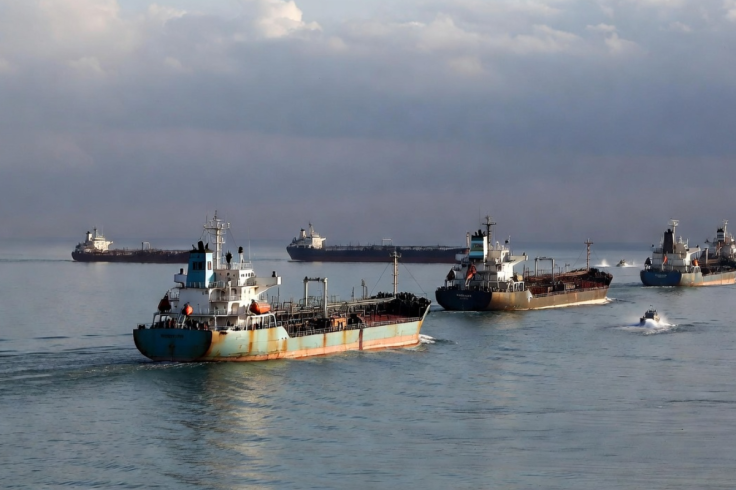
The risk of a global maritime conflict escalated sharply on 5 March 2026, as Iran's Islamic Revolutionary Guard Corps (IRGC) claimed responsibility for a missile strike on an American oil tanker in the northern Persian Gulf.
In a statement broadcast via state media, the IRGC asserted that the vessel was currently 'on fire' following the attack. This follows a direct warning that Iran now considers the Strait of Hormuz a restricted military zone. The IRGC declared that any commercial or military vessels belonging to the United States, Israel, or European nations would be 'struck by the help of God' if they attempt transit.
While the Pentagon has not yet confirmed a specific fire on a US-flagged vessel, the UK Maritime Trade Operations (UKMTO) reported an explosion and oil spill involving a tanker 30 nautical miles southeast of Kuwait at 22:40 GMT on 4 March. These developments mark the first major Iranian retaliation since the start of the 2026 Iran war and have intensified World War 3 fears.
#BREAKING | IRGC claims attacking US oil tanker in northern Persian Gulf
— WION (@WIONews) March 5, 2026
Iran: We have the right to control passage through Hormuz
Iran: Will target US, Israel, European ships in the region@ShivanChanana joins @vidurkat with more details pic.twitter.com/2FTRXAmiPW
The current maritime crisis was triggered by the deadliest naval engagement between the US and Iran since the 1980s. On 4 March 2026, a US Navy nuclear-powered submarine fired a Mark 48 torpedo to sink the Iranian frigate IRIS Dena in international waters approximately 40 miles off the coast of Galle, Sri Lanka.
Iran's Threat To Shipping in Strait of Hormuz
In a message carried by Iranian state media and reported by Reuters, the IRGC said the tanker was hit by the 'naval forces of the Spaah' in the northern Persian Gulf and was 'currently on fire.'
The statement asserted that, 'during a time of war,' transit rules through the Strait of Hormuz would be set by Iran, and warned that military and commercial vessels 'belonging to the United States, the Zionist regime, European countries, and their supporters' would not be allowed to pass.
Iran's Revolutionary Guard says it has hit a U.S. tanker in the northern part of the Persian Gulf and the ship is on fire pic.twitter.com/jkjyB08lSc
— Furkan Gözükara (@FurkanGozukara) March 5, 2026
The threat was explicit, with the IRGC adding that any such vessel detected would 'certainly be struck by the help of God.'
A separate report, carried in an Israeli outlet's live updates, said the Iranian claim 'may be linked' to a tanker attack off Kuwait cited by the UK Maritime Trade Operations centre.
Aftermath: The Warship Sinking Off Sri Lanka
The tanker claim follows the far more concrete and far deadlier episode off Sri Lanka's coast. The Associated Press reported that Sri Lanka's navy recovered 87 bodies and rescued 32 people after an Iranian warship was sunk in international waters near the island.
The Guardian reported that US Defence Secretary Pete Hegseth described the Iranian vessel as the Islamic Republic's 'prize ship' during a Pentagon briefing, and said it was the first US sinking of an enemy ship with a torpedo since World War II.
Iranian Foreign Minister Abbas Araghchi, meanwhile, posted a stark warning on X, saying, 'Frigate Dena, a guest of India's Navy carrying almost 130 sailors, was struck in international waters without warning.'
Iranian Foreign Minister Araghchi:
— Clash Report (@clashreport) March 5, 2026
Frigate Dena, a guest of India's Navy carrying almost 130 sailors, was struck in international waters without warning.
Mark my words: The U.S. will come to bitterly regret precedent it has set. pic.twitter.com/fewej6ELrz
🔥 Iran’s Revolutionary Guard says it struck an oil tanker passing through the Strait of Hormuz
— Anadolu English (@anadoluagency) March 2, 2026
🚢 The IRGC claims two unmanned drones hit the vessel, belonging to US allies, which it says was 'illegally' passing through the strategic waterway https://t.co/ZMgMruMVjm pic.twitter.com/IeSwLG5zuE
He followed with a line that has been repeated widely since, 'Mark my words: The US will come to bitterly regret (the) precedent it has set.'
The rhetoric from Tehran has intensified fears of a 'World War 3' scenario, particularly as the conflict moves beyond the Persian Gulf and into the Indian Ocean. Indian authorities have expressed 'deep concern' regarding the proximity of the US-Israeli strikes to their maritime borders, though they have stopped short of condemning the American action.
As of 5 March, the US military has claimed to have destroyed more than 20 Iranian naval vessels and one submarine.
Following the IRGC's threat to strike European ships, maritime traffic through the Strait of Hormuz has effectively ground to a halt, with the impact on global energy markets being immediate and severe.
© Copyright IBTimes 2026. All rights reserved.
- MOST POPULAR IN Trending