Iran Offers Europe a Hormuz Lifeline — and the Price Could Be the Dollar
Iran's proposal to negotiate transit access through the Strait of Hormuz could reshape global energy dynamics and challenge the petrodollar system.
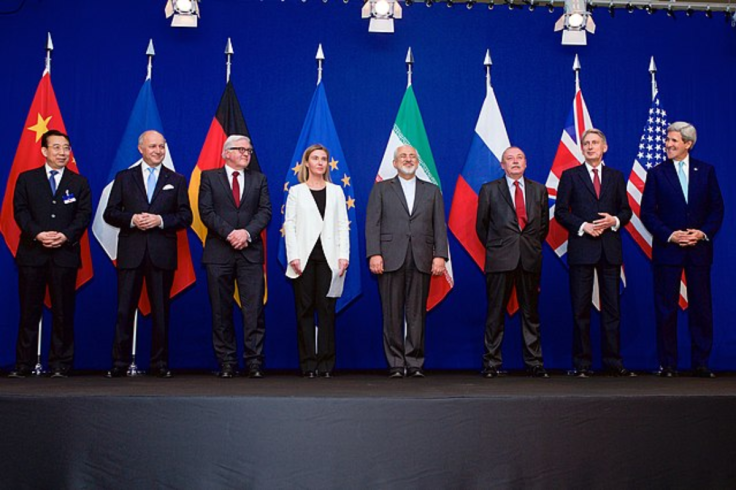
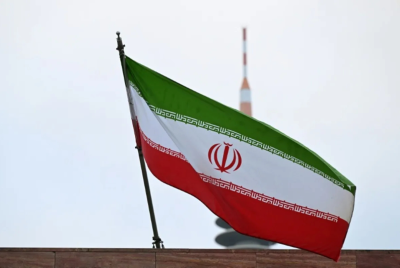
Iran has extended an offer to European, Asian, and Arab nations to negotiate transit access through the Strait of Hormuz — a waterway it has effectively shut down since early March following joint US-Israeli strikes on Tehran. The offer, announced on 2 April by Iran's Head of Government Information Council Elias Hazrati on state television, sounds like a diplomatic off-ramp from a devastating energy crisis. It may be something else entirely.
Speaking on air, Hazrati said Iran 'fully controls the Strait of Hormuz' and declared that Tehran had decided it 'may announce an agreement on the Strait of Hormuz,' inviting countries that wish to use it to 'conclude an agreement with us.' For a Europe already contending with surging energy costs, the offer is difficult to dismiss. But the financial conditions attached to any such deal could carry consequences far beyond the shipping lane itself.
A Crisis Europe Can No Longer Ignore
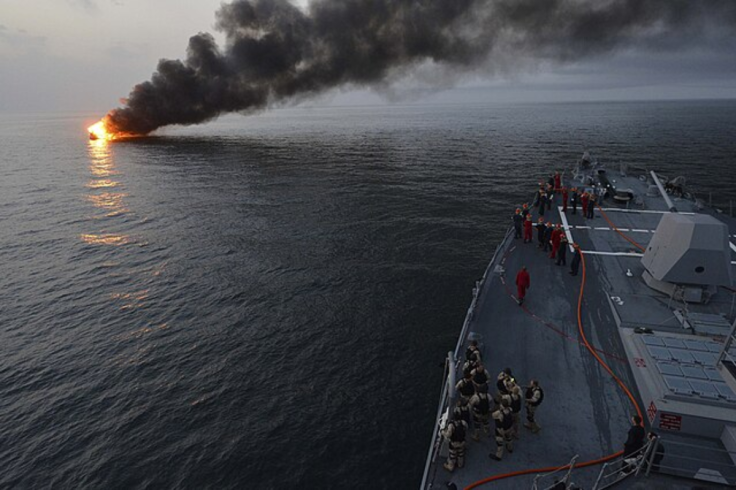
The Strait of Hormuz, at its narrowest just 21 miles wide, handles roughly 20 per cent of global oil and liquefied natural gas supplies under normal conditions. Since Iran's Islamic Revolutionary Guard Corps declared it closed to US- and Israeli-linked vessels in early March, Brent crude surged above $100 per barrel (approximately £79 per barrel) by 8 March 2026 for the first time in four years, peaking at $126 per barrel (approximately £99 per barrel). The International Energy Agency has called the disruption the largest supply shock in the history of the global oil market.
For Europe, the fallout has been severe. The European Central Bank warned that a prolonged blockade risks pushing energy-dependent economies, including Germany and Italy, into technical recession by the end of 2026. ECB Governing Council member Fabio Panetta, speaking at a conference in Rome on 2 April, said the conflict was already causing 'unprecedented disruptions in global energy supply chains,' adding that even a swift end to the war would not undo its economic damage. The ECB's own projections point to eurozone inflation reaching 3.1 per cent in the second quarter of 2026, with a recovery in energy supply potentially not arriving until 2027.
More than 40 nations, including several EU member states, joined a UK-hosted virtual coalition on 2 April to discuss strategies for securing free passage once active hostilities ease. British Foreign Secretary Yvette Cooper described Iran's conduct as 'holding the global economy hostage,' while EU High Representative Kaja Kallas called the restoration of 'toll-free freedom of navigation' an urgent priority. No joint statement was issued from the meeting, and no operational decisions were taken.
The Dollar Question
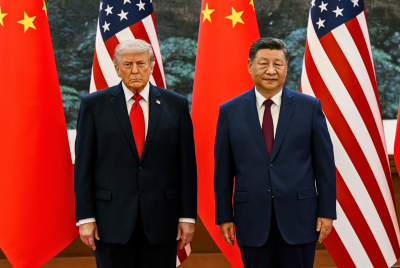
Beneath the energy emergency lies a more structural concern. A senior Iranian official told CNN that Iran is considering allowing a limited number of oil tankers to pass through the strait on the condition that cargo is traded in Chinese yuan, not US dollars. The official said the potential move is part of Tehran's plan to manage the controlled flow of tankers through the waterway. At least two vessels have already paid transit fees in yuan.
The petrodollar system — born from a 1974 arrangement under which Saudi Arabia and other Gulf states agreed to price oil in US dollars and reinvest surpluses in American assets — has underpinned US financial dominance for over five decades. In a research note, Deutsche Bank strategist Mallika Sachdeva wrote that the conflict 'tests the security-for-oil pricing system which has maintained dollar-based global oil pricing since the 1970s,' warning the war could be remembered as a key catalyst for erosion in petrodollar dominance, and the beginnings of the petroyuan.
Gregory Brew, a senior Iran and oil analyst at the Eurasia Group, said that if Iran manages to take permanent control of the Strait, it would be 'a colossal win' for the country. 'It's a massive strategic win, given that Iran has demonstrated that it can close the strait,' Brew said, adding that a long-term hold on the waterway would leave Tehran more powerful than it was before the conflict began.
🚨 IRAN JUST OFFERED EUROPE A HORMUZ DEAL. YOU HAVE NO IDEA WHAT THEY JUST TRIGGERED. 🚨
— Harris (@Harrisbro777) April 3, 2026
On the surface: Iran offered the EU transit access through the Strait of Hormuz.
Sounds like a small diplomatic move. Standard geopolitics.
It is not. This is a goddamn financial nuclear… pic.twitter.com/7bNUHxakxB
How Far Does the Threat Go?
Analysts are divided on whether the yuan-for-passage arrangement constitutes a genuine threat to the dollar's long-term status. Financial analysts note that the dollar's position rests on the depth and liquidity of US financial markets, a foundation no alternative currency can yet match, and that the offshore dollar credit market grew from $2.5 trillion (approximately £2 trillion) in 2000 to $14.2 trillion (approximately £11.1 trillion) by last year. Others have cautioned that the dollar is not about to be dethroned overnight, noting that China still maintains capital controls and that many nations, even those critical of US dominance, are reluctant to swap one monetary dependency for another.
What the crisis does, most agree, is accelerate a shift already underway: Russia has moved toward yuan-based energy settlements with China, India has tested non-dollar payment channels with sanctioned partners, and BRICS nations have continued to explore alternatives to dollar settlement. The US national debt crossed $39 trillion (approximately £30.5 trillion) on 18 March 2026, weeks into the war, at a moment when interest costs are already projected to become the fastest-growing line item in the federal budget for decades ahead. Whether or not Iran's transit offer to Europe leads to a formal deal, the willingness of nations to explore non-dollar payment mechanisms at the world's most critical energy chokepoint marks a shift that economists and central bankers are watching closely, unfolding at a rare convergence of energy dependency, war, and currency politics in a single narrow waterway.
© Copyright IBTimes 2026. All rights reserved.
- Recommended For You