

Jeffries Warns Against Democratic Infighting as Progressives Demand Action on Gaza and Medicare
Hakeem Jeffries urges Democratic unity after winning his speaker nomination as progressives demand action on Gaza, Medicare for All and US aid to Israel
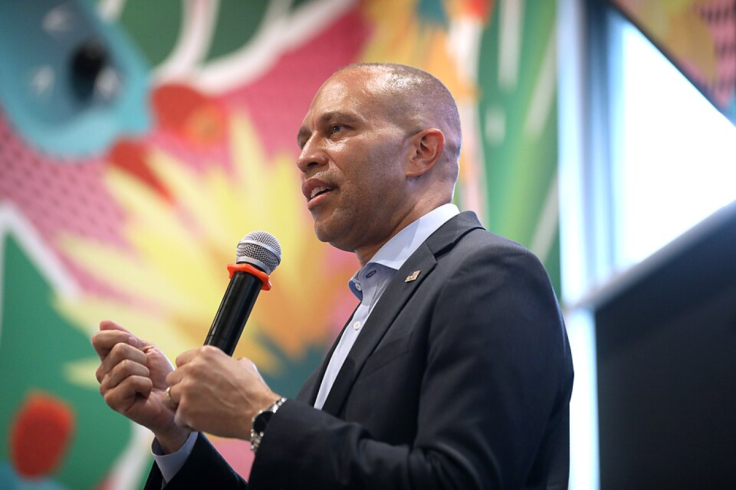
Hakeem Jeffries is on course to become the first Black speaker of the US House after winning the Democratic nomination by 251 votes to 11, but he has urged his party to stop fighting itself as progressives demand action on Gaza and healthcare.
The New York Democrat secured the votes in a closed-door ballot on Wednesday, 18 November. Democrats are preparing to take control of the chamber after their sweeping midterm election victory.
Jeffries, currently House minority leader, must still win the full House vote scheduled for 3 January 2027. The caucus ballot selects the party's candidate but does not elect the speaker. That decision rests with the full House, where Jeffries will need to secure enough support in January.
Asked about the opposition, Jeffries told reporters: 'Our job is to fight MAGA extremism, not each other.' He said the party needed to deliver meaningful change for Americans.
Progressives Demand Commitments on Gaza and Medicare
Seven incoming progressive Democrats acknowledged progress in talks with Jeffries but demanded firmer policy commitments in a joint statement. They cited Medicare for All, immigration enforcement, removing money from politics and ending what they called 'the genocide in Gaza'.
The signatories were Claire Valdez and Darializa Avila Chevalier of New York, Adam Hamawy of New Jersey, Chris Rabb of Pennsylvania, Melat Kiros of Colorado, Donavan McKinney of Michigan and Frederick Haynes of Texas.
Six of the lawmakers voted against Jeffries. Haynes missed the ballot because he was ill, according to his spokesperson. Eleven Democrats opposed the nomination overall.
Ohio representative-elect Don Leonard also opposed Jeffries. He told CNN he wanted commitments to pursue a constitutional amendment addressing the Supreme Court's Citizens United campaign finance ruling and to hold a vote on US aid to Israel.
Valdez said she was standing up for constituents who had elected her earlier in November. She indicated that conversations with Jeffries were continuing ahead of the January vote.
The Democratic leader has moved towards some progressive healthcare priorities. On 13 November, he backed lowering the eligibility age for Medicare, adding dental, vision and hearing benefits, and providing universal healthcare coverage for children.
Those proposals, however, do not constitute an explicit endorsement of Medicare for All. The distinction leaves the progressives' central demand for a broader healthcare system unresolved.
Democratic Leaders Urge Unity After Speaker Vote
Jeffries met incoming sceptics and representatives of the party's main factions before the ballot, including the Congressional Progressive Caucus, New Democrat Coalition and Blue Dog Democrats. Details of their private discussions have not been made public.
Michigan Democrat Hillary Scholten warned that arguments over leadership could undermine the party's election promises. Former speaker Nancy Pelosi played down the opposition, pointing to Jeffries' overwhelming support.
Veteran Democrat Jim Clyburn endorsed Jeffries before the vote, saying he was interested in 'headways and not headlines', according to CNN's account of the meeting.
Democrats also chose Katherine Clark as incoming majority leader and Pete Aguilar as majority whip. Clark is set to become the first woman to hold her position, while Aguilar will be the first Latino in the House's third-ranking leadership role.
In the day's contested leadership race, Illinois representative Lauren Underwood defeated Sara Jacobs of California for Democratic caucus vice-chair. Underwood will become the highest-ranking Black woman elected to congressional leadership.
Before that vote, Underwood said: 'Being wealthy is not the primary or important qualification for leadership', according to two people cited by CNN.
© Copyright IBTimes 2026. All rights reserved.