

Trump's Housing Rules Risked Penalising Domestic Abuse Shelters for Not Forcing Survivors Into Services
Judge strikes down HUD's £3 billion homelessness funding overhaul after advocates warned it could endanger survivors
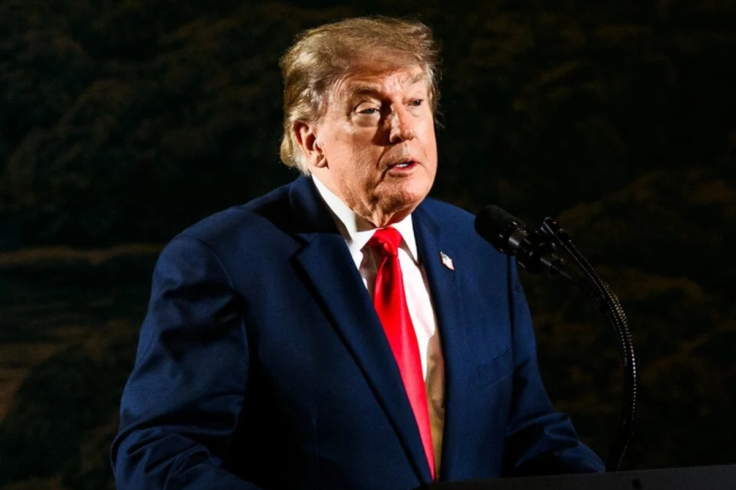
A federal judge has struck down the Trump administration's overhaul of a £3 billion ($4 billion) homelessness programme, including a proposed £980 million ($1.3 billion) funding shift that advocates warned could put survivors of domestic abuse at risk of losing safe housing.
Advocates said the plan could pressure providers to make housing conditional on taking part in services, potentially clashing with federal rules that make support for abuse survivors voluntary.
Court Rules HUD Went Beyond Its Authority
US District Judge Mary McElroy in Providence, Rhode Island, ruled on Friday that the Department of Housing and Urban Development (HUD) acted unlawfully in reshaping its Continuum of Care programme, Reuters reported.
The administration had sought to shift funding away from permanent housing and towards temporary housing and supportive services, including a plan to set aside £980 million ($1.3 billion) of the money Congress appropriated for fiscal year 2026 for transitional housing and supportive service-only grants.
McElroy found that HUD exceeded its authority under the McKinney-Vento Homeless Assistance Act by adding criteria that let it bypass reviews of existing projects' performance. 'This residual clause cannot be read as allowing HUD to nullify the other congressionally established mandatory factors,' she wrote.
She also struck down a provision allowing HUD to disqualify applicants that do not adequately promote 'self-sufficiency', along with a restriction on activities aimed at drug users, such as needle exchanges. HUD must let applicants resubmit by 1 December and award funding by 31 December.
Advocates Warned of Risks to Survivors' Housing
Domestic violence groups had raised alarms over the administration's approach. In a formal comment filed in October, the National Network to End Domestic Violence (NNEDV) and 88 other organisations opposed a HUD notice proposing extra incentives for transitional housing and for requiring people to participate in supportive services.
The groups warned that 'conditioning housing on participation in supportive services would effectively exclude many survivors from housing'. They said such requirements would clash with federal family violence rules, which state that providers 'cannot compel or force individuals to come to a shelter or participate in counseling or other services'.
That conflict, the coalition argued, could force domestic violence programmes to rewrite their policies or give up funding. It also warned that tracking participation could breach confidentiality protections for survivors. 'Housing instability is among the most reliable predictors of continued violence,' the letter said.
HUD Says It May Appeal
HUD Secretary Scott Turner said the agency reserves the right to appeal. He said the ruling 'disrupts $4 billion (£3 billion) for our most vulnerable, just days before funding awards were set to be made', and that HUD is no longer in the business of 'throwing taxpayers' money at a status quo'.
The case was brought by 22 mostly Democratic-led states, the District of Columbia and advocacy groups including the National Alliance to End Homelessness, which said the ruling 'protects the ability of communities and service providers to compete fairly for essential funding'.
McElroy also ruled against HUD's earlier funding changes in 2025 and again earlier this year, according to Reuters. A federal appeals court lifted that order, and the challenge was renewed on different grounds.
The earlier changes had faced challenges over conditions that states said would penalise providers for recognising gender identity and disadvantage programmes for people with mental disabilities or substance use disorders.
After McElroy's December 2025 injunction, California Attorney General Rob Bonta said: 'If the Trump Administration wants to stop losing in court, it should stop breaking the law.'
© Copyright IBTimes 2026. All rights reserved.