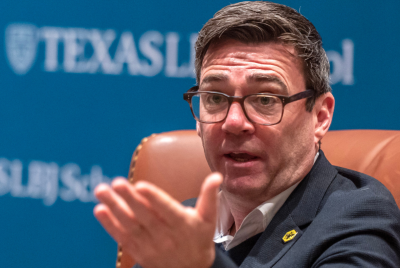
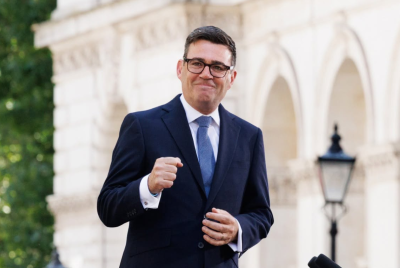
'All Parts of the Country Need to Play Their Part': Andy Burnham Defends Plan to Spread Asylum Seekers Across Britain
Burnham argues against the concentration of asylum seekers in poorer areas, urging a more equitable distribution across Britain

Andy Burnham has defended plans to spread asylum seekers more evenly across Britain, arguing that the burden of accommodating people seeking protection cannot continue to fall disproportionately on poorer communities. The Prime Minister said 'all parts of the country need to work, to play their part', as the Government faces mounting pressure over asylum accommodation and the continuing Channel crossings.
The intervention comes after analysis highlighted a striking imbalance in where asylum seekers are being housed. As reported by the Daily Mail, 17 local authorities currently have no asylum seekers in accommodation, while some of the areas carrying the heaviest burden include deprived towns in northern England.
The argument has already triggered a fierce political and public reaction, particularly in wealthier and more rural communities facing proposals for new accommodation. It follows anger in Piddington, Oxfordshire, where residents have protested against plans to house up to 1,250 asylum seekers at a former military site.
The proposed accommodation would be several times the size of the village's existing population, making the dispute a vivid example of the tensions surrounding the Government's approach.
Burnham Says Asylum Burden Cannot Fall on Poorer Areas
Burnham's central argument is that asylum dispersal should be based more evenly across the country rather than concentrated in places that already face significant economic and social pressures. 'I do have to say, we cannot have a situation where it's only the poorest communities in the country that receive all of the dispersal of refugees and asylum seekers,' he said. 'I do believe all parts of the country need to work, to play their part.'
The principle is not entirely new. Burnham has previously argued that Greater Manchester and other northern communities should not shoulder a disproportionate share of asylum accommodation.
In evidence to Parliament in 2018, he said the North West accommodated about a quarter of asylum seekers and argued for greater fairness between English regions and the devolved nations. The latest proposal therefore represents a continuation of a long-running argument rather than a sudden change in Burnham's position.
BREAKING
— Christopher Hope📝 (@christopherhope) August 11, 2026
Andy Burnham says wealthy areas must house more migrants after leafy village revolts over 1,250 asylum seekers in first @GBNEWS interviewhttps://t.co/g43TJpwTX9
The 10 Local Authorities Housing One in Four Asylum Seekers
The distribution of asylum accommodation has historically been influenced by the availability and cost of housing, rather than simply by population size or local wealth. Analysis published by the Guardian found that nearly one in four asylum seekers supported by the Home Office were concentrated in just 10 local authorities, with nine among Britain's most deprived areas. Middlesbrough, Cardiff, Rochdale and Glasgow were among places carrying substantial numbers.
That imbalance has helped fuel Burnham's argument that dispersal needs to consider local capacity. His position is that communities should not be expected to absorb large numbers simply because accommodation happens to be cheaper or easier to secure there. Under the current asylum dispersal system, the Home Office can move supported asylum seekers into longer-term temporary accommodation while their claims are assessed.
Why the Government Is Closing Asylum Hotels
The debate is also unfolding as ministers attempt to reduce reliance on hotels, which have become one of the most politically controversial aspects of the asylum system. The Home Office says the average cost of accommodating an asylum seeker is around £23.25 per person per night in dispersal accommodation, compared with £144 in hotels. The Government has said it is closing asylum hotels and moving people into cheaper accommodation, including former military sites.
Home Office guidance confirms that former Ministry of Defence sites are among the locations being used for asylum accommodation, with suitability rules determining who can be placed there. That shift helps explain why proposals in places such as Piddington have attracted such intense attention. Moving asylum seekers out of hotels does not eliminate the accommodation requirement; it changes where and how that accommodation is provided.
TThe Political Fight Over Fairness
Supporters of Burnham's approach argue that a fairer distribution could reduce pressure on communities that have hosted large numbers for years. Immigration Minister Anna Turley has similarly defended the principle, saying poorer areas have experienced serious tensions and that wealthier communities should contribute.
Critics, however, question whether redistributing asylum seekers addresses the underlying problem. Opposition politicians and campaigners have argued that the priority should instead be reducing Channel crossings, speeding up asylum decisions and returning people who have no legal right to remain. For Burnham, the immediate issue is more specific: if asylum accommodation is required, he believes responsibility should be shared across Britain rather than concentrated in its poorest communities.
The debate is therefore about more than where people sleep. It touches on housing capacity, public spending, local consent and the Government's broader attempt to restore confidence in an asylum system under sustained political pressure. Refugee charities have long warned that concentrating asylum accommodation in deprived areas risks compounding social tensions and undermining community cohesion.
© Copyright IBTimes 2026. All rights reserved.
- Recommended For You