Can Andy Burnham Transform Britain by 2036? Inside His 10-Year Mission to Raise Living Standards
Former Greater Manchester Mayor Andy Burnham outlines a decade-long strategy for economic renewal and regional development.

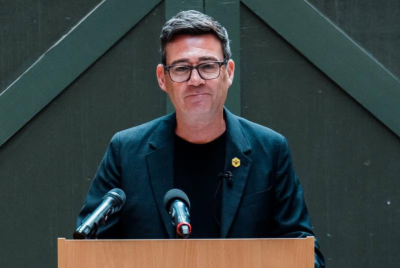
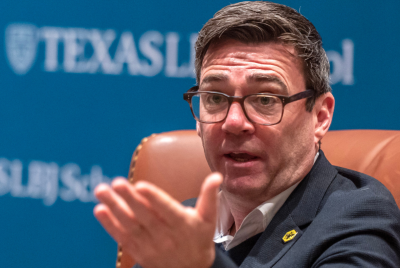
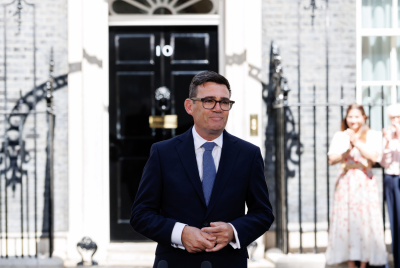
Andy Burnham has set out an ambitious vision to transform Britain over the next decade, arguing that meaningful improvements in living standards, economic growth, and regional development cannot be achieved within a single parliamentary term.
The former Greater Manchester mayor, widely regarded as the frontrunner to succeed Sir Keir Starmer as Labour leader and prime minister, said Britain needs a long-term strategy extending to 2036 to reverse years of economic stagnation, regional inequality, and declining public confidence in politics. His proposal centres on devolving power away from Westminster, boosting investment outside London, and creating what he describes as 'good growth in every postcode.'
The remarks come as Burnham seeks to define his political agenda during a period of leadership transition within Labour and growing debate over Britain's economic future.
Why Burnham Believes Britain Needs a Decade
Burnham's central argument is that many of the challenges facing Britain have developed over decades and therefore require long-term solutions rather than short-term political cycles.
He has repeatedly argued that economic growth has been too concentrated in London and the South East, leaving many communities struggling with lower wages, weaker investment, and fewer opportunities. His proposed timeline reflects a belief that rebuilding infrastructure, improving skills, and attracting private investment requires sustained policy commitments that extend beyond a single government.
The approach echoes similar long-term economic strategies adopted in parts of Europe and Asia, where governments have pursued multi-year development plans aimed at raising productivity and living standards.
The Plan to Bring Power Closer to Communities
A key pillar of Burnham's vision is a significant expansion of devolution across England.
As former mayor of Greater Manchester and now MP for Makerfield, Burnham has frequently championed that local leaders are better positioned to address regional challenges than central government departments in Westminster. His proposal would involve transferring greater control over transport, housing, skills training, and economic development to regional authorities.
Supporters of devolution argue that local decision-making can deliver more targeted investment and improve accountability. Advocates point to Greater Manchester's transport reforms and regional development initiatives as examples of how devolved powers can shape local growth strategies.
Burnham has suggested that empowering regions could help reduce longstanding economic disparities between different parts of the country.
The Challenge of Raising Living Standards
While Burnham's vision has attracted attention, delivering higher living standards remains a significant challenge.
The UK continues to face pressure from weak productivity growth, high public debt, and rising demands on public services. According to data from the Office for National Statistics, living standards have experienced prolonged stagnation compared with historical trends, while household budgets remain under pressure from housing costs and inflation.
Economists generally agree that sustained improvements in living standards depend on stronger productivity growth, higher investment, and increased business confidence. Achieving those goals may prove difficult against a backdrop of fiscal constraints and global economic uncertainty.
Burnham argues that a more regionally balanced economy would help unlock growth and create opportunities beyond traditional economic centres.
Political Risks and Obstacles Ahead
A decade-long transformation plan would require political stability rarely seen in modern British politics.
Governments often face pressure to deliver results quickly, while leadership changes and electoral cycles can disrupt long-term policy programmes. Burnham would also need to secure support within Labour while convincing voters that his strategy can produce measurable improvements over time.
The political landscape has become increasingly competitive, with public frustration over economic performance, public services, and living costs continuing to shape voter priorities.
For Burnham, maintaining public support over ten years could prove as challenging as implementing the reforms themselves.
Can Britain Be Transformed by 2036?
The success of Burnham's proposal will ultimately depend on whether long-term planning can translate into tangible improvements for households across the country.
Supporters argue that Britain needs a more ambitious approach to economic renewal and regional development, while critics question whether any government can sustain a coherent strategy across an entire decade.
What is clear is that Burnham has positioned himself around a long-term promise rather than a short-term political fix. As Labour enters a new chapter, his argument that Britain needs ten years—not five—to rebuild prosperity is likely to become a defining test of his leadership vision.
© Copyright IBTimes 2026. All rights reserved.
- Recommended For You