

Britons Question Westminster Stability After Six Prime Ministers in Less Than a Decade
Concerns Grow Over UK's Political Instability and Economic Challenges
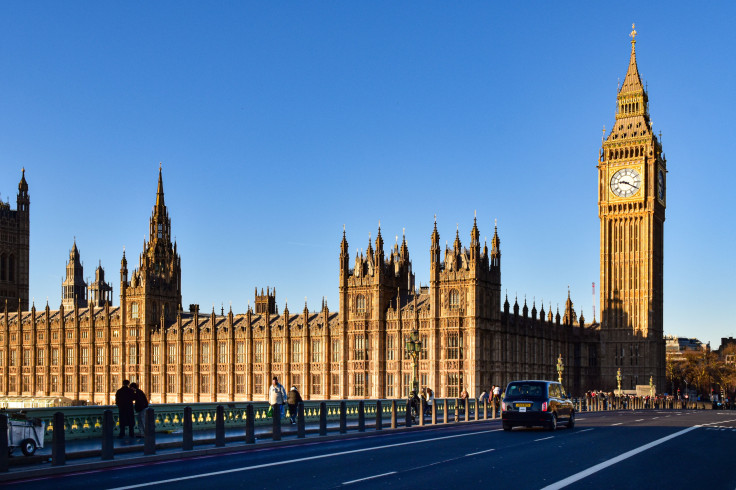
After years of changing Prime Ministers and political upheaval, some Britons are questioning whether Westminster can provide the stability needed to tackle the country's economic and social challenges.
The UK has experienced repeated leadership changes since 2016, a period marked by Brexit, the Covid-19 pandemic, inflation and rising pressure on public services. For many, the concern is not simply who occupies Downing Street, but whether governments have enough time and consistency to deliver meaningful change.
Public confidence in politics also remains low. A 2025 YouGov poll found that only 14 per cent of respondents trusted elected representatives, reflecting broader dissatisfaction with political leadership and concerns over the economy, healthcare and the cost of living.
Britons Say Stability Matters
Amy Golby, a self-employed Briton, said she rarely follows politics because it is dominated by negativity.
'Not really. I don't tend to follow politics because it never seems to bring good news. I just hope for the best,' Golby said.
Although she avoids political news, she believes frequent leadership changes make it harder for governments to provide stability.
'I think it probably does because there's no real consistency. If you're constantly changing leaders, it's unlikely to be good for anyone,' she said.
'Every new leader comes in with different priorities and different ideas, so it's difficult to maintain a consistent direction.'
Claire Brown, a mother and housewife, described Britain's political environment as unsettled and said uncertainty was being felt in everyday life.
'People don't know what's going on from one day to the next. It's a very unsettled time,' Brown said.
'It affects everything, really, the cost of living and the NHS, especially because I've had a lot of health problems.'
Brown argued governments needed more time to address long-term issues.
'I think any government needs at least 10 to 15 years to turn things around,' she said.
'Many people don't know what's happening anymore, and they've lost trust in politicians.'
Economic Pressures Deepen Concerns
Kenneth Zazulak, a retiree who works part-time, said Britain's financial challenges had limited what any government could achieve.
'The new government can't do much because the country is already carrying so much debt,' Zazulak said.
'I don't think any government will be able to turn things around as easily as they claim.'
He said the rising cost of living continued to affect people across the country.
'The cost of living affects everyone. It doesn't matter where you come from or whether you're working.'
After working for 58 years, Zazulak said he had expected retirement to provide financial security.
'I've worked for 58 years. When you retire, you expect to receive a decent pension so you don't have to work again,' he said.
'Instead, I've had to take a part-time job just to cover my household bills.'
Emmanouil Mavrouidis, a business development analyst, said leadership changes alone could not explain Britain's challenges, but governments needed sufficient time to implement policies.
'I think it's a very challenging job to change the economy or the direction of a country in a short period of time,' he said.
'Once you're in that position, you can see all the figures and understand the real financial situation.'
He warned that frequent policy shifts could make long-term planning more difficult.
'If you rush into making changes, you may create other problems that you didn't foresee,' Mavrouidis said.
'If you make a five-year plan but change direction after one year, what's the point?'
Calls for Long-Term Political Direction
Victoria Spencer, a consultant with a local authority in Sunderland, said repeated changes of Prime Minister reflected wider concerns about political stability.
'The frequent changes of Prime Ministers indicate unstable government,' Spencer said.
Although she said the changes had not significantly affected her personally, she added that social and economic welfare remained her main priorities.
Emmanuel Oluwatoyin, a Cambridge-based finance professional, said political instability could undermine planning and confidence.
'The instability does not offer enough time for Prime Ministers to implement their agenda,' Oluwatoyin said.
'One is not sure of the policy one will wake up to the next day.'
He added that predictable policies were important for organisations and international partnerships.
'No one wants to align with instability.'
Political analysts argue that restoring confidence in Westminster will require more than changing leaders. They say governments must demonstrate competence, deliver effective public services and provide long-term policy certainty.
For the Britons interviewed, the central question is whether political leaders can provide the stability needed to improve everyday life. While their views differ, they share a common concern that Britain needs lasting solutions capable of outliving individual governments and political cycles.
© Copyright IBTimes 2026. All rights reserved.