SpaceX Moon Crash: Why It Happened and Whether More Rockets Could Hit the Moon Again
Scientists use accidental Falcon 9 impact to study lunar collisions and future space debris risks
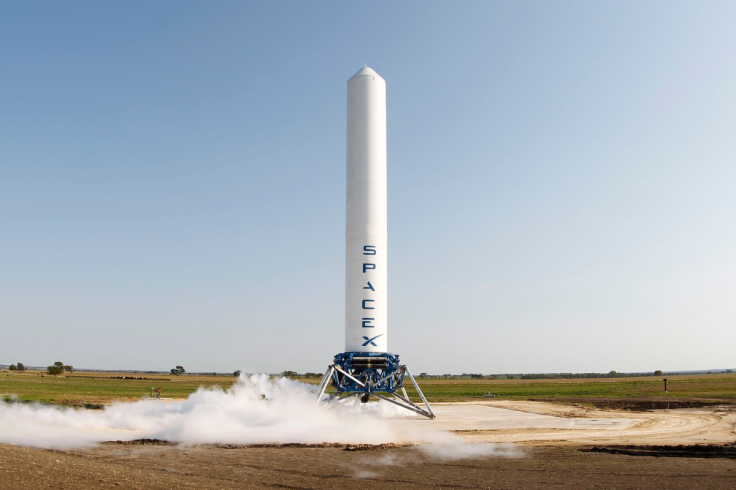
A SpaceX Falcon 9 upper stage that spent months drifting through space after a lunar mission has crashed into the Moon, giving scientists a rare opportunity to study the impact and what it could mean for the future of space exploration.
The roughly 3.9-tonne rocket stage was left travelling through space after launching Firefly Aerospace's Blue Ghost 1 lunar lander and Japan-based ispace's Hakuto-R Mission 2 lunar lander in January 2025. Both missions were designed to deliver commercial payloads to the lunar surface.
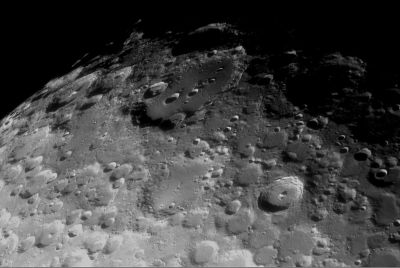
The unexpected impact near the Moon's Einstein crater occurred at an estimated speed of around 8,700 km/h. While the collision was not planned, researchers are using the event to better understand how human-made objects behave when they strike the lunar surface.
The crash was not caused by a problem during launch. The Falcon 9 successfully completed its mission before the upper stage continued along a trajectory that eventually brought it into contact with the Moon.
Why Did the SpaceX Rocket Hit the Moon?
The Falcon 9 upper stage became a piece of uncontrolled space hardware after completing its mission and no longer having enough fuel for a planned disposal manoeuvre.
SpaceX has become known for recovering its Falcon 9 boosters after launches, but the rocket's upper stage works differently. These stages are generally designed for a single use and are normally guided back into Earth's atmosphere, where they burn up after delivering their payload.
In this case, sending the lunar landers on their journey required much of the stage's remaining fuel. Without enough propellant left to control its path, the roughly 4,000kg upper stage was left drifting in a high Earth orbit that eventually crossed the Moon's path.
The rocket was not aimed at the Moon. Instead, gravitational forces slowly altered its trajectory, leading researchers to predict that a collision would eventually occur.
What Happened When the Rocket Crashed?
Scientists predicted that the Falcon 9 upper stage would strike near Einstein crater on the Moon's western limb.
Research led by Benjamin Fernando of Los Alamos National Laboratory suggested the impact could create a crater around 27 metres wide, while a cloud of dust and debris could rise high above the lunar surface before falling back down.
The Moon's lack of a significant atmosphere makes it an ideal place for scientists to study impacts because material released during collisions can be tracked more clearly than in similar events on Earth.
NASA's Lunar Reconnaissance Orbiter and South Korea's Danuri lunar orbiter were expected to observe the impact area before and after the collision to analyse the crater's size and the distribution of material ejected from the surface.
Why Scientists Are Studying the SpaceX Moon Crash
For researchers, the significance of the crash goes beyond the impact itself.
Most space collisions happen without warning, but scientists had already tracked the Falcon 9 stage's movement and predicted where it would strike. That allowed spacecraft and telescopes to prepare observations in advance.
The data collected could help improve scientific models of impact events, provide more information about the Moon's surface and support planning for future lunar missions.
Could More Rockets Accidentally Hit the Moon Again?
The SpaceX Moon crash has renewed attention on how space debris is managed as more countries and private companies prepare missions beyond Earth.
The area between Earth and the Moon, known as cislunar space, has historically been less crowded than Earth's orbit. However, that region is becoming increasingly important as NASA's Artemis programme, commercial space companies and international partners plan more lunar missions.
Scientists do not expect accidental lunar impacts to become common, but the growing number of spacecraft and rocket stages travelling through cislunar space means tracking and disposal methods will become increasingly important.
For SpaceX and other companies operating beyond Earth orbit, the incident highlights the challenge of managing rocket hardware in deep space, where traditional recovery methods used for Falcon 9 boosters are not always possible.
Future lunar missions will need to consider how spacecraft and rocket stages are handled after completing their objectives to reduce the likelihood of abandoned hardware becoming space debris.
© Copyright IBTimes 2026. All rights reserved.
- Recommended For You