

'Maybe They Weren't Paying Attention': Ms. Rachel Calls Out Critics Who Say Mister Rogers Wasn't Political
Ms. Rachel defends Mister Rogers' political legacy as critics question her advocacy for Palestinian children and immigrant rights
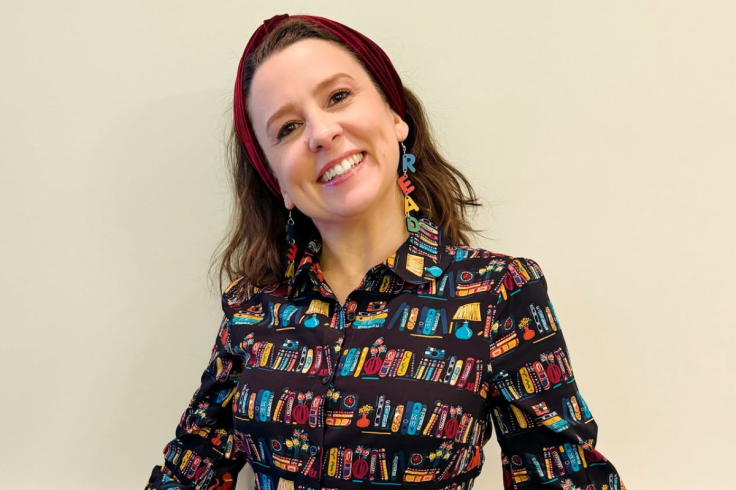
Mister Rogers addressed death, assassinations and war on American children's television, Ms Rachel has said, challenging critics who argue that he avoided politics. Speaking on comedian Hasan Minhaj's podcast, released on 25 November 2026, the children's educator defended Fred Rogers' willingness to tackle difficult subjects.
Her comments follow a September interview in which she questioned suggestions that following Rogers' example meant she should remain politically silent. Ms Rachel has faced debate over her advocacy for Palestinian children and her opposition to the detention of immigrant children in the United States.
Ms. Rachel Challenges Critics Over Mister Rogers' Political Legacy
Ms Rachel praised Fred Rogers for addressing difficult subjects on his television programme, including death, assassinations and war, for generations of young viewers.
'He wasn't afraid to tackle death, assassinations, and war,' she said during a conversation with Hasan Minhaj, reported by Complex on 26 November.
Ms Rachel, whose full name is Rachel Griffin Accurso, said her programme was aimed at younger children and that this affected how directly she could address some subjects.
During a 22 September appearance on SubwayTakes, she referred to a 1969 scene from Mister Rogers' Neighborhood featuring Officer Clemmons, played by actor and singer François Clemmons.
Rogers invited Clemmons to cool his feet alongside him in a small paddling pool. At the time, some swimming pools in the United States excluded Black swimmers. The programme's official website describes the scene as a statement promoting inclusivity during the civil rights movement.
Ms Rachel said she had read accounts of families reconsidering their views about sharing swimming pools after watching the programme. IBTimes UK said it could not independently verify those accounts.
Ms Rachel Highlights Mister Rogers' Advocacy Beyond Children's Television
Ms Rachel also pointed to Rogers' 1969 appearance before the US Senate Subcommittee on Communications, where he defended funding for public broadcasting. His official biography says he testified while lawmakers were considering cuts to public television funding.
Rogers explained how educational programming could help children recognise their individuality and understand their emotions. The testimony showed him making a case for public broadcasting to lawmakers as well as speaking to children through his programme.
Ms Rachel also cited opposition to the nuclear arms race as another example of Rogers addressing political subjects in children's television. The article's account of this point does not identify a particular programme or statement, so the example would benefit from further sourcing.
Not everyone shares her interpretation of Rogers' legacy. In a statement to Fox News Digital, published on 24 September 2026, author and psychotherapist Jonathan Alpert acknowledged Rogers' contribution to racial equality.
He argued that demonstrating compassion through educational programming differed from using a public platform to promote positions on contemporary political controversies.
Alpert's comments concerned Ms Rachel's September interview, not her latest conversation with Minhaj. Fred Rogers Productions had not immediately responded to the outlet's request for comment at the time.
Mister Rogers' Neighborhood aired nationally from 1968 to 2001. Rogers died in 2003. His documented record of social advocacy does not establish whether he would have supported Ms Rachel's contemporary political positions.
© Copyright IBTimes 2026. All rights reserved.