

How Did Tommy John Die? Real Cause of Death Revealed as Tributes Pour In for the Former MLB Pitcher
The man baseball's surgeons turned into a verb never reached Cooperstown, but Tommy John quietly rewrote what an athlete's broken body could survive
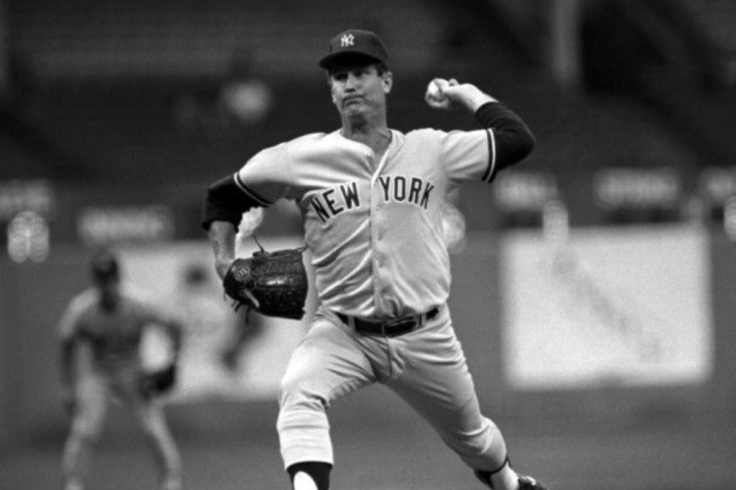
Tommy John, the former Major League Baseball pitcher whose name became synonymous with the groundbreaking elbow surgery that saved countless sporting careers, has died at his home in Bradenton, Florida, the New York Yankees confirmed on Sunday.
He was 83. The team did not disclose how John died, but said the four-time All-Star had been in hospice care after being diagnosed with bladder cancer and other ailments in recent years.
John's increasingly fragile health had kept him away from public events. In August, he missed the Yankees' Old-Timers' Day and posted a stark, almost farewell message to fans on social media, saying he wanted to say goodbye to everyone who had followed him through his 26-year career.
'I will never forget you,' he wrote then, leaving the uneasy sense that he knew time was running out.
Tommy John Surgery and a Second Baseball Life
John's fame rests on more than the 288 wins he stacked up on the mound. In 1974, at the age of 31 and at the peak of his powers with the Los Angeles Dodgers, he suffered what was then viewed as a career-ending injury to the ulnar collateral ligament in his pitching elbow.
John agreed to a radical procedure proposed by Dodgers orthopaedic surgeon Dr Frank Jobe, who estimated the odds of success at just one in 100.
Jobe rebuilt the ligament in a four-hour operation on 25 September 1974, drilling holes in the humerus and ulna and threading a tendon through in a figure-of-eight. The aftermath was grim.
John's left hand shrivelled, he lost feeling in several fingers, and he needed a second operation to reroute the ulnar nerve. His arm stayed in a cast for four months. It was, by any measure, a medical gamble.
What followed changed sport. John spent 1975 rehabbing, regaining the full range of motion, and working with teammate Mike Marshall, who had a doctorate in kinesiology, to alter his grip and protect his rebuilt arm. He returned to the majors and pitched another 14 seasons.
The surgery that once looked like a Hail Mary was renamed in his honour. Today, estimates from the American Medical Association suggest that roughly 35% of active MLB pitchers have undergone John surgery at some point in their careers.
Los Angeles Dodgers president and CEO Stan Kasten called him 'an exceptional pitcher' and said his 'courageous role in becoming the first to have surgery that would go on to bear his name can't be overstated.' The Dodgers marked his death with a pregame video and a moment of silence on Sunday.
Tommy John's Career, Legacy and Hall of Fame Omission
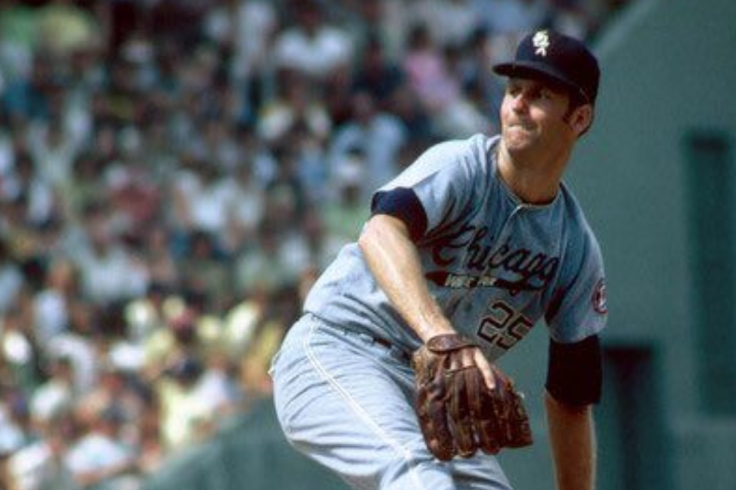
John's on-field record is formidable even without the medical subplot. Drafted by Cleveland in 1961 at 18, he debuted in the majors in 1963 and was traded to the Chicago White Sox in 1965.
He earned his first All-Star selection in 1968 after posting a 1.98 ERA, fifth best in the American League. Later, with the Dodgers, he led the National League in winning percentage in 1973 and 1974 before his injury struck.
By the time of his surgery, John had 124 wins in 355 games. After it, he added 164 more victories over 405 appearances, finishing with a career record of 288-231, a 3.34 ERA and 2,245 strikeouts across 760 games.
According to ESPN's data, his 288 wins are the second-most by any pitcher since 1900 who has not been elected to the Hall of Fame. That exclusion still rankles many in the sport.
From 1995 to 2009, John appeared on the Hall of Fame ballot but never received more than 31.7% of the vote, well short of the 75% needed.
The irony is stark: the Hall eventually honoured him and Dr Jobe together in 2013 for their contribution to baseball, even as voters declined to enshrine him as a player.
His peak years after surgery underline what voters passed over. John reached the World Series three times, twice with the Dodgers in 1977 and 1978 and once with the Yankees in 1981, posting a 2.67 ERA in 33⅔ innings, yet never winning a ring.
He logged three 20-win seasons: 20-7 for the Dodgers in 1977, then 21-9 and 22-9 for the Yankees in 1979 and 1980. From 1978 to 1980 he went 60-28 with a 3.22 ERA and made three straight All-Star Games. He was Opening Day starter for the White Sox in 1966 and, remarkably, for the Yankees in 1989.
The Yankees, for whom he won 91 games across two stints, described him as 'a bedrock of our rotation' and praised his 'competitiveness and skill' alongside his 'kind and gracious nature.' Their statement also acknowledged a quiet injustice: that his pioneering surgery 'overshadowed his excellence as a pitcher.'
A Name That Outlived the Man
John's influence now runs through almost every modern pitching staff. Among the current stars to have had John surgery are Shohei Ohtani, Tarik Skubal, Justin Verlander, Chris Sale, Gerrit Cole and Jacob deGrom, who has undergone the procedure twice.
Cole, who had the surgery in 2025, called John 'a trail blazer' and said he effectively wrote the script for how to endure, and succeed after, such a major operation.
Surgeon Dr Neal ElAttrache, lead physician for the Dodgers, told the Associated Press in 2024 that 'in dollars and cents' John surgery is probably the most valuable reconstructive procedure in sport.
Success rates now hover around 80% for pitchers returning to their previous level or better, according to ElAttrache's figures, a transformation that began with John's willingness to risk his left arm rather than go quietly back to Terre Haute, Indiana.
Born Thomas Edward John Jr on 22 May 1943 in Terre Haute, he was a standout in both baseball and basketball at Gerstmeyer High and graduated as valedictorian, although he skipped the speech because of a stutter.
The University of Kentucky wanted him for basketball. He chose baseball instead, signing with Cleveland and, as he later recalled in his August farewell message, leaving home under simple instructions from his father: whether he made it big or not, he would 'always just be Tommy John from Terre Haute, Indiana.'
Away from the mound, John's life took more complicated turns. He worked as a broadcaster for the Minnesota Twins and Yankees in the 1990s and later managed the independent Bridgeport Bluefish from 2007 to 2009. He was hospitalised with COVID-19 in December 2020 and later developed Guillain-Barré syndrome, leaving him temporarily paralysed in his lower body, he told the New York Post in 2022.
His family life carried both pride and loss. John and his first wife, Sally Simmons, had four children: Tamara, Tommy III, Travis and Taylor, who died in 2010 at 28 from a prescription drug overdose. The couple divorced in 2013. He is survived by his second wife, Cheryl, his children, and son-in-law Patrick Mannelly, the former Chicago Bears long-snapper.
In June 2022, John donated the original cast from his 1974 surgery to the Smithsonian Institution, signed by his Dodgers teammates, Jobe and Hall of Fame broadcaster Vin Scully.
It is a slightly macabre object, a relic of a broken arm, but also a reminder that his real monument is attached to thousands of elbows, quietly holding together a sport that never fully embraced him as one of its official greats.
Nothing has been confirmed publicly about the precise cause of John's death. What is clear is that the man whose name became medical shorthand ended his days much as he began them, by his own account, as simply 'Tommy John from Terre Haute.'
© Copyright IBTimes 2026. All rights reserved.