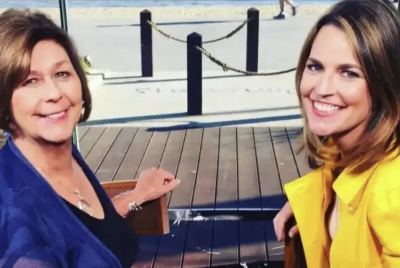
Nancy Guthrie Kidnapping Update: Expert Compares Methodical Abductor to Infamous Jodie Foster Stalker
With no suspect identified, experts pin their hopes on technology, DNA and the refusal of family and survivors to let the case go cold.
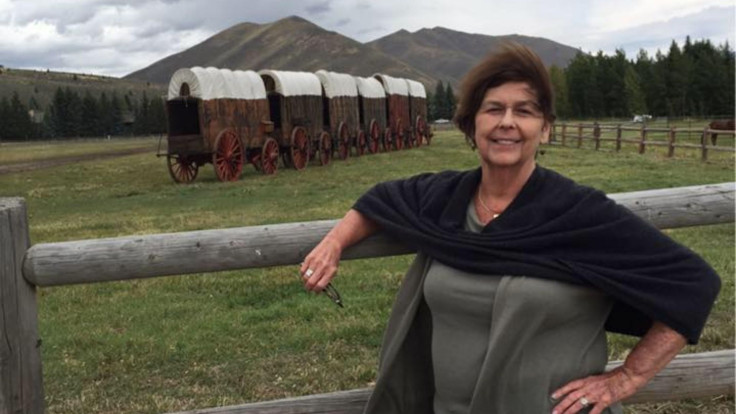
Nancy Guthrie kidnapping update centres on a fresh theory from attorney RJ Dreiling, who told HELLO! that the 84-year-old mother of NBC journalist Savannah Guthrie was likely taken by someone who knew her after she vanished from her Tucson, Arizona, home on 31 January and was reported missing on 1 February.
The case quickly drew national attention after investigators in Pima County, later joined by the FBI, said they believed Nancy Guthrie had been taken from her home against her will.
Authorities recovered evidence near the property, including DNA samples and gloves, and doorbell footage showed an armed person in a balaclava apparently trying to disable the camera outside her front door.
Methodical Abductor Theory In Nancy Guthrie Case Update
In the latest Nancy Guthrie case update, former prosecutor turned criminal defence attorney RJ Dreiling told HELLO! magazine he is still persuaded by the original theory that Nancy was taken by someone she knew who prepared the kidnapping with care and patience.
He argued that the apparent ransom angle may have been staged, saying 'The lack of follow‑through on any ransom demand makes it look like it was a distraction meant to throw off investigators.'
In his view, whoever is responsible appears 'intelligent enough to completely hide their tracks, including DNA, fingerprints, and electronic data, but also deranged enough to kidnap this woman out of her home and hold her hostage.'
Nancy Guthrie Kidnapping Compared To Jodie Foster Stalker
Pushing that point further, Dreiling drew a striking parallel with one of the most notorious celebrity obsessions in US history. 'What is worth considering are parallels to the Jodie Foster / John Hinckley Jr. case. Someone who is methodical in preparation but has a motive that makes no rational sense,' he said.
Hinckley, who became fixated on Foster after seeing her in Taxi Driver, attempted to assassinate President Ronald Reagan in 1981 in what he later claimed was an effort to impress the actor.
Dreiling is not suggesting the Guthrie case is political, only that investigators should keep in mind the prospect of a highly organised offender driven by a private, incomprehensible logic rather than money or an obvious vendetta.
That idea fits awkwardly with the few hard facts that have been released. The doorbell footage, obtained by the FBI days after the investigation began, shows an individual in a backpack and balaclava, armed and wearing gloves, first trying to cover the camera with a hand, then yanking up a plant from the garden to block its view. It is, in its own way, both clumsy and careful.
Publicly, investigators have not said whether they can link that figure directly to Nancy's disappearance.
Hope 'Not Lost' As Investigation Drags On
For a family waiting months with no answers, talk of deranged stalkers can only go so far. Dreiling is clearly aware of that, and he has been careful to counter the darker speculation with a measure of optimism.
'It's important to remember that even though it has been a substantial amount of time since she went missing, hope is not lost,' he told HELLO!.
He pointed to the 2002 kidnapping of Elizabeth Smart, who was rescued nine months after she was taken from her bedroom in Utah. That case, he noted, was finally cracked when a family member recalled a previously overlooked detail and passed it to police.
Smart herself has added her voice to those resisting the idea that the Guthrie case is already over. In a recent CNN interview, she said of Nancy, 'Absolutely. She could absolutely still be alive,' citing other instances where victims were found years after they vanished. She added that until there is certainty, 'we have to keep looking', and stressed that 'either way, [Nancy] deserves to be brought home.'
Elizabeth Smart says she thinks Nancy Guthrie could “absolutely still be alive” three months after her disappearance and urges authorities to keep searching. More tonight on OutFront at 7p ET/4p PT. pic.twitter.com/B91rJoMnYf
— Erin Burnett OutFront (@OutFrontCNN) May 5, 2026
Dreiling argues that advances in technology since Smart's abduction are one of the few quiet advantages investigators now have. 'Technology has come a long way since then, particularly as it pertains to cell phone data and electronic tracking,' he said.
The most promising scenario, in his view, would be that a DNA profile from Nancy's home or another site eventually matches someone with an identifiable motive, whether linked to past contact, a grievance or activity on social media.
Fears Of A Cold Case In The Nancy Guthrie Investigation
Officials on the ground have been more guarded. Pima County Sheriff Chris Nanos has already warned publicly that the heavy emphasis on forensic and DNA analysis could, if it fails to produce a match, leave the case drifting towards cold‑case status.
Dreiling does not dispute that risk but pushes back on what 'cold' really means. 'A cold case doesn't mean it's over, it means resources are pulled back and the case sits until a new lead emerges or new forensic results come in,' he said.
With limited budgets, he added, 'law enforcement sometimes has to prioritise. The evidence gets preserved, the file stays open, and investigators wait for a tip, a witness, or new technology that can revisit the DNA samples.'
Authorities have repeatedly acknowledged the lack of 'credible public information' and actionable leads.
For now, no suspect has been named, no charges filed and no confirmed sighting released to the public.
Nancy Guthrie disappeared from her home in the Catalina Foothills area of Tucson on 31 January 2026 and was reported missing the following day after she failed to appear at church. The Pima County Sheriff's Department quickly treated the case as a likely abduction and later called in the FBI.
Investigators recovered DNA samples and gloves near the property, and obtained doorbell camera footage showing an armed, masked figure tampering with the front‑door camera, but no suspect has been identified and no arrest has been made.
© Copyright IBTimes 2026. All rights reserved.
- Recommended For You