

What Is the Artemis III Mission? NASA Names Four-Person Crew to Test SpaceX and Blue Origin's Commercial Lunar Landers
Artemis III to test commercial lunar landers, paving the way for future Moon landings

NASA has unveiled the four astronauts who will carry out a crucial orbital mission that could determine how humans return to the Moon and eventually establish a lasting presence beyond Earth. The organisation announced the Artemis III crew during a live event at the Johnson Space Center in Houston on 9 June, revealing the four-person team that will fly aboard the Orion spacecraft in late 2027. Unlike previous expectations, Artemis III will not land astronauts on the Moon. Instead, it will serve as a high-stakes demonstration mission designed to test commercial lunar landers developed by SpaceX and Blue Origin.
The mission marks the next major chapter in NASA's Artemis programme, which aims to return humans to deep-space exploration and lay the groundwork for future lunar surface operations. By proving that commercial landing systems can safely rendezvous and dock with NASA's Orion spacecraft, Artemis III is expected to pave the way for crewed Moon landings beginning with later Artemis missions.
Who Are the Artemis III Crew Members?
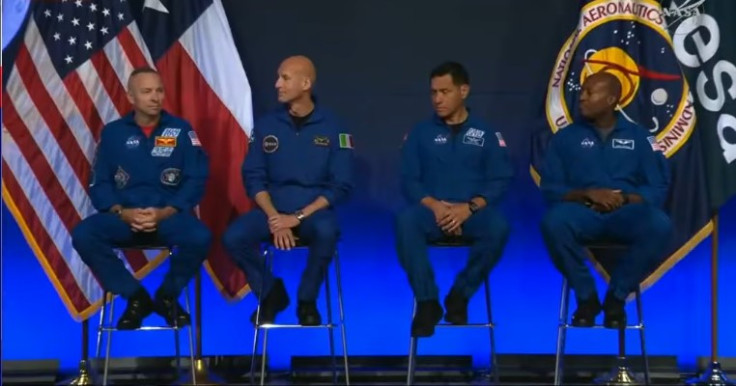
NASA confirmed that four astronauts have been assigned to Artemis III. The crew consists of a commander, a pilot and two mission specialists drawn from NASA and the European Astronaut Corps:
- Randy Bresnik (NASA) — Commander
- Luca Parmitano (ESA) — Pilot
- Frank Rubio (NASA) — Mission Specialist
- Andre Douglas (NASA) — Mission Specialist
What Exactly Is the Artemis III Mission?
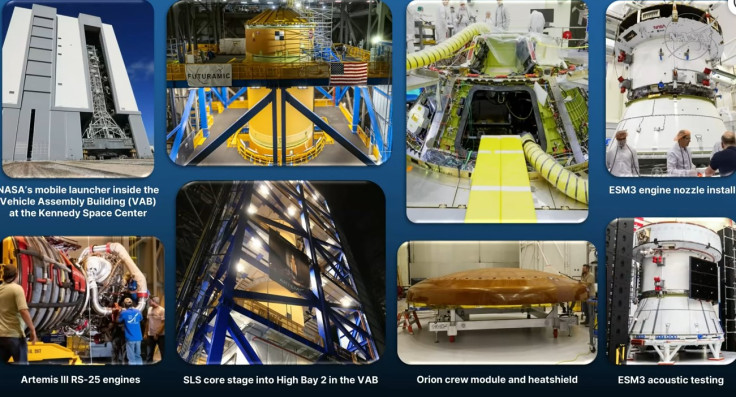
Artemis III is scheduled to launch no earlier than late 2027 from Kennedy Space Center in Florida aboard NASA's Space Launch System (SLS) rocket. The astronauts will travel in the Orion spacecraft and enter low Earth orbit rather than heading directly to the Moon.
Once in orbit, Orion will attempt rendezvous and docking operations with one or both commercial Human Landing Systems being developed by SpaceX and Blue Origin. These complex manoeuvres are considered essential for future lunar missions because astronauts will eventually need to transfer from Orion into a lunar lander before descending to the Moon's surface.
NASA has described Artemis III as a demonstration mission focused on validating spacecraft systems, docking procedures, life-support operations and crew interactions with the next generation of lunar vehicles. The agency has also indicated that astronauts may enter at least one of the landers during testing, depending on the final mission design.
Why Are SpaceX and Blue Origin Central to the Mission?
The Artemis programme increasingly relies on commercial partners to provide lunar transportation capabilities. SpaceX is developing a lunar version of its Starship spacecraft, while Blue Origin is building the Blue Moon Human Landing System. NASA intends to use these vehicles to transport astronauts from lunar orbit to the Moon's surface and back again.
Rather than designing and operating every spacecraft itself, NASA is adopting a commercial partnership model similar to the approach used for cargo and crew transport to the International Space Station. Artemis III will provide the first real-world opportunity to test whether these competing lunar landers can safely integrate with Orion and support future exploration missions.
The mission is also expected to help reduce risk before NASA commits astronauts to an actual lunar landing later in the decade.
Will Artemis III Land on the Moon?
Despite its name, Artemis III is not currently planned as a lunar landing mission. Instead, NASA will use the flight to evaluate the technologies, spacecraft and operational procedures needed for future Moon landings. The focus will remain on low Earth orbit testing rather than travelling to lunar orbit or the lunar surface.
Future Artemis missions are expected to send uncrewed landers into lunar orbit before astronauts arrive aboard Orion. The astronauts would then transfer into a landing vehicle and descend to the surface. NASA has also indicated that later missions may involve crew transfers through the planned Gateway lunar space station.
How Artemis III Fits Into NASA's Long-Term Moon Strategy
Artemis III represents the latest step in a programme that began with the uncrewed Artemis I mission in 2022. Artemis I tested Orion's ability to travel around the Moon and return safely to Earth. Artemis II followed with a crewed lunar fly-by mission, proving the spacecraft could support astronauts during deep-space travel.
Now, Artemis III will focus on the transportation systems needed to move astronauts between spacecraft and eventually onto the lunar surface. Success would clear a major hurdle for NASA's broader goal of establishing a sustainable human presence on and around the Moon while preparing for future missions to Mars.
For NASA, the mission is far more than a routine test flight. It is a critical rehearsal for the next era of human exploration, one in which government space agencies and private companies work together to expand humanity's reach deeper into the solar system.
© Copyright IBTimes 2026. All rights reserved.