

'An Elon Musk Ego Project': Ex-NASA Expert Exposes Hidden Dangers of $1.75T SpaceX Launch
A trillion‑dollar test of belief, the SpaceX float asks investors whether they trust Elon Musk's vision more than they fear his power.

Elon Musk's SpaceX is preparing to sell shares to the public in a listing that values the rocket and AI group at about $1.75 trillion, with trading expected to start on 12 June and UK retail investors in line for roughly £1.5 billion of stock, according to documents seen by the BBC. The partial flotation, which bundles Musk's space business with his fast‑growing artificial intelligence venture xAI, could make Musk the world's first trillionaire and hand ordinary savers a stake in a company pitched as nothing less than the vehicle for making 'life multiplanetary.'
SpaceX pulled off a technically audacious Starship test in which its giant booster fell back towards Earth, reignited and then slowed its descent so precisely that engineers hope future flights will see it caught mid-air by the towering 'Mechazilla' launch tower.
Musk quickly framed the feat as a 'big step towards making life multiplanetary,' the latest example of how each engineering milestone is folded into a much grander story about the destiny of humanity and, not incidentally, the destiny of his companies.
That story now has a price tag that places SpaceX firmly among the ten most valuable firms on the planet, despite the company losing nearly $5 billion last year. Bankers marketing the float have set an overall valuation of $1.75 trillion, a figure that has stunned even jaded market watchers.
SpaceX is several businesses at once: a dominant launch provider, a satellite manufacturer and operator, and the owner of the Starlink broadband network that has become a strategic asset in Ukraine's defence against Russia. Yet even bullish estimates put that space and communications arm at about $300 billion, less than a fifth of the value being implied.
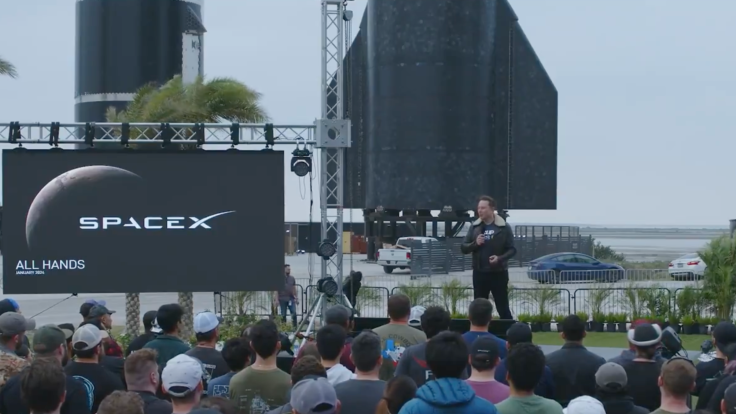
SpaceX IPO Turns Into a Bet on Elon Musk and AI
The prospectus makes clear that the main bet is not on rockets at all but on artificial intelligence. Folded into SpaceX is Musk's xAI, and with it an expansive plan to build vast solar-powered data centres in orbit, using the cold of space for cooling while ultimately supporting human-crewed bases on the Moon and, one day, Mars. Of the $28.5 trillion 'total addressable market' SpaceX claims for its future services, $26.5 trillion is tied to AI.
To believe that pitch, investors have to accept that AI will grow into a market roughly the size of the entire US or European economy. On its own numbers, less than 10% of SpaceX's opportunity lies in space and communications, the only areas where it has already shown genuine commercial advantage. That mismatch is what alarms some experts.
BREAKING: SpaceX to raise $75 billion at a $1.75 trillion valuation in the largest IPO ever - Reuters pic.twitter.com/nPIBbhQNcv
— Crypto India (@CryptooIndia) June 3, 2026
'I think it's an Elon Musk ego project,' says Sinead O'Sullivan, an economist who has worked for Nasa. In her view, the business has become a sprawling Musk‑centred conglomerate. 'The logo, the brand is built on two decades of rocketry but most of the capital expenditure is actually on data centres and an AI company that seems to be more about social media than anything to do with space,' she argues, adding that investors are being asked to buy into the Musk brand rather than a clearly defined industry.
The prospectus itself concedes that SpaceX must 'build, commercialise and operate' products 'at a scale that has not been previously achieved', a frank admission that much of what is being sold exists only on paper.

Control, Cult and the 'Musk Effect'
The chance for ordinary savers to buy into Musk's flagship company has already stirred remarkable enthusiasm in Britain. Hargreaves Lansdown, one of the UK's biggest retail investing platforms, told the BBC it has seen a rush of interest from clients seeking exposure. 'While we recognise this IPO might not be right for everyone, it's an exciting moment for many of our clients,' said Simon Belsham, the firm's chief client officer. 'We're expecting this might be a first foray into investing for many.'
Even those who do not apply directly may find themselves dragged in anyway. Most UK workers with a pension have at least some money in global equity funds, and large institutions are expected to buy SpaceX stock as it enters major indices. In effect, millions of people could become minority owners of a company bound up with geopolitics, defence and the direction of AI, whether they welcome that role or not.
Yet the ownership on offer comes with almost no meaningful control. Musk is listed as founder, chief executive, chief technical officer and chair. Though he holds just 42% of the equity, his super‑voting shares give him around 85% of voting power. Financial commentator Robert Armstrong is blunt about the trade‑off. 'What is holding shares in a company? It's ownership but what kind of ownership is this? Do you really own something you can't control?' he asks, arguing that investors should demand a discount, not pay a premium, to surrender their influence.
One large institutional investor quoted by the BBC took a darker view. The 'cult of Elon Musk,' they said, demands that investors pay up for 'the questionable privilege of having no real say in how the company they own is run.' Despite recurring controversies over Musk's political interventions, including almost $300 million spent backing Donald Trump's second White House run and vocal support for right-wing figures in the UK and elsewhere, many are evidently willing to do so.
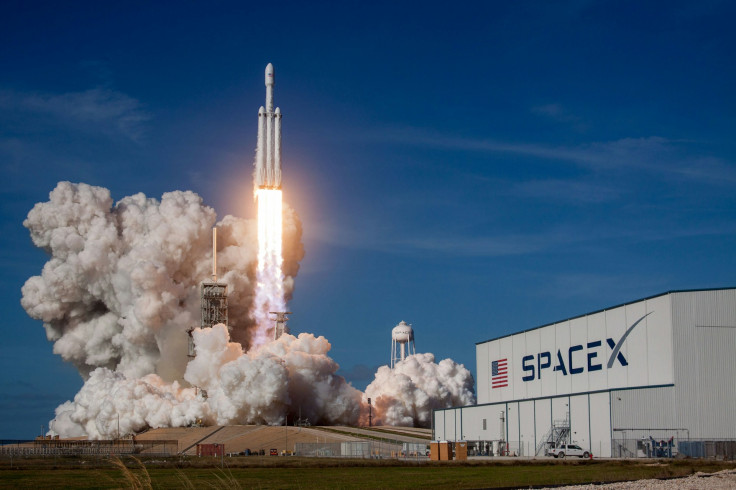
History explains some of that loyalty. Since 2020, private estimates of SpaceX's worth have rocketed from $40 billion to $1.75 trillion, while shares in Tesla have risen roughly tenfold even as the carmaker's production has stagnated. Musk's habit of unveiling fresh, headline‑grabbing ambitions such as a pivot to building one billion humanoid robots has repeatedly given investors new reasons not to sell. One major backer told the BBC he is 'more P.T. Barnum than Rockefeller or Buffett' a showman as much as a business titan.
Whether SpaceX's listing marks the dawn of an AI‑driven new era or the top of another bubble is impossible to know. The company is selling only about 5% of its equity, around $75 billion worth of shares, in this first wave, with rival AI groups Anthropic and OpenAI expected to follow with their own blockbuster offerings. If all three keep returning to the market, trillions of dollars' worth of new stock could be pushed into investors' hands in the coming years. Some warn of a repeat of the dot‑com boom and bust, others argue that today's giant index funds will quietly soak up the supply.
SpaceX has just officially unveiled its AI1 satellite, the first generation of its AI satellite.
— Sawyer Merritt (@SawyerMerritt) June 8, 2026
Overall Specs:
• 150 kW peak compute payload
• 120 kW average compute payload
• 70 kW per ton
• Compute provider interchangeable
Dimensions:
• Wingspan: 70 meters
• Deployed… https://t.co/KB0WGfp6t5 pic.twitter.com/qR6wEvs2da
Nothing about the future trajectory of the share price is confirmed, and both the AI projections and the valuation assumptions should be treated with a healthy dose of scepticism. What is clear, though, is that in 2024 the most closely watched launch pad in global finance does not sit on Wall Street, but on the Texas coast where Musk's rockets rise and fall.
© Copyright IBTimes 2026. All rights reserved.