

OpenAI CEO 'Embarrasses Himself' Live After Saying He Could Not Raise His Son Without ChatGPT
A late-night anecdote about a father consulting his own chatbot has opened a wider debate on AI, trust and parental responsibility.
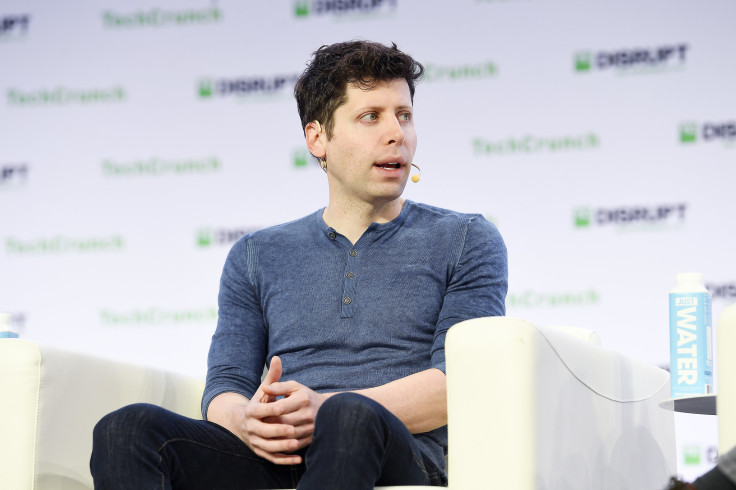
Sam Altman has stunned viewers by telling Jimmy Fallon he 'cannot imagine' parenting his newborn without ChatGPT, a remark that has ignited a fierce debate about tech, expertise and the domestic role of artificial intelligence.
Altman's off-the-cuff comments came during his first late-night television interview, in which he framed ChatGPT as a constant bedside adviser during the uncertain early months of fatherhood.
The episode has since been clipped, shared and dissected across social platforms, prompting questions about corporate leaders modelling intense reliance on their own products.
Altman's On-Air Admission
Appearing on NBC's The Tonight Show Starring Jimmy Fallon, Altman told Fallon: 'I cannot imagine having gone through, figuring out how to raise a newborn without ChatGPT.' He said he sometimes runs to the bathroom to ask ChatGPT urgent questions, for example, whether a perceived lag in crawling warranted a doctor's visit, and that the chatbot's personalised reassurance calmed him.
Altman's comment echoed remarks he has made previously about parenthood and AI. In interviews and public appearances earlier this year, he has spoken about raising a child in a world where AI is ubiquitous and 'genius-level' tools will shape how new generations learn and develop.
Altman used a personal anecdote to illustrate the point. After hearing another parent brag that their six-month-old was 'crawling everywhere,' he panicked and checked ChatGPT, which responded that his son's development was 'normal' and that he should relax.
Jimmy Fallon: "And do you use ChatGPT when raising your baby?"
— More Perfect Union (@MorePerfectUS) December 9, 2025
Sam Altman: "I cannot imagine figuring out how to raise a newborn without ChatGPT." pic.twitter.com/jx29pvvpGM
That moment, trivial and intimate, is now at the centre of a larger conversation about whether AI's soothing, medical-sounding language encourages parents to substitute machine reassurance for judgment.
Taken literally, the line is hyperbolic. People have raised children for millennia using family knowledge, midwives, books and doctors. But Altman's remark functions as rhetoric as much as confession: a high-profile CEO signalling that the product he helped create is not merely a productivity tool but a domestic companion. That positioning is significant from both cultural and commercial perspectives.
Public Reaction And Criticism
Within hours, clips and transcripts of the segment circulated on X (formerly Twitter), YouTube and Instagram. Some commentators mocked what they saw as a tech titan's overreliance on a chatbot for basic parenting tasks; others defended the remark as a relatable, modern-parent anecdote.
if you cannot raise your child without ai, maybe you shouldn’t have reproduced in the first place…
— The Notorious J.O.V. (@whotfisjovana) December 9, 2025
The mix of ridicule and defence has been amplified by commentators who argue the exchange illustrates a tension: convenience versus the risk of eroding practical knowledge and parental confidence.
Chatbot is now part of a standard children's first aid kit
— DΞSH (@whereislamb0) December 9, 2025
Critics also pointed to broader concerns about product placement and PR. Altman, whose company has navigated intense scrutiny over safety, governance and competition, used a mainstream entertainment platform to humanise both himself and ChatGPT.
Thats some terrifying propaganda
— Savvy ( ˶ˆ꒳ˆ˵ ) (@MadamSavvy) December 9, 2025
Industry analysts have observed similar moves across Silicon Valley, casting AI as an indispensable daily aide, even as regulators and researchers flag risks about over-trust and misinformation.
What This Suggests For AI Adoption And Governance
Altman's off-the-record style admission matters because it normalises a pattern: users rely on generative AI as a first port of call for health, education and parenting queries. That raises questions for clinicians and regulators about where responsibility lies when an automated response, however well phrased, is wrong or incomplete. Medical and developmental guidance traditionally carries liability frameworks; generative models do not.
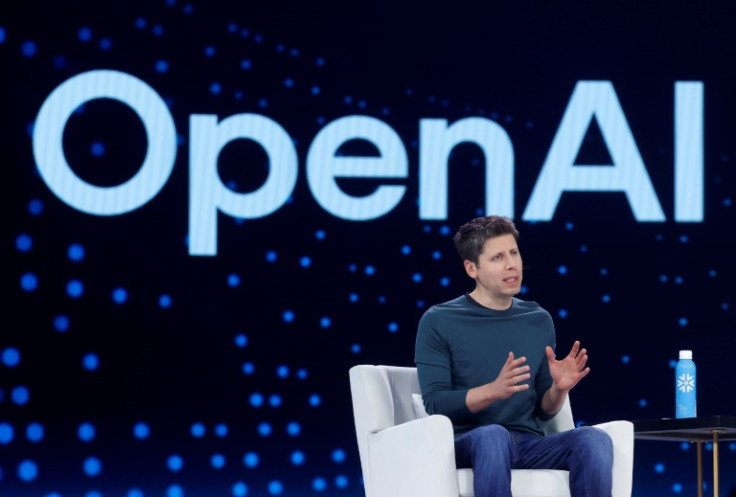
OpenAI itself has emphasised safety guardrails and the need for external oversight in public statements and research. Yet anecdotes like Altman's sharpen the policy debate: should there be more explicit warnings when AI offers health-adjacent advice? Must companies adopt stronger disclaimers or routing to certified professionals for clinical questions?
Those are live policy issues as governments worldwide discuss age verification, liability and the limits of automated advice.
The CEO's candid on-air confession: charming to some, alarming to others, crystallises a new reality: technology has moved from the desk into the nursery, and society must decide how much of parenting we want to outsource to machines.
© Copyright IBTimes 2026. All rights reserved.