

Jeffrey Epstein's Death: The Overlooked Piece of Evidence a Forensic Scientist Wants Investigated
Forensic scientist Dr Michael Freeman says markings and other findings warrant further examination, but the fabric's evidential history and significance remain unproven
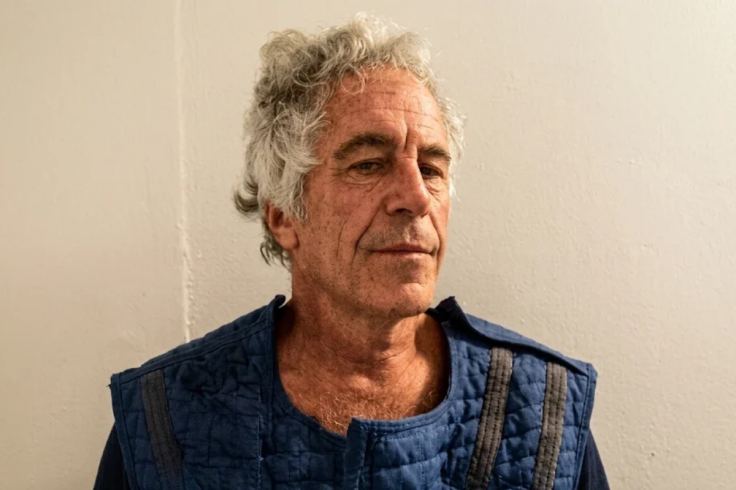
A knotted strip of orange fabric photographed inside Jeffrey Epstein's prison cell has become the focus of renewed forensic scrutiny, after a scientist questioned whether the material could help explain injuries documented following his death.
Dr Michael Freeman presented his analysis in London on Monday, 16 November 2026, challenging the official determination that Epstein died by suicide at Manhattan's Metropolitan Correctional Center on 10 August 2019.
The Orange Fabric Raising New Questions
Freeman examined autopsy photographs, medical records and images of Epstein's prison cell while investigating the circumstances surrounding the disgraced financier's death.
Among the materials was a photograph showing a narrow strip of orange fabric containing two knots. Freeman suggested that the material could be relevant to understanding certain markings documented on Epstein's neck.
However, questions remain about the fabric's evidential history, including whether the photographed item was examined and how it relates to materials collected during the original investigation.
Available reporting does not establish a complete chain of custody for the particular strip identified by Freeman. Consequently, its precise significance cannot be determined from the photographs alone.
There is no independently established evidence that the photographed fabric was used to cause Epstein's death or that it demonstrates the involvement of another person.
Why Freeman Disputes the Official Findings
Freeman identified what he interpreted as two different patterns among the neck markings documented during Epstein's autopsy.
One marking appeared to slope upwards, while another was described as more horizontal. He argued that the differences warranted further examination because they could potentially indicate different mechanisms of injury.
Freeman also raised questions about abrasions he considered potentially consistent with fingernail scratches and bleeding documented within Epstein's left shoulder muscle.
Working alongside forensic pathologist Anders Eriksson and cognitive neuroscientist Itiel Dror, he developed three-dimensional reconstructions to explore possible explanations for the injuries. Their analysis suggested that certain findings could be more consistent with an assault than suicidal hanging.
However, these interpretations remain disputed and do not independently establish that an assault occurred.
The research has not been published in a peer-reviewed journal, limiting the extent to which its methodology and conclusions have undergone independent scientific scrutiny.
Why Epstein's Death Remains Officially Ruled a Suicide
The New York City Office of Chief Medical Examiner continues to stand by its original determination that Epstein died by suicide.
The official autopsy findings did not establish convincing defensive injuries demonstrating that Epstein had struggled with another person. A US Department of Justice inspector general investigation subsequently documented serious failures in prison supervision, including missed inmate checks and falsified records.
Nevertheless, the investigation found no evidence contradicting the FBI's determination that no criminality was associated with Epstein's death. Those findings remain separate from Freeman's alternative interpretation of the medical evidence.
The available material also presents limitations for retrospective reconstruction, particularly where the precise positioning of evidence and its handling cannot be independently established.
Freeman's presentation has renewed questions about whether additional forensic examination could clarify the significance of the photographed fabric.
For now, its relationship to Epstein's injuries remains unproven, and the official suicide determination has not changed.
© Copyright IBTimes 2026. All rights reserved.