

Playstation 6 Ray Tracing Performance Will Be Ten Times Better Than Base Model According To Leak
A dramatic graphics upgrade promises a tantalising glimpse of PlayStation's future, but the evidence has yet to catch up
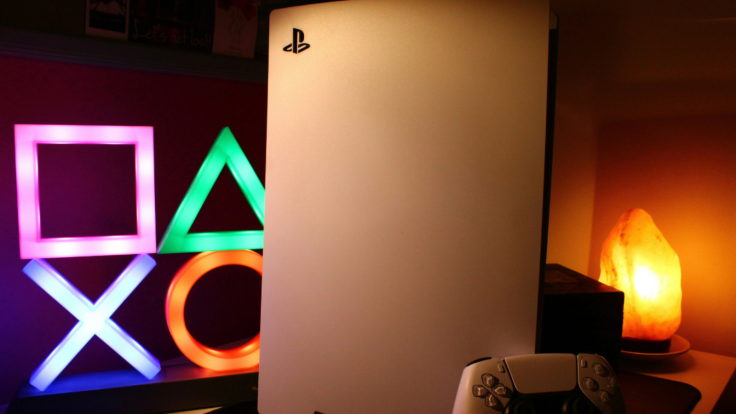
Sony's rumoured PlayStation 6 could deliver up to 12 times the ray tracing performance of the original PlayStation 5, according to an unverified hardware report published on Saturday, 31 October 2026. The alleged next-generation console, reportedly codenamed Orion, could feature substantial AMD graphics upgrades. However, Sony has not confirmed the specifications or the proposed release window.
The claims, detailed by GameGPU, suggest a considerable improvement in lighting, reflections and other demanding visual effects. The report also compares the proposed hardware with Nvidia's GeForce RTX 5090 graphics card.
Yet the performance estimates remain speculative. No independently verified benchmarks or authenticated engineering documents establish whether the PlayStation 6 could achieve the reported gains.
Alleged AMD Zen 6 and RDNA 5 Hardware
According to GameGPU, the rumoured console would use an AMD processor manufactured using the N3P fabrication process. The chip would reportedly measure approximately 280 square millimetres and feature eight Zen 6 CPU cores supporting 16 threads.
The report also claims six cores would be assigned to operating system functions, leaving the remaining resources for gaming. However, that unusual allocation has not been substantiated by technical documentation.
The proposed graphics processor would reportedly use AMD's RDNA 5 architecture, featuring 54 active compute units operating at 2.8 GHz.
GameGPU estimates theoretical graphics processing power at 38.7 teraflops. For comparison, Sony officially lists the original PS5's GPU performance at 10.3 teraflops.
These numbers cannot establish how much faster games would run. Differences in graphics architecture, memory performance and rendering techniques make direct teraflop comparisons unreliable.
Memory specifications are another prominent part of the report. The proposed console could feature 30 GB to 48 GB of unified GDDR7 memory, a 256-bit interface and 96 MB of Infinity Cache.
The article also mentions 16 memory controllers, a claimed 32 Gbps data rate per pin and support for M.2 PCIe 5.0 storage.
None of these details has been confirmed by Sony.
The leak further suggests compatibility with PlayStation 4 and PlayStation 5 games. However, the extent of any backward compatibility remains unknown, including whether older PlayStation 3 discs would be supported.
PlayStation 6 Ray Tracing Claims Draw RTX 5090 Comparisons
The most striking prediction concerns ray tracing, which simulates how light interacts with surfaces to produce more realistic reflections, shadows and illumination.
GameGPU estimates that the PlayStation 6 could process certain ray tracing workloads approximately eight to 12 times faster than the standard PS5.
The report also suggests performance could approach Nvidia's GeForce RTX 5090 in some circumstances. However, no independently verified benchmarks establish that comparison. Results would depend on the game, resolution, graphics settings and rendering workload.
Sony has already demonstrated measurable improvements with its existing hardware. When announcing the PS5 Pro, the company said its upgraded graphics processor could deliver ray tracing speeds twice, and occasionally three times, those of the original PS5.
Those official figures provide context for the more ambitious PlayStation 6 predictions, although they do not validate them.
The latest report separately estimates conventional graphics rendering improvements of approximately 2.3 to 2.5 times over the original PS5.
It suggests larger gains could be possible through PlayStation Spectral Super Resolution, Sony's AI-based image reconstruction technology.
Sony introduced PSSR with the PS5 Pro and expanded support for an upgraded version in March 2026. However, image reconstruction improvements should not be confused with equivalent increases in raw graphics processing power.
Storage, Memory and Possible Physical Media Cut-off
GameGPU also speculates that more demanding PlayStation exclusives could become harder to run through unofficial PC software. That suggestion remains unsupported by demonstrated hardware requirements or compatibility testing.
Meanwhile, the report points to a possible launch between late 2027 and 2028. Sony's May 2026 investor statements offered a more cautious position, indicating that decisions about next-generation platform timing and pricing had not been made.
Sony has acknowledged investment in the next generation of the PlayStation platform, alongside its continuing collaboration with AMD.
For players, questions extend beyond the impressive technical figures. Pricing, game compatibility and actual performance will ultimately determine whether the next console represents a meaningful upgrade.
Until Sony publishes official specifications or independently tested hardware becomes available, the reported ray tracing improvement remains an unverified prediction.
© Copyright IBTimes 2026. All rights reserved.