

Political Analyst David Pakman Warns Next Chapter of MAGA Movement Is 'Only About to Begin'
Trump's presidency will eventually end, but the battle over who inherits his political movement may only be beginning, argues Pakman
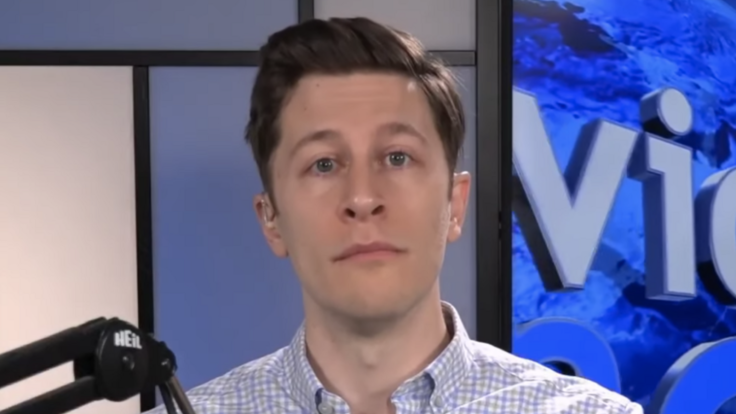
Political commentator David Pakman has warned that MAGA could outlast President Donald Trump, with Vice President JD Vance emerging as a possible successor.
He raised the prospect on his 26 October programme, ahead of the US midterm elections on Tuesday, 3 November. The question of Trump's political heir remains unsettled.
In an interview on 19 October, Vance said he had not decided whether to seek the 2028 Republican presidential nomination. Trump subsequently said the pair had not discussed an endorsement.
'The next chapter of MAGA and Trumpism is only about to begin,' Pakman said on The David Pakman Show.
He argued that the midterm results could change Trump's leverage over Republicans and his influence over their choice of the next presidential candidate.
David Pakman Examines Silicon Valley Links to Vance
Pakman's deeper concern was not simply which Republican might win in 2028. He questioned whether political thinkers who challenge established democratic institutions could become more influential through a future administration. His argument centred on the relationship between Vance and figures in Silicon Valley.
Pakman cited Gil Durán's The Nerd Reich: Silicon Valley Fascism and the War on Democracy, published in August 2026.
The book examines anti-democratic political ideas associated with some technology investors and commentators. Its arguments do not establish a coordinated plan involving everyone it discusses.

Among those mentioned are investor Peter Thiel and political writer Curtis Yarvin. Thiel helped finance a political committee supporting Vance's 2022 Senate campaign.
Yarvin, meanwhile, has advocated alternatives to conventional electoral democracy, including a system resembling corporate government.
There is also a public record of Vance discussing Yarvin. In a 2021 podcast interview, Vance referred to his ideas while advocating sweeping changes to the federal bureaucracy. He proposed replacing officials he believed obstructed an elected administration and made remarks about resisting judicial decisions.
When questioned about those comments in a 2024 television interview, Vance argued that civil servants should be accountable to elected leaders. His position does not, by itself, demonstrate support for replacing elections with corporate rule. That distinction is essential when assessing Pakman's broader warning.
Pakman also said several Republicans had privately expressed anxiety about Vance's potential presidency during conversations in recent weeks. He did not identify them or provide evidence that their concerns reflected a wider party consensus.
'That is terrifying even to a bunch of these Republicans,' Pakman said. The statement conveys his account of those conversations, not a verified measure of Republican opinion.
He contrasted what he regards as Trump's grievance-driven politics with the more developed theories of concentrated executive power associated with Thiel and Yarvin. Pakman suggested such ideas could influence a successor. He did not establish that Vance intends to adopt them.
David Pakman Sees the Midterms as a Test of Trump's Influence
The public discussion of 2028 is already more complicated than any single succession theory. During his 19 October interview with Mark Halperin, Vance said he had not decided whether to run. He nevertheless believed Trump would endorse him if he entered the race.
A day later, Trump was asked about Vance's prediction with the vice president present. He praised Vance but said they had never discussed a potential endorsement. 'It's early,' Trump said, adding that the administration needed to get through the midterms.
Other prominent Republicans, including Secretary of State Marco Rubio, have also been discussed as potential candidates. No nomination or Trump endorsement has been settled, and voter preferences could change substantially before 2028.
At the Republican convention in Dallas in September, some supporters openly cheered Vance as a future president. Yet interviews conducted by The Associated Press also found interest in Rubio, Ron DeSantis and Ted Cruz. Vance's appeal was visible, but no clear consensus emerged.
Pakman argued that Republican losses on 3 November could weaken Trump's authority within his party. Strong results, he suggested, could leave the president better placed to shape the contest for his successor. Neither outcome, however, would determine the nomination by itself.
© Copyright IBTimes 2026. All rights reserved.