Pope Leo XIV Says Church Needs to Stop Obsessing Over Sex After 'Weak' Spat With Donald Trump
A pope who once inherited a church obsessed with the bedroom now seems determined to drag its gaze back out into the world.

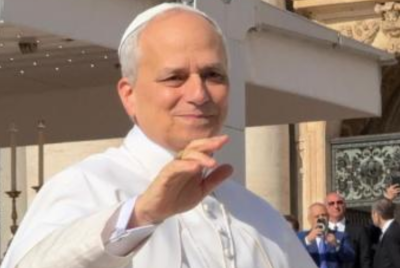
Pope Leo XIV said on Monday that he no longer wants to field questions about sex, telling reporters on a flight back to Rome from Africa that the Catholic Church under his leadership should stop 'revolving around sexual matters' and focus instead on justice and equality.
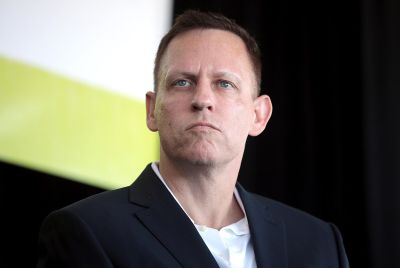
Donald Trump, in which the former US president branded Pope Leo XIV 'weak on crime' during a recent campaign stop. That political flashpoint has now been followed by a different kind of clash, this time inside the Church itself, over how much energy Rome spends policing what happens in people's bedrooms. The pontiff chose his final press conference at the end of his African tour to draw that line, and to do so in unusually plain terms.
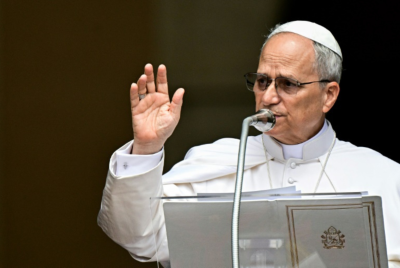
Pressed on same-sex marriage, Pope Leo XIV did not offer a new doctrine or a change in canon law. Instead he questioned the whole premise of the debate. 'The unity or division of the Church should not revolve around sexual matters,' he told journalists, according to the Deccan Chronicle. He went on to list 'justice' and 'equality' as 'much greater and more important issues' that should take priority over disputes about sexuality.
He acknowledged that the subject remains a fault line among Catholics worldwide and suggested that dwelling on it now risks doing more harm than good. 'To go beyond that today, I think that the topic can cause more disunity than unity,' he said. It was as close as a pope is likely to come to asking the global Church to change the subject.
Pope Leo condemned capital punishment, calling for its abolition in the US just as President Trump's administration moved to broaden methods of execution for federal inmates https://t.co/sEtNtgm4Kc pic.twitter.com/uAedW8kTLH
— Reuters (@Reuters) April 25, 2026
Pope Leo XIV and a Shift Away From 'Bedroom Policing'
The Vatican has spent decades defending detailed teaching on sex, marriage and contraception, with popes routinely asked to adjudicate on questions of who may love whom and how. Under Pope Francis, there were already signs of a more pastoral tone, but the doctrine itself largely held. Pope Leo XIV is not ripping that up. He is, however, saying out loud that he does not want the hierarchy to be defined by it.
He made a point of aligning himself with Francis's earlier decision to allow priests to give informal blessings to same-sex couples in certain circumstances. Those blessings are permitted on a case-by-case basis and outside formal liturgical rites, a carefully hedged move that stopped short of endorsing same-sex marriage but did recognise the reality of couples who had long felt shut out. Leo said he supported that approach, signalling continuity with his predecessor while still trying to move the conversation on.
That endorsement matters because it effectively cements Francis's tentative opening as the new normal. It also pushes critics who want a return to a stricter, culture-war footing further to the margins. Leo's choice of emphasis less bedroom, more justice is not neutral; it is a deliberate reordering of the Church's priorities.
LGBTQ Catholic group Dignity USA welcomed the remarks, calling them 'a very significant and overdue reorientation of priorities,' according to the Deccan Chronicle. For Catholics who have spent years feeling that every synod and statement came back to sex, the signal from the top that there are other, weightier concerns will sound like overdue common sense.
Conservative voices in the Church have not yet issued a co-ordinated rebuttal, but the tension is obvious. If sexual ethics are no longer the frontline test of orthodoxy, many of the battles they have been fighting over communion for divorced and remarried Catholics, over LGBT inclusion, over the language of 'intrinsic disorder' risk being deprioritised. Nothing in Leo's comments suggests he plans a doctrinal revolution, but the centre of gravity is moving.

Africa, Condoms and the Longer Story Behind Pope Leo XIV
The choice to draw this line at the end of an African tour also has a history. Popes have long used these trips to address contested moral questions. On a visit to Cameroon, Pope Benedict XVI told reporters that condom use could be acceptable in some 'exceptional circumstances', according to the BBC. Benedict framed it as a 'first step towards moralisation' where the intention was to reduce the risk of HIV infection, even though he insisted condoms were 'not really the way to deal with the evil of HIV infection.'
He worried that a 'sheer fixation on the condom' could trivialise sex itself, turning sexuality from an expression of love into 'only a sort of drug that people administer to themselves.' However one reads Benedict's argument, it marked a subtle concession to medical reality and a rare acknowledgement that rigid bans can play out differently in the real world.
Pope Leo signals shift away from Catholic Church's focus on sex https://t.co/BcER9iOL69 https://t.co/BcER9iOL69
— Reuters (@Reuters) April 27, 2026
Leo's remarks on sexual issues follow that pattern of incremental, sometimes awkward adjustment rather than clean breaks. By refusing to keep answering the same questions about who may sleep with whom, he appears to be betting that global Catholicism will be better defined by its social teaching on poverty, conflict and inequality than by the details of its sexual code.
Nothing in his latest comments changes Church doctrine, and there has been no formal document to expand or restrict existing rules. For now, his stance is a matter of tone and emphasis, delivered to reporters at the back of a plane. Even so, in an institution where every phrase is weighed and replayed, a pope saying he is tired of talking about sex may prove one of the more consequential things he has said all year.
© Copyright IBTimes 2026. All rights reserved.
- Recommended For You