

'Nobody Is Safe': FL Man Sues After AI Facial Recognition Wrongly Tags Him Child Luring Suspect in Shocking Police Blunder
Lawsuit exposes danger in modern policing where investigators build cases to validate faulty algorithms rather than test against facts

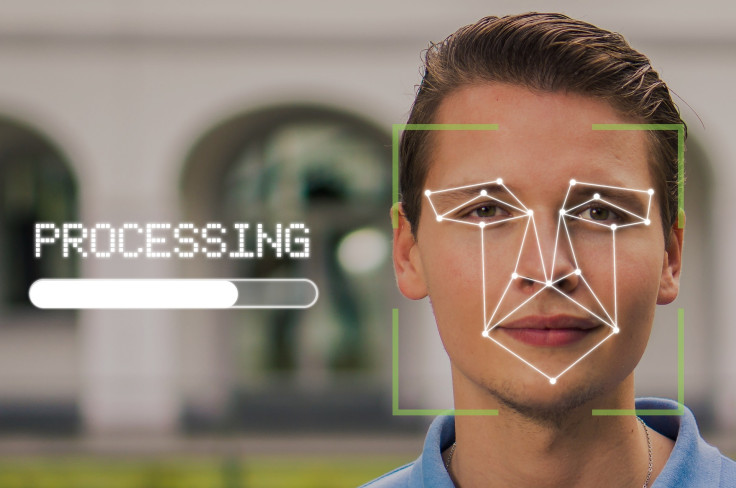
An innocent Florida man has launched a major lawsuit after a terrifying police blunder turned his life upside down.
Law enforcement officers arrested him at his home for a disturbing crime committed hundreds of miles away after blindly trusting a match generated by automated software.
The high-stakes legal battle now threatens to blow the lid off the growing, unregulated reliance on artificial intelligence in modern policing.
Multiple law enforcement agencies are facing a lawsuit from a Florida man who was locked up and put on trial for trying to lure a child, all because an unreliable artificial intelligence programme mistook him for a suspect.
A Faulty AI Match
When security footage at a local McDonald's captured a man trying to get a young, unaccompanied girl to leave with him, Jacksonville Beach police relied on software that flagged Robert Dillon as a 93 per cent match for the suspect.
In reality, Dillon lived in Fort Myers, more than 300 miles away, and told investigators he had never visited Jacksonville Beach in his life, leading prosecutors to drop all charges and dismiss the case following the August 2024 incident.
Legal Action Against Law Enforcement
The ordeal has prompted the 52-year-old to sue both local police departments, along with Pinellas County Sheriff Bob Gualtieri, whose office manages the Faces software and leases the technology across the state.
The American Civil Liberties Union launched a lawsuit on Dillon's behalf on Tuesday in a Fort Myers district court, stating that the 'investigation resulted in the wrongful arrest and prosecution of an innocent man.' The legal filing details the devastating personal toll of the blunder.
'Mr Dillon was arrested at his home in front of his wife. He was accused of attempting to lure a child, a charge carrying devastating social stigma and permanent reputational destruction. He was subjected to months of criminal prosecution and publicly branded with a mugshot that remains accessible online long after the charges were dropped.'
Highlighting the ongoing impact on his daily life, the lawsuit notes that 'he no longer feels comfortable being friendly to children. No law enforcement agency has ever apologised or acknowledged the error.'
A Growing National Problem
Legal documents place the blunder in a much wider context, claiming that Dillon is now at least the 15th person across the country to face arrest or criminal charges because of a faulty computer match.
The concerns echo a Guardian investigation published last month, which revealed that regulation is failing to keep pace with rapid technological advances and that oversight of artificial intelligence software remains severely lacking both in the UK and globally.
According to Dillon's legal team, investigators completely ignored the facts in front of them to protect the software, noting: 'Rather than test the machine's answer against the evidence that would have cleared him, the officers built a case to confirm it.'
Investigators Ignored Exculpatory Evidence
The legal filing takes direct aim at lead investigator Scott O'Connell, accusing him of intentionally leaving out a mountain of easily verifiable evidence that would have cleared Dillon from the outset.
According to the court documents, automated licence plate trackers proved that none of Dillon's vehicles had ever been near the restaurant.
The filing also claims that the lead investigator withheld a crucial fact from the magistrate who signed the warrant: the image fed into the software was actually a grainy, low-quality photograph of a security monitor taken on an officer's mobile phone, rather than a direct digital file from the security system itself.
Furthermore, the lawsuit highlights how the lead investigator failed to question a glaring contradiction when a McDonald's employee picked Dillon out of a six-photo line-up, claiming the suspect was a frequent customer who had visited her branch multiple times over the preceding weeks.
The lawsuit notes that the investigator was fully aware Dillon lived hundreds of miles away, meaning it would have been physically impossible for him to be a regular customer at that branch.
'These Florida police departments owe it to Mr Dillon to make amends and to take serious steps to make sure this doesn't happen to anyone else,' Nate Freed Wessler, deputy director of the ACLU's speech, privacy and technology project, said in a statement.
'Police across the country are on notice: unreliable face recognition technology is hurting people, and we will keep fighting to hold them accountable for these abuses.'
The case comes just weeks after a remarkably similar incident came to light involving Jalil Richardson, who was extradited to Jacksonville and locked up for nearly three months after automated software pinned a car theft on him.
In that instance, the algorithm completely missed the fact that Richardson was clocked in at his job 400 miles away in Charlotte, North Carolina, at the exact moment the crime was committed.
Picking up the Pieces
Reflecting on the lasting impact of the ordeal, Dillon said the trauma continues to weigh heavily on him.
'Over a year later, I'm still picking up the pieces of my life, all because the police relied on this dangerous technology instead of doing their jobs and actually investigating. Florida police must implement safeguards and ensure this never happens to anyone else, because until they do, nobody is safe.'
© Copyright IBTimes 2026. All rights reserved.