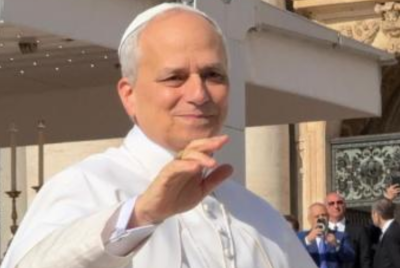
Vatican Backlash: 30% Of Americans Are Against Pope Leo XIV Asking Congress To Reject The Iran War
Most Americans support Pope Leo XIV's anti-war stance on Iran, but 30% oppose him, exposing a stark rift between moral authority and political loyalty.


Thirty per cent of Americans say they view Pope Leo XIV negatively for asking citizens to lobby Congress to 'work for peace and reject war' with Iran, according to a new ABC News/The Washington Post/Ipsos poll released in the US this week.
While 66 per cent of respondents reacted positively to the Papal peace appeal, nearly one in three citizens now view the Holy Father through a partisan lens. This shift marks a departure from the traditional status of the Pope as a moral witness above the American political fray. The Vatican- Donald Trump row has intensified as the President continues to frame the Pope's stance as a threat to national security.
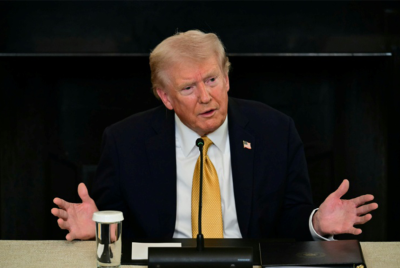
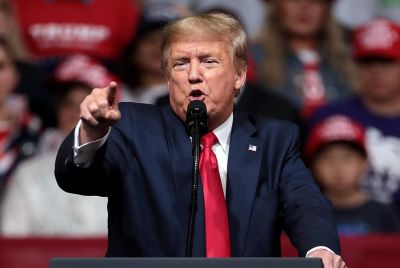
The poll results follow weeks of escalating tension between the White House and the Holy See. Trump has utilised social media to attack the Pontiff, stating he does not want a Pope who accepts a nuclear-armed Iran.
According to the data, 57 per cent of Americans viewed Trump's social media attacks negatively, while 38 per cent supported his confrontational rhetoric. The Pope Leo XIV Iran war stance is rooted in the Church's long-standing opposition to all forms of nuclear weaponry, a fact the Pontiff reiterated during a recent address from his residence in Castel Gandolfo.
Poll Shows Deep Split Over Pope Leo XIV And Iran War
The poll asked Americans to rate their reactions to statements from a range of figures on the Iran war, from Trump administration officials to Pope Leo XIV. When participants were presented with the Pope's request that Americans contact their representatives in Congress to push for peace and reject war, two-thirds, or 66 per cent, said they felt positively about his stance.
30 percent of Americans are against [squints at notes] the Pope urging peace pic.twitter.com/nwKvczqNhV
— Aaron Rupar (@atrupar) May 7, 2026
Almost one in three, however, said they had a negative reaction. In a country where pontiffs have often been treated as moral voices above the partisan fray, that 30 per cent is not a trivial fringe. It suggests a sizeable bloc of Americans is uncomfortable with, or outright hostile to, the idea of a Pope intervening directly in US foreign policy debates, even when that intervention is framed as a plea for peace.
The same survey also captured public reaction to Trump's own rhetoric. Asked about his social media post stating, 'I don't want a Pope who thinks it's OK for Iran to have a Nuclear Weapon,' a clear majority of respondents, 57 per cent, reacted negatively. Just over a third, 38 per cent, viewed the president's post positively, reinforcing how sharply opinion cleaves around his confrontational style.
Pope Leo XIV has firmly rejected Trump's characterisation. The president has insisted that the pontiff's approach 'endanger[s] Catholics,' accusing him of effectively accepting the prospect of a nuclear-armed Iran. Those charges, serious on their face, sit awkwardly with the Church's long record of opposing nuclear weapons outright.
🚨HOLY MOLY: Pope Leo responds to Trump FALSELY suggesting he wants Iran to have nuclear weapons:
— CALL TO ACTIVISM (@CalltoActivism) May 6, 2026
“If anyone wants to criticize me for announcing the Gospel, they should do so with truth.”
Trump is an evil embarrassment. pic.twitter.com/YNSNQ2wzkK https://t.co/L2MAGPnOCg
From outside the papal residence, Pope Leo seemed to answer those attacks head-on. 'The mission of the Church is to proclaim the Gospel, to preach peace. If someone wants to criticise me for proclaiming the Gospel, let them do so truthfully,' he said, in comments clearly aimed at his critics. He then undercut Trump's central accusation, adding that 'for years, the Church has spoken out against all nuclear weapons, so there is no doubt on that point.'
The Politics Of Pope Leo XIV's Peace Push
The ABC/Washington Post/Ipsos poll lands amid a delicate diplomatic moment. On Thursday, US Secretary of State Marco Rubio, himself a Catholic, is due to meet Pope Leo at the Vatican. According to Ambassador Brian Burch, the pair will hold what has been described as a 'frank conversation about U.S. policy and engage in dialogue.'

Rubio has already entered the controversy surrounding Trump's comments. During a press conference on Tuesday, he appeared to defend the president's broader position while gently distancing himself from the most inflammatory phrasing. Referring to Trump's claim that the Pope was 'endangering Catholics,' Rubio argued, 'Well, I don't think that's an accurate description of what he said.'
It is a careful line to tread. On the one hand, Rubio is the administration's chief diplomat, obliged to manage relations with the Vatican and avoid a full-blown rupture with the leader of the world's Catholics. On the other hand, he remains tied to a president who thrives on confrontation and has made attacking perceived opponents a political trademark.
The survey also offers a glimpse of where the public may be drawing its own moral lines. Respondents, across religions, denominations and political affiliations, 'overwhelmingly' reacted negatively when asked about another Trump move: his decision to share a Christ-like AI image of himself, which he later insisted he thought showed him as a doctor. The poll data, as reported, does not break down the numbers by faith or party, but the language suggests broad discomfort that crosses the usual culture-war boundaries.
Taken together, the findings sketch a more complicated picture than a simple 'Pope versus President' narrative. A strong majority of Americans appear to agree with Pope Leo XIV's anti-war plea and reject the idea that he is soft on Iran's nuclear ambitions. At the same time, a substantial minority resent or distrust his intervention enough to register a negative view of him personally.
Whether that 30 per cent signals a lasting erosion of Papal authority in US politics or a passing symptom of Trump-era polarisation is not something a single poll can settle. For now, it is enough to note that a Pope calling for peace has, in the eyes of millions of Americans, become a controversial political actor rather than an uncontested moral witness.
© Copyright IBTimes 2026. All rights reserved.
- Recommended For You