

'Resume at Normal Speed': Chilling Order Given To Train Driver Before Deadly Spain Rail Crash
Audio published by El País indicates the driver was not told to stop after the Iryo service reported it remained immobilised near Urda
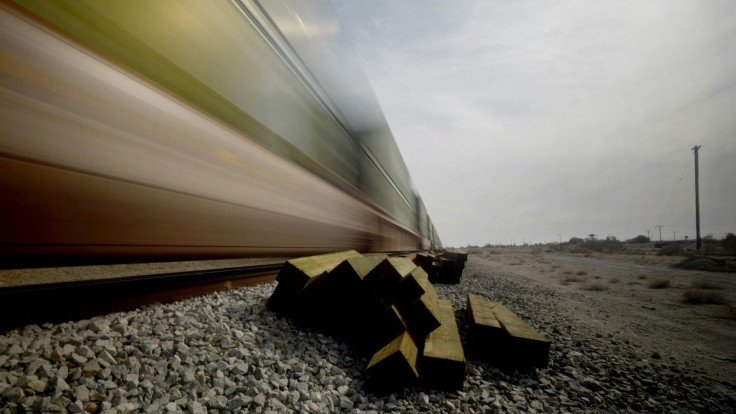
Audio recordings have revealed how a railway controller authorised a Renfe train to resume normal running despite a stationary Iryo passenger service ahead, in the minutes before a collision that killed at least 69 people in Spain.
The crash occurred near Urda, in Spain's Toledo province, on 28 October, when a high-speed train operated by state-owned Renfe struck the rear of a stationary Iryo service on the Madrid-Seville line. Both trains were travelling towards Seville.
Spanish newspaper El País published the recordings, and the driver of the Renfe train was identified as Antonio Acedo Meneses, 36, who died in the collision alongside his trainee colleague, Daniel Cabañas Cob.
Acedo came from a family with strong ties to the railway industry and had trained as a train driver himself. Investigators are examining whether a series of signalling failures and incorrect instructions contributed to one of Spain's deadliest railway disasters.
Chilling Recordings Expose Critical Mistake
Three recordings published by El País document communications between the Atocha control centre and the drivers of the two trains involved in the collision.
The exchanges indicate that the Renfe driver was authorised to resume normal running before the control centre had established that the track ahead was clear. The instruction was issued after a failure involving the automatic signalling system.
The driver reportedly sought confirmation that normal operation was permitted and received an affirmative response. 'Resume at normal speed,' the control centre instructed Acedo. He verified this and asked, 'At normal speed?' to which the control worker responded, 'Yeah.'
According to the preliminary findings, the applicable protocol required the Renfe train to proceed under restricted conditions, at no more than 40km/h (25mph). However, it was authorised to resume normal running.
Desperate Warning Before Collision
The incident began after a failure involving the LZB signalling system brought several trains to a halt along a 63-kilometre stretch of railway. Control of their movements subsequently passed to railway controllers in Madrid.
Six services automatically stopped along a 63km section of railway. Responsibility for directing their movements subsequently passed to controllers working for Spain's railway infrastructure operator, Adif.
At approximately 8:36am, the Renfe driver was authorised to continue. Five minutes later, controllers issued similar instructions to the Iryo train, approximately 25km ahead. However, its driver encountered difficulties restarting the signalling equipment and remained unable to proceed. At 8:48am, she contacted the control centre to explain that her train was still immobilised near Urda.
Despite receiving that information, controllers did not instruct the approaching Renfe driver to stop, according to the published recordings. Approximately five minutes after the Iryo driver's warning, the approaching train collided with the stranded service at around 8.53am. Two carriages from the stationary train subsequently derailed and plunged down an embankment.
Investigation Into Deadly Disaster
Spanish Transport Minister Óscar Puente described the decision to authorise the Renfe train to continue at normal speed as 'inexplicable'.
Investigators are examining the signalling failure, communications between railway personnel and whether the required safety procedures were followed. The precise speed at impact remains subject to examination of the train's recording equipment, per Reuters.
Authorities confirmed the death toll had reached 69 by Thursday, while numerous injured passengers remained hospitalised.
© Copyright IBTimes 2026. All rights reserved.