British Sprinter Romell Glave Suffered Two Fractured Backs: Now He's Europe's 100m Champion
British sprinter Romell Glave wins European 100m title after overcoming severe injuries
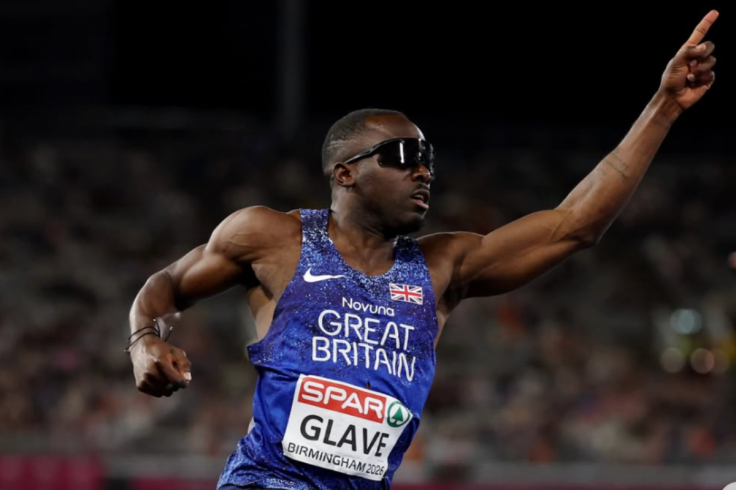
British sprinter Romell Glave has completed a remarkable comeback from twice fracturing his back by winning the European 100 metres title on home soil.
The 26-year-old powered to victory in 10.09 seconds at Birmingham's Alexander Stadium, leading a British one-two ahead of teammate Jeremiah Azu, who claimed silver in 10.16 seconds.
Glave's first major senior title follows years of injuries that threatened to derail a career once expected to take him to the top of international sprinting.
Training During Pandemic Led to First Fracture
Glave was already regarded as one of Britain's most exciting sprint prospects before his injury problems began.
Born in Jamaica, he moved to South Norwood in London at the age of 15 and joined Croydon Harriers. By 2017, he had become the world's fastest 17-year-old after running the 100 metres in 10.21 seconds.
His progress stalled during the COVID-19 pandemic, when restrictions prevented him from using his usual track in Croydon. Glave said training on grass and other unfamiliar surfaces contributed to his first back fracture.
The injury eventually required him to spend much of 2022 wearing a back brace. It kept him away from regular competition and interrupted his transition from a successful junior into a senior international athlete.
Glave returned and won bronze at the 2024 European Championships in Rome. However, another fracture in his back later became inflamed, preventing him from building on that breakthrough.
Glave Upgrades Bronze to Gold
Working with coach Michael Afilaka, Glave focused on rebuilding his body and improving the mechanics of his sprinting.
That work began producing results in 2026. He broke the 10-second barrier legally for the first time when he ran 9.98 to win the British title in June.
He lowered his personal best to 9.97 in London the following month, making him one of the leading contenders for the European title in Birmingham.
Glave won his semi-final in 10.13 seconds before delivering his strongest start of the competition in the final.
He established an early advantage and maintained it to the line, finishing seven-hundredths of a second ahead of Azu. Germany's Owen Ansah secured bronze in 10.19 seconds.
The result marked only the third British one-two in the history of the men's European 100 metres.
Marcell Jacobs Pulls Up Injured
Two-time defending champion Marcell Jacobs had been expected to provide Glave's greatest challenge.
The Italian Olympic champion won his semi-final in 10.08 seconds but appeared to suffer an injury approximately 40 metres into the final. He slowed dramatically and crossed the line in 12.26 seconds.
Britain's Louie Hinchliffe withdrew shortly before the race because of injury, leaving Glave and Azu as the country's two representatives.
Their medals continued a strong start for Britain after Amy Hunt captured the women's 100 metres title the previous evening.
'Britain Is Where I Was Made'
Glave described his victory as evidence of the opportunities he received after moving from Jamaica to Britain.
He credited the country's athletics clubs and coaching system with giving him the resources to develop his talent, declaring that he had been born in Jamaica but 'made' in Britain.
His gold medal also completed a journey from wearing a back brace to becoming Europe's fastest man.
For an athlete whose senior career was twice interrupted by a fractured back, the Birmingham victory represented more than an upgrade from bronze. It proved that the promise Glave showed as the world's fastest teenager had survived years of pain, rehabilitation and uncertainty.
© Copyright IBTimes 2026. All rights reserved.
- Recommended For You