

Elon Musk Explains Why SpaceX's Starship Flight 13 Launch Was Aborted and What It Means for Starlink
Two Raptor engines will be swapped out before the next attempt, expected early next week
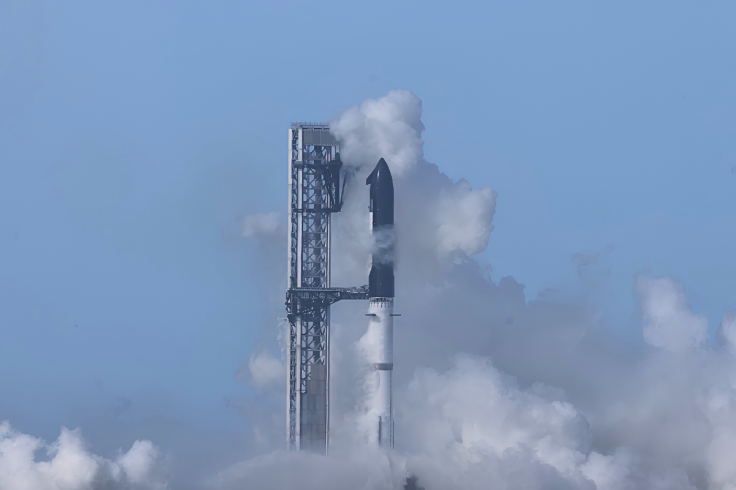
SpaceX aborted the thirteenth test flight of its Starship megarocket at the final second on Thursday evening in Texas after several Raptor engines failed to ignite, delaying the first launch of upgraded Starlink V3 internet satellites.
The rocket's automated flight computer called a hold at T-0 on 16 July at the company's Starbase site in South Texas, just as the Super Heavy booster's 33 Raptor engines began to light. The launch window had opened at 6:45 p.m. Eastern time.
'Some of the engines didn't start, triggering an automatic launch abort,' SpaceX chief executive Elon Musk wrote on X about 10 minutes later. 'Now offloading propellant. Next launch attempt hopefully in a few days.'
Why the Countdown Stopped at Zero
Musk later said two Raptor engines will be removed and replaced to be confident of a good flight, with the most probable launch timing early next week. SpaceX has not confirmed a new date.
'We'll take some time, dig into what triggered that abort once the booster was igniting to launch, and then we'll figure out what our path forward is going to be,' launch commentator Dan Huot said during the company's webcast.
Flight 13 is the second outing for Starship Version 3, the upgraded configuration SpaceX needs for future orbital missions. Booster 20 and Ship 40 are both flying for the first time, with the booster targeting a splashdown in the Gulf rather than a tower catch.
20 Upgraded Starlink Satellites Stay Grounded
The mission carries the first 20 production Starlink V3 satellites, and that is where the abort reaches ordinary households. Each V3 unit delivers 1 terabit per second of downlink capacity, roughly 10 times more than the satellites flying today, and connects to the rest of the constellation through high-capacity lasers. SpaceX has asked the Federal Communications Commission (FCC) for permission to deploy up to 100,000 of them.
The satellites will not reach orbit on this suborbital flight. They are set to briefly connect with the network before burning up over the ocean, while six of the 20 carry cameras to scan Ship's heat-shield tiles ahead of a future attempt to catch the upper stage with the launch tower.
What the Delay Means for Rural Internet Users
Securities and Exchange Commission filings show Starlink served about 10.3 million subscribers across 164 countries and territories as of 31 March. Analysts at MoffettNathanson estimate around 2.7 million of those customers are in the US, most of them in rural areas where wired broadband barely reaches.
V3 satellites are too large for the Falcon 9 rocket and can only fly on Starship, so every scrub pushes back the capacity upgrade those customers are waiting for as the existing network grows more congested.
Investors Felt the Abort Within Minutes
Thursday's scrub was also SpaceX's first launch attempt since the company's 12 June debut on the Nasdaq. Shares trading near $132 (£98) dropped to almost $125 (£93) within five minutes of the abort before recovering to about $127 (£94) in after-hours trading.
The stakes stretch beyond one company. Starship anchors NASA's Artemis moon landing timeline, and a clean Flight 13 would open the door to orbital missions later this year. For now, the world's most powerful rocket stays on the pad while millions of rural internet customers wait a little longer for faster service.
© Copyright IBTimes 2026. All rights reserved.