

Trump's Neck AI Pixelation Claim Goes Viral: Users Say AI 'Can't Tell the Difference' in Bizarre Censoring Rumour
Viral photos sparked debate over whether AI misidentified Donald Trump's neck

A viral claim suggesting artificial intelligence mistakenly pixelated Donald Trump's neck during Japanese television appearances has spread online, but there is no confirmed evidence that AI censorship technology caused the effect.
The rumour gained traction after social media users shared clips claiming automated censorship systems used in Japan had confused Trump's neck with content requiring removal or blurring. The unusual claim sparked widespread jokes and memes, with users alleging AI had failed to distinguish between a person's appearance and material it was designed to censor.
However, the circulating footage does not confirm how the pixelation occurred. No broadcaster, technology provider or official source has identified AI censorship as the cause of the visual effect.
How the Trump AI Pixelation Claim Spread Online
The claim began circulating after an Instagram post and accompanying clips alleged that Japanese television broadcasts had used AI technology that mistakenly blurred Trump's neck during appearances.
According to the social media post, users claimed the effect was caused by AI moderation tools designed to censor adult content.
The post attracted attention because it combined Trump's recognisable public image with growing online interest in artificial intelligence errors and automated censorship. The explanation quickly became the subject of memes and humorous reactions across social media.
While the clips show pixelation around Trump's neck, they do not independently prove that an AI system created the effect.
What Is Confirmed About the Viral Clips
The confirmed part of the story is that videos and screenshots showing the unusual pixelation have circulated widely online.
The source of the effect remains unclear. The available footage does not establish whether the pixelation resulted from artificial intelligence, manual editing, broadcast processing, video compression or another technical process.
No Japanese broadcaster has publicly confirmed that it used AI censorship technology that mistakenly targeted Trump's appearance. There has also been no statement from an AI company claiming responsibility for the alleged effect.
Why the Rumour Gained Attention
The claim spread because it presented an unusual explanation for a visual effect involving a major political figure. The idea that an AI system could mistakenly identify a normal part of a person's appearance as content requiring censorship created an easy target for online jokes.
The rumour also reflects wider public interest in the reliability of artificial intelligence systems, particularly as AI tools become more common in image recognition, moderation and content filtering.
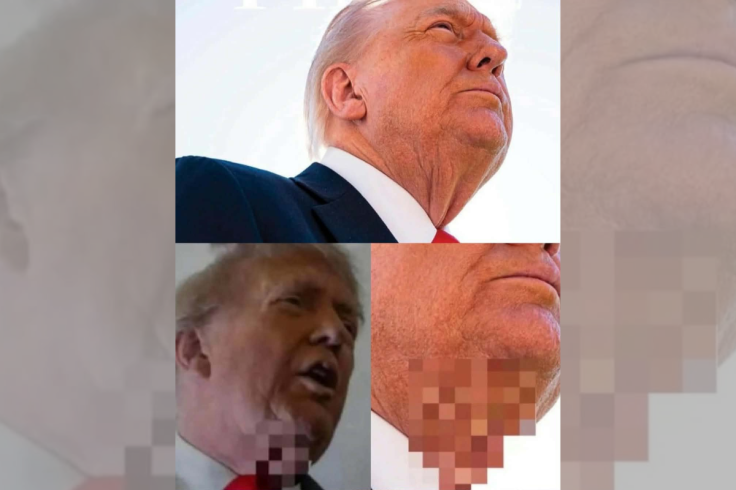
The viral post attracted a wave of humorous reactions, with many users treating the alleged AI mistake as an internet joke rather than a confirmed technology failure. Some commenters described the clip as something they 'really need to laugh today', while others called it 'funny' and reacted with comments such as 'OMG I AM DED.'
Other users praised the unusual nature of the clip, with one commenter writing, 'Japan you earned my respect.' Additional reactions turned the alleged AI error into memes and jokes about artificial intelligence supposedly being unable to distinguish between ordinary images and content requiring censorship.
The comments reflect opinions shared on social media and do not provide evidence that AI censorship technology caused the pixelation or explain how the visual effect occurred.
No Evidence Confirms AI Caused the Pixelation
Artificial intelligence moderation systems can sometimes produce errors when analysing images, but no technical source has linked the viral Trump clips to an AI censorship system.
The claim that Japanese television broadcasts used AI technology that mistakenly pixelated Trump's neck remains unverified.
The verified development is that the clips have circulated widely and generated online discussion. What remains unknown is the cause of the pixelation and whether artificial intelligence played any role in creating the effect.
© Copyright IBTimes 2026. All rights reserved.