'Then Why You Got So Much Of It?': Elon Musk Trashed Online After Losing Trillionaire Status
The market slide has collided with viral clips of Musk predicting a future where 'money will stop being relevant', prompting a wave of jokes and sharp criticism online.

Tech entrepreneur Elon Musk lost his short‑lived trillionaire status on Tuesday in New York after a sharp fall in SpaceX and Tesla shares dragged his estimated net worth back below the thirteen‑figure mark, according to the Bloomberg Billionaires Index.
The index, which still ranks him as the world's richest person, puts Musk at about $957 billion, less than two weeks after SpaceX's high‑profile Nasdaq debut briefly made him the world's first trillionaire.
Social Media Turns On Elon Musk Trillionaire Hype
The news came after a fortnight in which the 'Elon Musk trillionaire' label had ricocheted across social platforms, half awe and half disbelief, before flipping into something closer to open mockery once the number slipped.
While no one is remotely worried about Musk paying his bills, the scale and speed of his rise and fall struck a nerve with users living in an economy where the average American salary is just over $69,800 a year, according to the US Social Security Administration.
On Reddit, one user jokingly claimed personal responsibility for the slide, writing: 'Guys, I think I'm responsible. I just cancelled my subscription to Starlink.'
Another deadpanned: 'Now he is one of us. I also have no trillionaire status.'
A third piled on with theatrical concern: 'This is truly sad news, how will he cope?'
Other comments edged from punchline into pointed criticism. One popular post suggested people should continue using the 'Elon Musk trillionaire' tag regardless of what the index says, arguing: 'Let's just keep calling him a trillionaire so that he doesn't do something stupid to our world trying to regain his status.'
Another argued that, in their view, he was 'never a trillionaire' in any meaningful sense, because so much of his wealth sits in 'unrealised gains' on shares that cannot be taxed or easily spent like cash.
The sarcasm escalated into fake rescue plans. 'I think we should start a GoFundMe to help him out. Poor guy,' one commenter wrote, while another asked: 'We have to help him! How can we send him all our money?'
Trillionaire Status Meets Musk's Own Theory That 'Money Will Stop Being Relevant'
For starters, the online backlash did not come out of nowhere. Back in March, Musk sat down with entrepreneur Peter Diamandis and sketched out an almost sci‑fi vision of the future economy, driven by artificial intelligence and robotics.
He told Diamandis: 'I do think we'll have universal high income. We're basically just issuing money to people, you know, and they are really just, because the output of goods and services will so far exceed the money supply that we effectively have deflation.'
He went further, saying AI and robots would 'make so much stuff and provide so many services that they will actually run out of things to do for the humans'. Then came the line that stuck: 'I think money will stop being relevant at some point in the future.'
When that clip was reposted on 13 June, the day after his net worth crossed the trillion mark on paper, people connected the dots instantly. One commenter snapped back: 'Then why you got so much of it?'
Another observed drily: 'Says the man who has it.'
Market Jolt Behind The Elon Musk Trillionaire Comedown
The financial mechanics behind the Elon Musk trillionaire rise and fall are brutal but fairly simple. After SpaceX's blockbuster IPO on 12 June, investor enthusiasm drove the shares from an opening price of $150 to a peak of $225.64 by 16 June.
With Musk holding about 42% of the company, every move in the stock translated directly into vast swings in his personal net worth, which briefly hit around $1.32 trillion.
However, the market rally did not last. Concerns over heavy capital spending, the long‑term costs of building artificial intelligence infrastructure and stubbornly high interest rates contributed to a broader tech sell‑off that hit high‑growth names hard.
SpaceX shares bore the brunt, plunging more than 30% from their mid‑June peak to around $156.
On Monday, 22 June alone, a 16% single‑day drop in SpaceX erased an estimated $240 billion from Musk's paper fortune. The following day, shares in his electric vehicle company, Tesla, in which he owns about 12% of the stock, fell nearly 6%, further compounding the damage.
By Tuesday evening, the Bloomberg Billionaires Index was marking his wealth at $957 billion, down from roughly $1.11 trillion less than two weeks earlier.
Analysts have stressed that such volatility is typical for newly listed growth firms with sky‑high expectations. Danni Hewson, head of financial analysis at AJ Bell, said that for a stock like SpaceX 'a lot of decision making might have been emotional and based on the anticipation of huge leaps forward in space exploration and utilisation', and argued that investing should instead be approached 'with clear eyes and patience, even when such huge numbers are involved.'
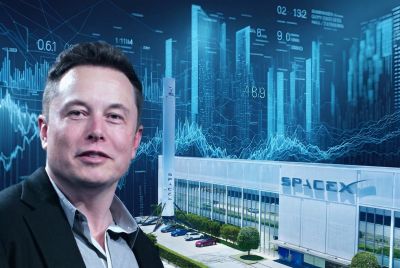
Elon Musk's fleeting trillionaire status was built almost entirely on the spectacular stock market debut of SpaceX, his rocket and satellite company.
The much‑anticipated initial public offering was priced at $135 per share and opened at $150, valuing SpaceX at more than $1.77 trillion on day one and instantly catapulting his paper wealth past $1 trillion, since he owns roughly 42% of the company.
© Copyright IBTimes 2026. All rights reserved.
- Recommended For You